Mr Suzuki
Bullet TrainMr Suzuki, an exam-prep instructor whom Nanao has met before, enters the train narrative through an ordinary gesture: he picks up Nanao’s dropped phone and returns it. The encounter turns consequential when he reveals that he heard a conversation about a killing and admits to prior involvement in dangerous situations. His calm manner offers no clear account of what he knows, but his questions and recognition of Terahara make him a quietly unsettling presence in Nanao’s already dangerous journey.
Identity and Introduction
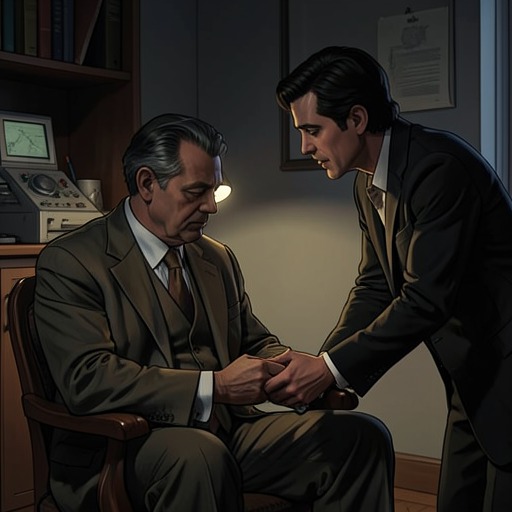
Mr Suzuki is identified by his work as an exam-prep instructor. Nanao recognizes him as the teacher he encountered earlier, and their first exchange on the train grows out of Nanao’s fall: the instructor happens to pass by, stoops to retrieve the phone, and hears a voice coming through it. He instinctively raises the phone to his ear before Nanao stands and asks for it back. The moment makes him a chance witness to information Nanao would rather keep private.
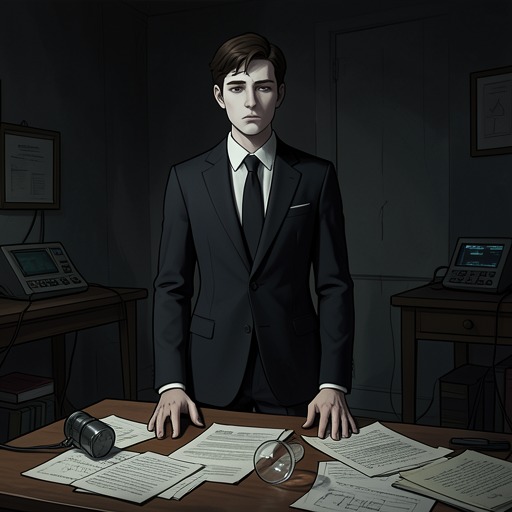
His manner is described as placid but somehow lifeless. When he realizes that he has remained standing nearby, he bows in apology with a quick, mechanical movement. These details establish a composed, oddly impersonal surface, not an explanation of his character. He appears unalarmed by the disturbing subject he overheard, and that composure gives his later disclosures more weight: he does not present himself as a threat, yet neither does he seem simply startled or naïve.
The Phone and Nanao’s Suspicion
After the call ends, Nanao is dismayed by the failure of negotiations and considers calling back, but reassures himself that Tangerine is unlikely to act rashly. He turns to Mr Suzuki, asking whether he can help him. The instructor explains that the caller’s words about someone being killed caught his attention and led him into thought. His account is brief and apparently candid, but it confirms that Nanao’s private crisis has become audible to a stranger.
Nanao tries to keep control of the encounter. When Mr Suzuki refers to the disturbing call, Nanao laughs and jokes about what a person might do if violence broke out on a Shinkansen. The joke conceals the truth: Nanao has already killed Wolf and fought Lemon. Mr Suzuki does not disclose knowledge of those events. Instead, he draws on something Nanao himself had said earlier: that he has terrible luck. He links that complaint to the call about a murder and to the recurring trouble Nanao associates with travelling by Shinkansen. His observation brings the pattern into focus for Nanao, who feels threatened by the instructor’s attention and asks whether he takes dangerous jobs.
A Past Involvement with Danger
Mr Suzuki denies that dangerous work is his occupation, but then qualifies the denial by saying he has been involved in dangerous situations before. The distinction leaves his past unspecified. He does not name an employer, describe an incident, or explain what kind of danger he encountered. The exchange establishes experience without supplying a biography, preserving the gap between his ordinary professional identity and the knowledge he appears to possess.
Nanao responds reflexively that he is involved in a dangerous situation now. He describes the death of the son of a dangerous man, while stressing that he did not see the death happen and that, apparently, no one did. Mr Suzuki repeats the connection between the dead son and a dangerous father, speaking as if to himself. The exchange moves from Nanao’s attempt to deflect suspicion toward a shared recognition of the stakes: the death is not an isolated piece of gossip but part of a larger threat.
The Name Terahara
Nanao initially suggests that the instructor would not know the dead man’s name, though he adds that the man was famous in his line of work. Mr Suzuki says that he cannot be certain which line of work Nanao means, but suspects he would recognize the name. When Nanao identifies the man as Terahara, Mr Suzuki confirms the name rather than showing surprise. Nanao, in turn, says that Terahara was famous and died by poisoning, a detail he lets slip before regretting it.
Mr Suzuki responds by distinguishing the deaths in the story he has just heard: the father was poisoned, while the son was hit by a car. The statement demonstrates that he can place Nanao’s account within a wider sequence of events, though the exchange does not explain how he acquired that knowledge. It also alters the encounter’s balance. What began with the instructor as an accidental listener ends with him supplying a specific connection between deaths, while Nanao has revealed more than he intended.
Thematic and Narrative Role
Mr Suzuki’s scene is structured around a gradual shift from routine contact to uncertainty. A dropped phone gives him access to a fragment of the crisis; his attention to Nanao’s talk of bad luck turns that fragment into a pointed observation; his admission of past danger makes Nanao question who he is; and the name Terahara reveals that he recognizes more of the situation than his initial role suggests. The scene keeps his knowledge suggestive rather than explanatory, using what he says—and what he leaves unspecified—to extend the mystery.
That pattern resonates with the novel’s treatment of fear and learned helplessness without making Mr Suzuki its agent. Kimura recalls a guard explaining how repeated punishment can teach a person to stop trying to escape, and later interprets the students’ fear of Prince in similar terms. Those episodes establish a wider contrast between apparent powerlessness and the possibility of action. Mr Suzuki’s encounter with Nanao is quieter: he offers no rescue or explicit intervention, but his questions expose how danger can be present beneath an ordinary conversation. His calm, uncertain presence makes him a hinge between Nanao’s concealed predicament and the larger chain of deaths surrounding Terahara.