Prince Frames Takuya's Father
Bullet TrainPrince Frames Takuya’s Father is revealed as part of Prince’s effort to silence someone investigating him: students tell Kimura that they were directed to build a sexual-misconduct case against Takuya’s father, after which the man was arrested and lost his job.
Background and Disclosure
The account emerges while Kimura is speaking with four schoolboys about Takuya, who has died. One boy brings up Takuya’s father, explaining that the man had been arrested the previous month after an allegation involving a girl at their school and had subsequently been fired. The detail changes the conversation from Takuya’s death to the pressures surrounding his family.
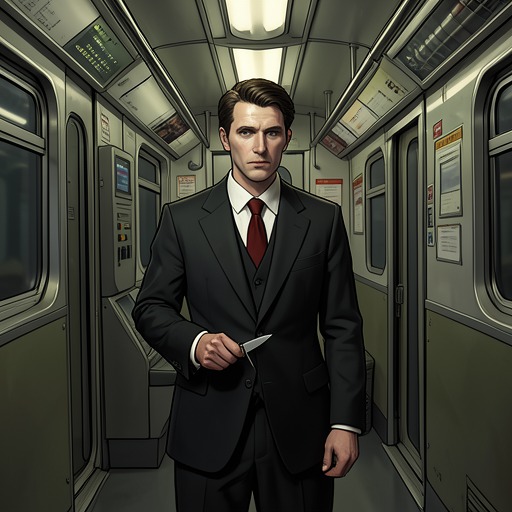
Kimura initially treats the allegation as grounds for the father’s punishment, but the boys’ uncertainty prompts him to ask whether they had set him up. They do not deny it. When Kimura asks whether the father was innocent, they remain silent, so the scene does not establish his innocence directly. A student then explains that they acted on Prince’s instructions and connects the allegation to the father’s attempt to uncover information about him. Kimura recognizes the episode as a case Prince had arranged through the students, presenting the arrest and dismissal as consequences of an effort to manufacture a sexual-misconduct accusation.
Learned Helplessness and the School’s Fear
Kimura interprets the boys’ silence and disbelief at the suggestion of resisting Prince through an earlier experience guarding a kidnapped man. The man was not tied up and the apartment door was unlocked, yet he did not leave. A guard who relieved Kimura explained this behavior through learned helplessness: in an experiment, a dog exposed to shocks it could not avoid later failed to escape even when jumping would protect it. Repeated punishment, the guard argued, can teach people that action is futile, a pattern also seen in abusive relationships. The comparison gives Kimura a framework for understanding why the schoolboys treat Prince’s power as immovable even when resistance might be possible.
Kimura sees the students’ helplessness as learned rather than innate. They have repeatedly witnessed classmates and adults suffer under Prince, and that history has persuaded them that they cannot prevail. He does not know precisely how Prince administers the electric shocks or what orders he gives, but suspects the shocks reinforce the boys’ submission. Their efforts to look confident and establish rank among their peers coexist with fear; Kimura regards them as young people whose standing in their small social world feels perilously important.
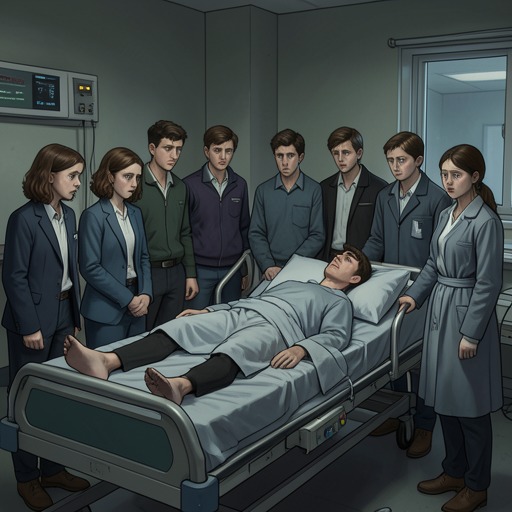
The pattern becomes visible again when Kimura watches students prepare defibrillator pads for an experiment involving Tomoyasu and his dog, Takeshi. One student challenges another’s reluctance by threatening to report him to Prince, and the boys deny or deflect responsibility rather than trust one another. Kimura reads this division as a consequence of rule by fear: each student focuses on avoiding punishment, while anger at the person in power is redirected toward potential allies. He compares the dynamic to the distrust he had heard characterized in Terahara’s criminal organization, where members watched one another and sought to ensure that someone else bore their leader’s anger. In both settings, fear makes collective resistance less likely by turning self-protection into the group’s governing principle.
A Pattern Beyond Takuya’s Family
The account places the case against Takuya’s father within a wider pattern of adults being removed from the school. A student tells Kimura that Prince has also driven out three teachers: one left after becoming depressed, another was caught in an incident involving a student, and a third had an accident. The students give no further details, so these outcomes are not all shown to have been arranged in the same way. Set beside their account of Takuya’s father, however, they suggest that Prince’s influence reaches beyond direct control of the pupils and can also obstruct adults who might challenge or investigate him.
Kimura’s Limited Intervention
When Kimura raises the possibility of bringing down Prince, the boys react as though the idea is beyond their comprehension; none has considered challenging him. Kimura can see that fear has made their obedience seem inevitable, and even thinks controlling them may not be difficult. Yet he checks his impulse to become involved, comparing the boys to a stray dog that should be left alone, and tells them to work it out for themselves. His response leaves a tension unresolved: he recognizes how Prince’s power has narrowed the students’ sense of what they can do, but at this point he does not offer to lead their resistance.