Prince–Tomoyasu bullying relationship
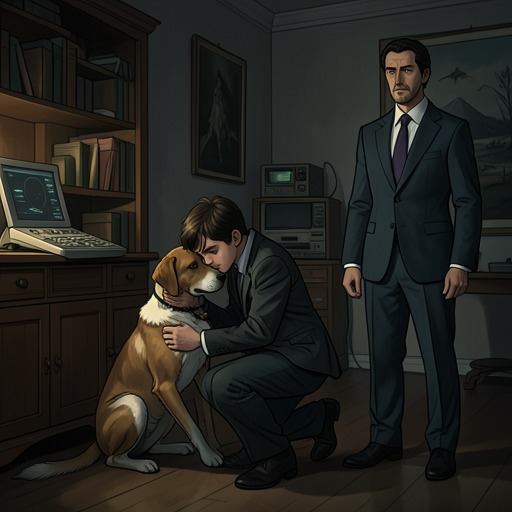
Bullet TrainThe Prince–Tomoyasu bullying relationship begins, in the available account, with the Prince singling out Tomoyasu as a classmate he dislikes and recalling an occasion when they were together in a park. Kimura recognizes Tomoyasu as the boy with the dog, but rejects the Prince’s description of their encounter as play: to Kimura, it had amounted to torment. The gap between those accounts defines the relationship. What the Prince presents as an episode of play is understood by Kimura as harm, and Tomoyasu’s response shows that the episode had consequences beyond the Prince’s own account of it.
Identity and Context
Tomoyasu is identified as a classmate of the Prince’s, and the recalled park encounter is the clearest specific example of their relationship. The conversation does not detail exactly what happened there or establish how often the Prince mistreated him. It does establish that the Prince disliked Tomoyasu and that Kimura regarded the remembered interaction as more serious than the Prince’s casual description suggested. Tomoyasu’s dog serves as the identifying detail that helps Kimura place him; the evidence does not make the dog a participant in the conflict.
The relationship is therefore presented through contrasting interpretations rather than a full account of the incident. The Prince treats the park encounter as unremarkable play, while Kimura immediately challenges that framing and names its cruelty. This distinction matters: Tomoyasu is not simply a classmate the Prince dislikes, but someone whose experience of the encounter differs sharply from the Prince’s self-serving version of it. The account offers no independent description from Tomoyasu himself, so the reader learns of his position through what the Prince says he did afterward and through Kimura’s rebuke.
The Park Incident and Its Aftermath
The Prince explains that Tomoyasu told his father about the incident. He had previously heard Tomoyasu mention that his father had a frightening friend who might come after the Prince, but he did not take the warning seriously, assuming Tomoyasu had invented it. The disclosure changes the Prince’s understanding: Tomoyasu had appealed to his father, and the father acted on that appeal by informing Minegishi. The relationship consequently extends beyond the two classmates. Tomoyasu’s account of what happened reaches his father, and the father’s intervention connects the school conflict to Minegishi.
The Prince responds with contempt to Tomoyasu’s decision to involve a parent. He portrays the appeal as weakness and objects to parents becoming angry over their children. He also derides Tomoyasu’s father as a lawyer who thinks too highly of himself. These judgments do not establish what the father said to Minegishi or what Minegishi did in response; they show how the Prince recasts a complaint about his own behavior as evidence against the people who challenge him. Tomoyasu’s attempt to enlist adult protection becomes, in the Prince’s telling, a reason to look down on him rather than a reason to reconsider the original conduct.
Minegishi and the Prince’s Reaction
Kimura’s response makes the connection to Minegishi explicit. Once the Prince says that Tomoyasu’s father reported him to Mr Minegishi, Kimura understands how the Prince is linked to Minegishi and recognizes that the warning about a frightening friend was real. The revelation is not that the Prince and Tomoyasu are close, but that Tomoyasu’s family connection has brought Minegishi into the consequences of their conflict. The available account leaves Minegishi’s actual response unspecified.
The Prince distinguishes between the father’s intervention and Minegishi’s handling of it. He says he respects people who manage their own affairs, judges Tomoyasu’s father harshly for reporting him, and then says he was disappointed that Minegishi treated him lightly. The two judgments reveal an expectation that adults should either act forcefully or be judged as inadequate; they do not clarify what Minegishi’s treatment consisted of. Kimura, meanwhile, sees the episode as an explanation of the Prince’s connection to Minegishi, not as proof that Tomoyasu deserved the Prince’s contempt.
Significance and Limits
The relationship is significant because it shows a pattern of the Prince interpreting resistance as a personal failing in the person resisting him. Tomoyasu’s appeal to his father is presented not as a response to being mistreated, but as proof that he is pathetic; the father’s decision to involve Minegishi is similarly treated as a mark against him. Kimura’s blunt correction interrupts that self-exculpating account by recalling that the Prince’s supposed play looked like torment from outside it. The exchange thus sets the Prince’s characterization against a second perspective without supplying a complete account of the bullying.
The evidence supports a specific chain of events: the Prince mistreated a classmate in a park, Tomoyasu told his father, and the father reported the Prince to Minegishi. It does not establish the frequency or duration of the bullying, the precise acts involved, Tomoyasu’s later circumstances, or the consequences of Minegishi’s response. Within those limits, the episode makes the relationship’s imbalance clear: the Prince had treated Tomoyasu as an object of unwanted play, while Tomoyasu’s recourse to his father exposed the conflict to adults and challenged the Prince’s ability to define what had happened.