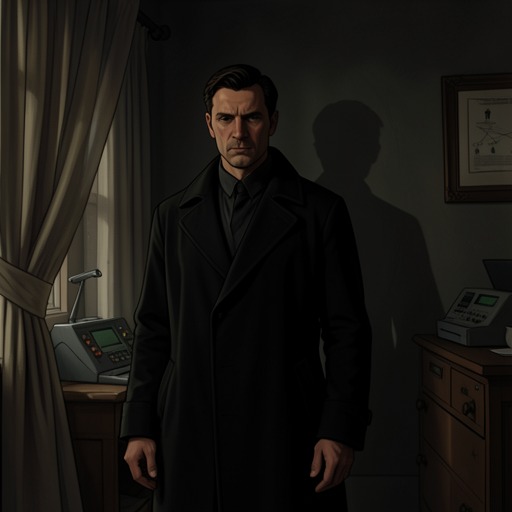
Shigeru Kimura–Yuichi father–son relationship
Bullet TrainShigeru Kimura and Yuichi Kimura are father and son, joined by a history that neither career change nor retirement entirely breaks: Shigeru left rough work after Yuichi was born, but later discovered that Yuichi had entered the same line. Shigeru’s wish to protect and raise his son thus sits beside the rueful recognition that his son has followed a path he himself abandoned.
A career change with two causes
Shigeru explains that Yuichi’s birth was a real reason for leaving his old line of work. He wanted to be there to watch his son grow up, and he and Akiko Kimura agreed to change careers. Akiko remembers being glad: she, too, had wanted a change for a long time. The decision belongs to both parents, but Shigeru’s account makes fatherhood its defining personal stake. Leaving meant choosing the possibility of an ordinary presence in his son’s life over continuing as before.
That explanation, however, is not the whole story. Shigeru says he had already grown disgusted with his work and the people around him, whom he experienced as saturated with bad intent. He describes the feeling as an old stench and contrasts it with the supermarket, where the work has been hard but he has never sensed the same atmosphere. His departure was therefore both a family decision and a rejection of a world he no longer wanted to inhabit. The distinction matters: Yuichi’s birth gave Shigeru a reason to leave, but his disillusionment had its own force.
The son enters the old line
The resemblance between their careers unsettles Shigeru. When a friend first told him that Yuichi was beginning to help with rough jobs, Shigeru was so worried that he considered secretly following his son to keep watch over him. The impulse exposes the tension at the center of their relationship: Shigeru had changed careers in part to be present for Yuichi, yet the news of Yuichi’s work makes him imagine surveillance as a way to protect him.
Shigeru later confirms that he knew Yuichi had also entered that line of work. He admits that he saved Yuichi’s skin a few times, speaking sheepishly and reluctant to tell a parent about the son’s bungles. The disclosure gives the resemblance a practical history, not merely a symbolic one: Shigeru had been involved in helping Yuichi through trouble, even after retiring. His embarrassment softens the admission, while the repeated need to help makes clear that the connection between their working lives had consequences.
Inheritance and the hoped-for limit
Kimura’s rueful response to learning that Shigeru knew about Yuichi’s work frames the discovery as a case of father and son repeating one another. Shigeru’s own bitter smile at the rumor shows that he, too, sees the echo. Yet this likeness is not presented as uncomplicated pride. It recalls the rough work he left behind and renews the worry that his son has taken up precisely the kind of life from which he tried to turn away.
The thought of Wataru gives that worry a generational boundary. Shigeru hopes the pattern will stop with Yuichi and not be repeated by his grandson. That hope does not erase what Yuichi has already done, or the times Shigeru helped him; it marks the limit Shigeru wishes the family’s history to reach. Their relationship consequently carries both care and apprehension: Shigeru’s decision to leave was partly an effort to be a father, and his later response to Yuichi’s work is another effort to protect him, this time from inheriting the dangers Shigeru knows firsthand.