Tangerine
Bullet TrainTangerine is a contract killer whose self-command and attention to other people’s mistakes make him the more controlled half of his partnership with Lemon. During the Shinkansen journey carrying Yoshio Minegishi’s rescued son, a ransom suitcase, and the consequences of a job going wrong, he tries to impose order on a chain of uncertainties. His competence cannot protect him from the train’s accumulating violence: after finding Lemon dead, Tangerine is killed by Nanao.
Identity and Working Style
Tangerine is traveling in car three, row ten, seated in the aisle beside Lemon, with the rescued young man in the middle seat. He checks on a cut to Lemon’s cheek, which Lemon denies came from a blade and instead attributes to a rash. The exchange establishes Tangerine’s attention to practical details, as well as the dry, irritated familiarity between the two men: he remembers what happened to Lemon even when Lemon refuses to acknowledge it.
Tangerine and Lemon are about the same height, around five feet ten inches, and share a rangy build. People often take them for brothers, sometimes even twins, and the idea deeply frustrates Tangerine. He considers Lemon careless and simplistic, a judgment that turns their resemblance into a source of irritation rather than solidarity. An associate has described Tangerine as easy to deal with and Lemon as difficult; Tangerine agrees with that distinction. Their fruit names invite comparison, but his view of the pairing is practical: Lemon’s shortcomings are not charming quirks to him but recurring problems that someone else must manage.
His composure is not the same as indifference. Tangerine keeps watch on the job, notices when something is missing, and assesses the people around him. At the same time, he can be sharply dismissive. After the rescue, he observes that the young man seems to have recovered quickly from his ordeal and privately judges people who do not read fiction as emotionally shallow and unable to empathize. This is Tangerine’s own generalization, not an objective account of the rescued man; it shows how readily he turns a passing impression into a theory about character.
The Rescue and the Shinkansen Job
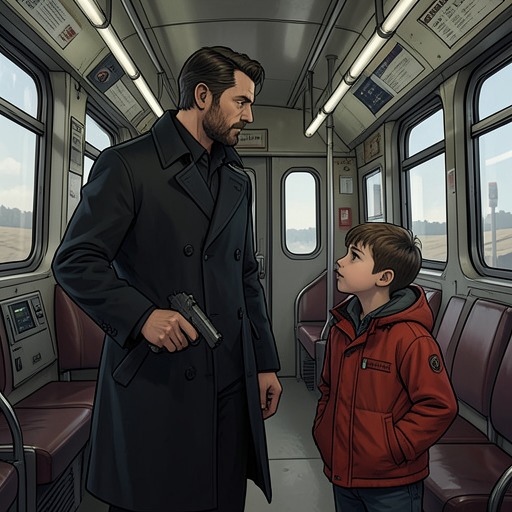
Tangerine and Lemon have rescued Yoshio Minegishi’s only son from a room three floors underground in Fujisawa Kongocho. At nine in the morning, nine hours after the rescue, they are taking him onward by train. The young man had been found tied up and badly shaken, but Tangerine notes that he now appears close to normal. The recovery is part of a larger assignment: Minegishi has ranked the priorities as returning his son first, retrieving the ransom money second, and killing the perpetrators afterward.
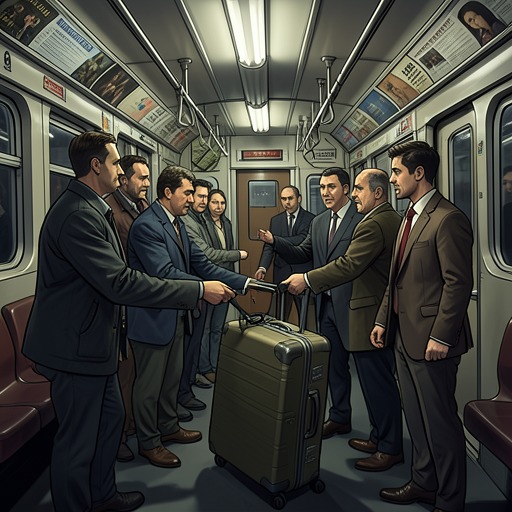
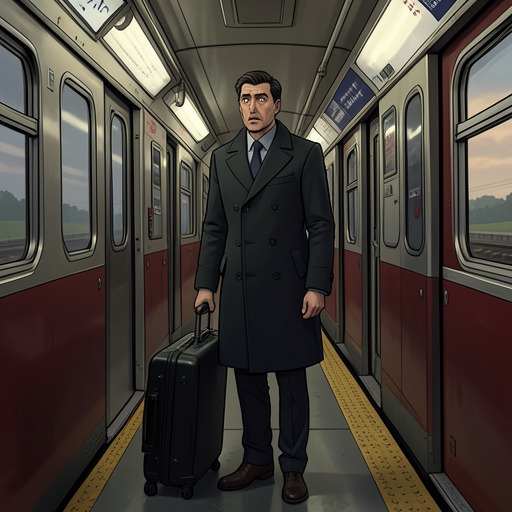
The arrangement leaves Tangerine responsible for a volatile mixture of people and property. When he realizes that the suitcase containing the ransom money is nowhere on the luggage rack or beneath the seats, he immediately asks Lemon where it is. Lemon responds casually, but the suitcase remains unaccounted for. For Tangerine, the missing case is not a trivial inconvenience: the money is one of the explicit priorities of the job, and its disappearance compounds the danger surrounding their passenger.
Lemon returns from searching without the suitcase and begins an unrelated conversation about characters from Thomas and Friends. Tangerine asks whether he found the bag; Lemon admits that the conversation has nothing to do with it and questions why they should worry. Tangerine has worked with him for five years and understands this pattern. Lemon is physically capable and stays calm under pressure, qualities that make him useful in their line of work. Yet he is poor with details, irresponsible, and quick to make excuses rather than own a mistake. Tangerine recognizes that Lemon’s refusal to face a problem usually leaves him to clean it up. His irritation is therefore rooted in repetition: the missing suitcase is another instance of a division of labor Tangerine never chose but expects to endure.
Client, Suspicion, and Pursuit
As the train approaches Omiya Station, Tangerine remembers that Minegishi’s man will be waiting. Minegishi distrusts people so thoroughly that he assumes anyone given the chance will betray him. Even when he hires someone, he arranges to keep watch, fearing that Tangerine and Lemon might take the money and run or abduct his son again to demand a second ransom. The handover is thus also surveillance: Tangerine is completing a job for a client who regards the possibility of disloyalty as a certainty.
Tangerine goes to the gangway to meet the contact, although he does not know what the man looks like or whether more than one person will appear. As the train pulls into Omiya Station, he glimpses a tall man with slicked-back hair, a black suit, and a conspicuous blue shirt. The stranger belongs, in Tangerine’s estimation, to the criminal underworld rather than ordinary working life. Once Tangerine steps onto the platform, the man peers through the train window, apparently checking on Minegishi’s son. Tangerine has identified the contact’s social world but has not established his identity or intentions beyond that surveillance.
Later, after returning from the bathroom, Tangerine recognizes a younger man with black-framed glasses as someone from their own world. The newcomer tries to appear natural but is visibly nervous and works to avoid looking toward Tangerine and Lemon. Tangerine has to make an effort not to laugh. When Lemon asks whether he found the man, Tangerine’s expression gives away the answer: the man has escaped. The moment briefly reverses the usual direction of scrutiny. Tangerine is accustomed to reading other people, but the escape leaves him without control of the encounter and adds another unresolved threat to the train journey.
Lemon, Nanao, and the Unraveling Partnership
Tangerine’s attempts to manage events increasingly depend on incomplete information. When he learns that Lemon has not returned, he initially focuses elsewhere; later, he allows himself to consider that Lemon may have been killed. He finds the possibility both plausible and surprising that it took him so long to face it. If Lemon has died, Tangerine reasons, the killing must have happened recently, so the killer is probably nearby. He cannot rule out Nanao, though he also imagines that Lemon would have tried to leave a clue.
A call from Nanao reaches Tangerine on a phone he has obtained from a cross-dresser, using a number he does not recognize. Nanao asks whether he is speaking to Tangerine or Lemon, and Tangerine identifies himself. In a later exchange, Tangerine tells Lemon that the man with glasses is giving up; the news does not settle the problem of Little Minegishi’s death. Tangerine tells Nanao that, in their proposed version of events, Nanao is the killer. This is an attempt to shape the account of what happened, not proof that Tangerine knows the full truth. The call makes clear how the job has shifted from carrying out Minegishi’s instructions to managing blame and survival.
Tangerine eventually comes across Nanao sitting against a wall in the gangway, apparently unconscious, as the train enters a tunnel. Later, while moving between cars with him, Tangerine questions the claim that Lemon got off at Sendai Station. He cannot explain the suspicion, but he thinks Lemon did not leave the train and asks whether Nanao spoke to him. When a schoolboy points out copper wire protruding from a toilet door, Tangerine recognizes it as Lemon’s wire—the same kind Lemon used to secure the door from outside when they hid Little Minegishi’s body. The small, familiar object turns a strange locked bathroom into evidence connected to their earlier handling of the corpse.
Discovery and Death
The Prince watches Tangerine inspect the bathroom and pretends to be frightened, studying Tangerine’s response. Tangerine briefly goes pale and rigid, then enters the toilet alone. When he comes back out, his expression has returned to normal. He tells the Prince that another man is inside—the man who had been with him—and reports that the man has been shot. His controlled manner survives the discovery in public, even as the Prince had hoped to see him lose it.
Tangerine then confronts the Prince over an empty place among the Thomas and Friends stickers. When the Prince says he does not know which character used to be there, Tangerine says that he does: the missing sticker is attached to the Prince’s blazer. The sudden accusation shows Tangerine still working from concrete clues, testing a denial against a detail the Prince has overlooked. It is a brief assertion of control, but it does not restore the partnership or remove the danger around them.
As the Prince cries for help, Tangerine turns toward him, topples, and drops his gun. Nanao stands over his body. Tangerine’s story ends not with a resolution of the ransom job but with the collapse of the control he has spent the journey trying to maintain. His habit of noticing details lets him identify the wire and expose the sticker clue; it cannot save him once the people and conflicts around him converge. The contrast between his measured attention and the abruptness of his death gives his final stretch its force: the man who repeatedly tries to read the situation becomes, in the end, unable to govern it.