Water of life
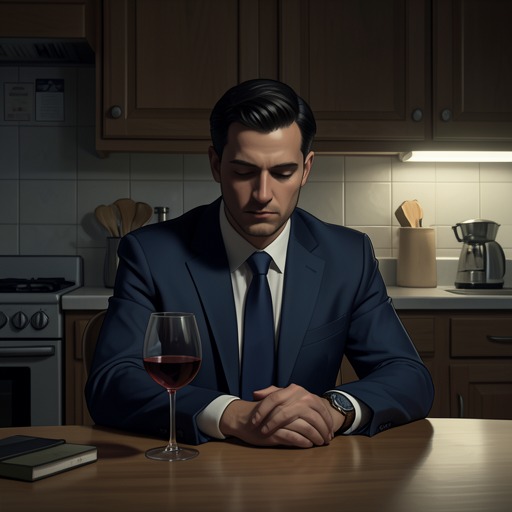
Bullet TrainWater of life is Kimura’s name for the brandy he carries and drinks, a phrase that first lets him recast alcohol as comfort and necessity. Its meaning shifts as Kimura’s father explains the physiology of dependence: what Kimura calls life-giving is also the substance that can reactivate his alcoholism with a single sip.
The phrase as a defense
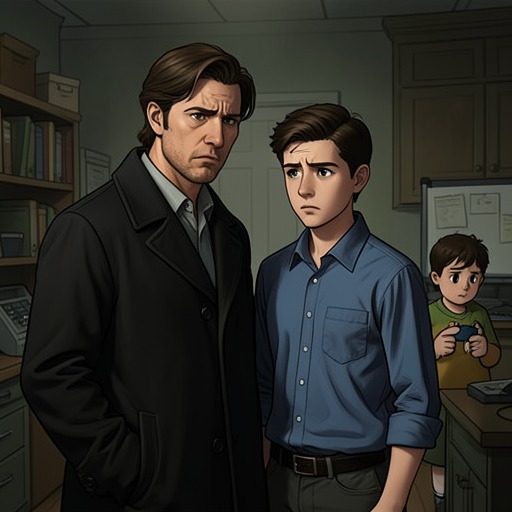
When Wataru asks whether Kimura has been drinking, Kimura answers by explaining that brandy is distilled spirits and that distillation reaches back to Mesopotamia. He then introduces the French term eau de vie, which means water of life. Saying the phrase makes him feel better, and he treats each sip as a lifesaving measure rather than a drink he could choose to forgo.
That defense has an immediate contradiction. Wataru points out that the doctor could smell alcohol even while wearing a mask. Kimura dismisses the concern by insisting that the doctor knows it is water of life. The exchange shows the phrase working less as a description of brandy than as Kimura’s way of quieting an accusation he understands but does not want to accept.
His father’s account of dependence
Kimura’s father takes the phrase’s comforting logic apart by defining alcoholism as addiction and a disease, not simply the habit of liking alcohol or drinking heavily. In his account, once an alcoholic takes a drink, he may be unable to stop; the matter is not a test of resilience or restraint. He warns Kimura that he is nearing alcoholism and could become fully dependent if he continues.
His explanation makes the physical mechanism central. Alcohol stimulates the brain’s A10 cells and produces a feeling of having accomplished something, even when nothing has been done. Repeated drinking can alter the brain, leaving a switch that activates when alcohol enters the system. A person may live normally after abstaining for a long time, but one sip can restore the inability to stop. The father stresses that this response is not a failure of willpower or resolve.
Kimura tries to turn the conversation back toward the antiquity of brandy, but his father says the claim about Mesopotamia may not be true and warns him against believing everything he hears. Against Kimura’s appealing phrase, he sets a blunt rule: the only way to beat alcoholism is to give up drinking entirely. Satisfaction, he argues, should come from honest work rather than the easy reward alcohol supplies.
The phrase in retrospect
Later, while struggling with a combination lock in the swaying Shinkansen, Kimura remembers how drinking had governed his life. If he went even a short time without alcohol, he became anxious and irritable. On his grandparents’ instructions, Wataru hid the alcohol in the apartment; Kimura searched for it and, when he could not find it, became desperate enough to consider drinking hair tonic. The memory gives the water-of-life idea its stark counterimage: alcohol was not simply something Kimura carried as medicine, but the focus of a dependence that reached into his home and his relationship with his son.
Kimura is now sober, having struggled out of what he remembers as the dark forest of alcoholism. Yet Wataru lies in a hospital coma, unable to witness his father’s new beginning. Kimura feels that his hard-won sobriety has been robbed of its meaning. The phrase that once helped him justify a sip therefore ends in painful contrast: the water of life was a self-protective story, while recovery has become a change Kimura longs to share with Wataru.