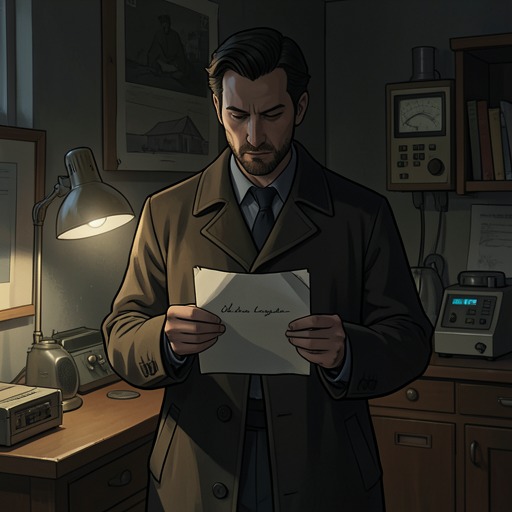
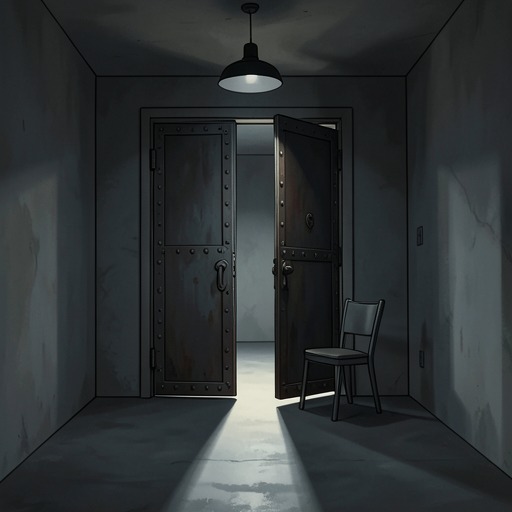
We perished, each alone
Bullet TrainWe perished, each alone is a line from a novel that moves from abstract reflection to personal grief. Tangerine first explains it to Lemon as a statement about the smallness of individual lives and the solitude of death. Later, after Lemon dies, the line returns to Tangerine’s mind, linking their earlier exchange to the loss he is trying to comprehend. Its recurrence does not erase the time they spent together; it makes the contrast between companionship and death newly immediate.
Origin and Meaning
The expression enters a conversation about reading. Tangerine suggests that Lemon try a book, proposing To the Lighthouse as a starting point. When Lemon asks what reading it would tell him, Tangerine describes a perspective in which each person is only one existence among countless others, lost in an immeasurable span of time. He then invokes We perished, each alone as a line spoken by one of the novel’s characters.
Tangerine supplies a plain interpretation: everyone dies, and is alone when doing so. The explanation gives the line a definite meaning within their exchange, even as his ocean-of-time imagery places that meaning against an immense scale. Individual lives are presented as finite and small beside the multitude of other existences and the limitless passage of time. The sentence is not offered as a riddle for Lemon to solve; it is a stark conclusion about mortality.
The Exchange Between Tangerine and Lemon
Lemon reacts with disbelief and then rejects the prospect of his own death. He insists that he will not die; when Tangerine counters that he will, Lemon answers that even if he dies, he will come back. His response opposes the line’s finality with a stubborn insistence on return. The disagreement gives the expression a personal edge: the discussion is not only about what a novel means, but about whether Lemon will accept its claim as applicable to him.
Tangerine does not exempt himself from the same fate. He concedes that he, too, will die someday, alone. This admission prevents the exchange from becoming merely a warning directed at Lemon. The line applies to both men, despite their different responses to it: Lemon resists its implication, while Tangerine acknowledges it as something awaiting him as well.
Lemon then asks Tangerine to leave some kind of clue if it looks as though he is about to be killed. The request shifts their conversation from the general certainty of death to the possibility of a message between them. Tangerine agrees to try if such a circumstance arises, but qualifies his promise as something he would do by chance, if he saw that he was about to be killed. The exchange thus places a small, practical hope for communication beside the larger claim that death is faced alone. The evidence does not establish that Tangerine later leaves the requested clue; instead, the line itself returns as a memory after Lemon’s death.
Return After Lemon’s Death
Later, Tangerine encounters Lemon dead in the train bathroom. The scene recalls the man he knew as a constant talker, including his childlike wish that people would think of him as a good train. That remembered wish draws their shared history into the moment: Lemon is no longer speaking beside him, but Tangerine’s recollection preserves the distinctive way he spoke about what he wanted people to think of him.
The line from the book then echoes in Tangerine’s mind. Its return is closely followed by his recognition that the two of them spent a great deal of time together, yet each person is alone at the end. The earlier definition has not changed, but its emotional weight has. What Tangerine once explained to Lemon as a general truth now accompanies his attempt to take in the death of someone whose company had been part of his life. Their past closeness remains real, and the line’s force lies partly in the fact that closeness cannot make the final separation disappear.
Tangerine is shaken by the unfamiliar intensity of his response. The recurrence of the phrase marks this loss as more than an occasion to repeat a philosophical idea: memory brings the old discussion back at the moment when its meaning becomes personal. The line does not explain every feeling he has, but it gives shape to the contrast between Lemon’s remembered voice and his absence. Its movement through the scene—from spoken explanation to inward echo—makes the earlier exchange newly consequential.
Function and Significance
The expression connects two moments that differ in knowledge and feeling. In the first, Lemon contests the thought of his own death, while Tangerine speaks of mortality as a shared certainty. In the later moment, Lemon has died, and Tangerine is left with the memory of their companionship. The line therefore recurs not as a prediction with a new secret attached to it, but as a phrase whose significance deepens when circumstances change.
Its central tension is between being together in life and being alone at death. Lemon’s request for a clue briefly imagines a message that might cross that separation; the later recollection instead emphasizes what Tangerine cannot share with him now. The text holds both facts at once: the men spent substantial time together, and that companionship cannot undo the solitude of the ending. In that contrast, We perished, each alone becomes a refrain for the limits of companionship as well as a statement about mortality.
The line also draws attention to how literature persists within the characters’ lives. Tangerine first borrows it to make an idea intelligible to Lemon, explaining its meaning through the scale of time and the fate of individual people. After Lemon’s death, he does not need to explain the sentence again; it returns as part of his own thought. The shift from explanation to recollection is the expression’s decisive change in function: once a claim debated between companions, it becomes a language through which Tangerine confronts their separation.