Wolf
Bullet TrainWolf is a small-time underworld criminal whose loud claims of lethal exploits exceed the limited work he is trusted to do. His encounter with Nanao aboard the train turns their existing hostility into a fatal struggle: Nanao’s attempt to restrain him ends in Wolf’s accidental death, a consequence that weighs on Nanao and later complicates the question of how many people have been killed on board.
Identity and Underworld Reputation
Nanao recognizes Wolf by his gloomy face and flat cap, which brings to mind a children’s-story detective. The recognition is unwelcome. Wolf belongs to the same dangerous line of back-alley work as Nanao, but his standing is not that of a feared professional killer. Though he boasts that he killed the missing assassin known as Whale, the story does not establish that claim as true. Whale’s disappearance is the subject of competing rumors, while Wolf’s reputation for extravagant claims makes his version especially doubtful.
The more practical account of Wolf’s career is less grand. People in the business would not hire him for a major killing; he is used as a bag man or to intimidate women and civilians. His boast about Whale therefore exposes the gap between the dramatic identity he advertises and the low-level work others will actually give him. The nickname Wolf likewise carries a joke at his expense: it is associated not with a heroic lone predator but with the boy who keeps crying wolf. Wolf nevertheless says Terahara gave him the name, a claim Nanao finds hard to credit because Terahara was occupied with steering the underworld.
History with Nanao
Nanao has long tried to avoid dealing with Wolf. Wolf’s face and manner provoke an urge to hit him, and Nanao understands that giving in would bring trouble. That hostility has an earlier cause: Nanao once came upon Wolf in a backstreet in the bar district as Wolf was preparing to attack three children, none apparently older than ten. Wolf said they had mocked him and struck one of them. Nanao intervened, knocked Wolf down, and kicked him. The episode shows that their antagonism precedes the train and is rooted in Nanao’s response to Wolf’s bullying of people less able to defend themselves.
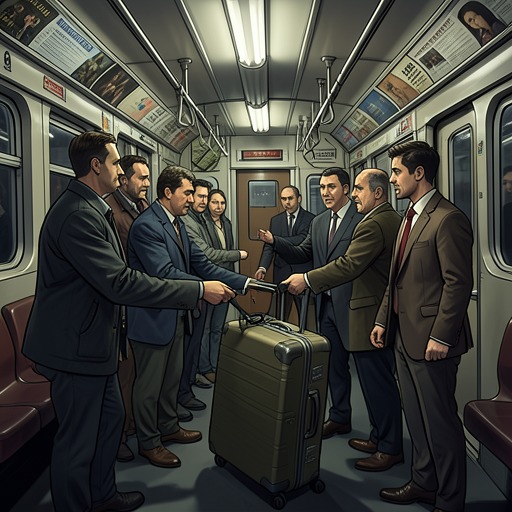
Aboard the train, Wolf again has the advantage in their immediate confrontation. As Nanao tries to keep matters from becoming a public scene, Wolf calls him Ladybug, a nickname used by people in their line of work to belittle him as weak and insignificant. Nanao dislikes the insult, even though he personally likes ladybugs and associates the seven-spotted kind with possible good luck. The distinction matters: the name itself is not repellent to him; Wolf’s use of it turns it into a deliberate taunt. Wolf then draws a knife, intensifying the danger and narrowing Nanao’s options.
Death Aboard the Train
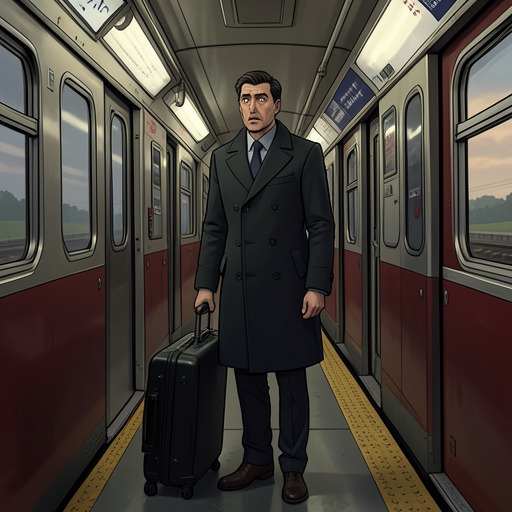
Nanao tries to defuse the encounter and proposes that they leave the train together at Omiya to discuss matters. He has already missed the chance to get off at Ueno, and he senses that this delay will make events go badly. During the ensuing physical struggle, the train’s movement disrupts their balance. Nanao tells Wolf to get up, then realizes that Wolf is unresponsive. The fall and the momentum of Nanao’s arm around Wolf’s head have caused a fatal injury. Nanao’s immediate denial cannot undo the accident: Wolf is dead, although Nanao had not set out to kill him.
The difference between intention and consequence defines Nanao’s response. He had already attacked Wolf once in the past, but the death aboard the train is not presented as a planned act of revenge. Nanao must instead confront the result of a struggle he meant to survive and contain. He gets to his feet and hauls Wolf’s body upright against himself, an awkward practical task that underscores the sudden transformation of an ongoing quarrel into the handling of a corpse.
The Corpse and the Train’s Mystery
Wolf’s death does not resolve the growing uncertainty around the other deaths on board. Later, Nanao tells Maria that there is a dead man on the train with no visible injuries and suggests that poison may have been involved. When Maria identifies Wolf as the man Nanao killed, Nanao corrects her: he means someone else. He cannot bring himself to tell her that the other victim is Minegishi’s son. Wolf’s death is therefore confirmed even as the possibility of another killing comes into focus.
The distinction also shapes Nanao’s view of the train. He mentally groups Wolf’s corpse with the bodies of Little Minegishi and the underworld figures Tangerine and Lemon, but insists that the train itself is not to blame. He attributes the accumulated trouble to his own bad luck. Wolf’s presence in that list makes him more than the victim of one isolated confrontation: his accidental death is part of the crowded sequence of criminal entanglements and deaths through which Nanao understands the journey.
Narrative Role
Wolf’s boasts, petty violence, and use of a humiliating nickname establish the personal stakes of his meeting with Nanao before the accident changes its meaning. He is neither shown as the master assassin he claims to be nor reduced to an anonymous body; the remembered incident with the children gives Nanao a concrete reason to despise him, while their final struggle leaves Nanao responsible for an outcome he did not intend. His death also creates a useful but misleading answer to the train’s mystery: Maria can correctly connect Nanao to Wolf’s death, yet Nanao is speaking about a different, possibly poisoned victim. The episode thus binds a personal accident to the larger uncertainty surrounding the deaths aboard the train.