
Butcher’s Crossing Loses Its Purpose
Butcher's CrossingThis flow traces the settlement’s shift from a growing hide-trading outpost to a place emptied by market change, abandonment, and the destruction of the trade that once sustained it.
increasing Bearing strength in each event
 decreasing
Bearing strength in each eventdecreasingA Frontier Outpost
A Village Built Around Trade
A small settlement
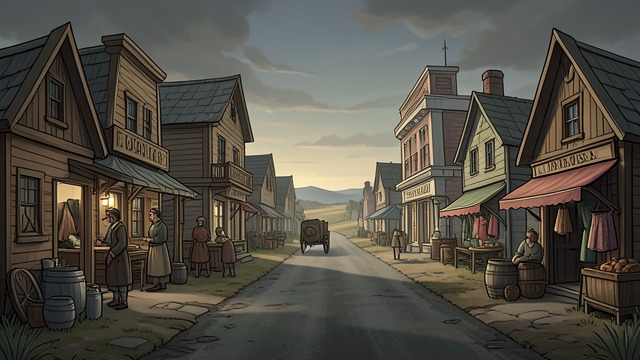
Will Andrews arrives at a sparse collection of wooden buildings, tents, and makeshift businesses. The saloon, hotel, barber, smithy, and cloth shop give the settlement a practical shape, while wagons and hunters fill the surrounding roads.
A town in expectation
J.D. McDonald tells Will Andrews that the village was only a few tents and a shack when he arrived, but that new businesses and the anticipated railway will make it grow. The promise of future development encourages merchants and newcomers to treat the frontier as an opportunity.
The settlement’s apparent vitality rests on a narrow foundation. Its buildings and routines are tied to hunting, the hide trade, and expectations about transport and expansion rather than to a stable community independent of those forces.
A Village of Hunters
Commerce Shapes Daily Life
Labor and profit
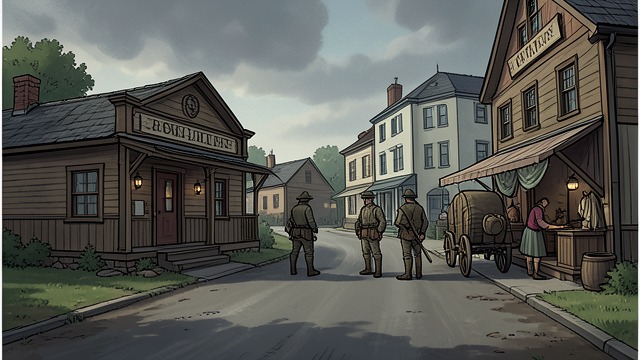
Miller explains that hunters bring in hides while J.D. McDonald buys and resells them, a division of labor that makes the settlement function. The arrangement gives the village an economic center, but also creates resentment between the hunters and the merchant who controls their access to buyers.
A temporary population
The saloon, hotel, and local businesses serve men who arrive, work, and leave again. Francine describes the quieter seasons when hunters are absent and expects the town to revive when they return.
Butcher’s Crossing is therefore lively without being secure. Its social world depends on repeated waves of hunting and trade, leaving the town vulnerable to the depletion of the bison and any change in demand for their hides.
The Railway Passes North
Progress Takes Another Route
Rails on the plain
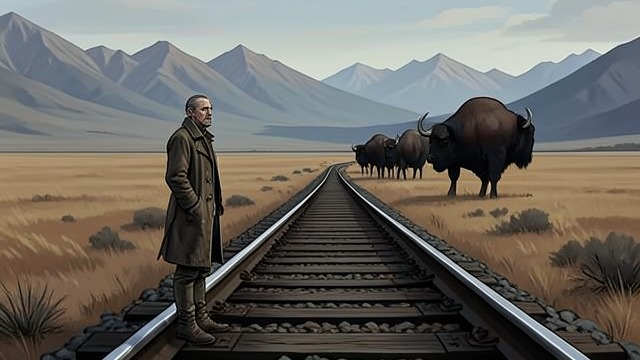
After many days crossing the plains, Will Andrews and Miller see railway tracks running toward the mountains. Miller is astonished that the railway has reached the region, having imagined it as a force that would bring growth to settlements such as Butcher’s Crossing.
An altered frontier
Fred Schneider responds that he has never seen a bison herd beside a railway, while Miller absorbs the sight in silence. The tracks reveal that commercial progress is real, but not necessarily aligned with the expectations that shaped the village’s future.
The railway’s route anticipates the settlement’s decline. Infrastructure advances across the landscape, yet it passes far from the hide economy and the particular ambitions that J.D. McDonald and other residents built around it.
A Nearly Empty Return
Familiar Buildings Without Business
A changed townscape
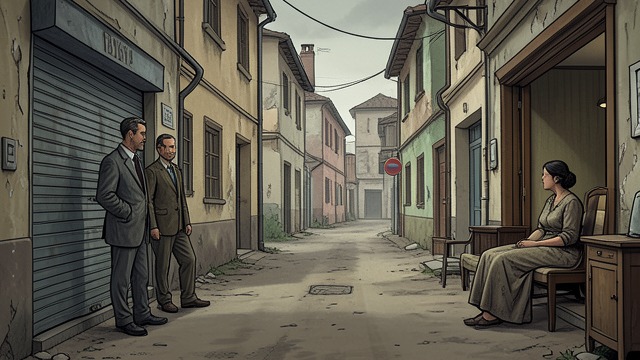
When Miller, Will Andrews, and Charley Hoge return, they find J.D. McDonald’s office neglected, the hotel dusty, and the streets almost empty. The new hotel keeper has arrived only recently and knows little about the people and businesses that defined the town before the expedition left.
The old economy fades
The saloon remains open, but its sparse customers and unfamiliar staff make it feel detached from the hunters’ earlier world. The bar’s workers speak of slow months and departed women, while the streets offer little sign of the bustling trade Will Andrews remembers.
The return makes the town’s decline visible without a single dramatic announcement. Butcher’s Crossing has not simply paused during the winter; the economic and social life that once made it recognizable has receded.
Ashes Beyond the Village
A Settlement at the Edge of Disappearance
The last spectacle
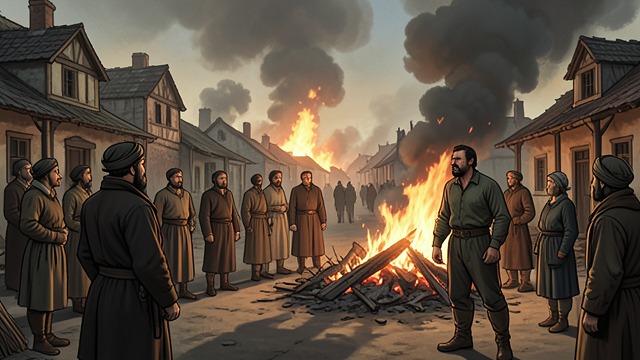
After Miller sets fire to J.D. McDonald’s stored hides and wagons, the villagers gather but do little beyond watching. The blaze illuminates the buildings and faces, turning the settlement’s commercial stock into an immense, temporary spectacle.
An uncertain future
By dawn, most observers have returned to the village, leaving Will Andrews beside the smoldering remains. He imagines the buildings being dismantled, the earthen huts weathering away, and grass gradually reclaiming the road.
The closing image reduces Butcher’s Crossing to a temporary mark on an immense landscape. Its disappearance is not certain in date or detail, but the trade that gave it purpose has been destroyed, and the remaining structures no longer promise a settled future.
When Will Andrews first reaches Butcher’s Crossing
During Will Andrews’s first weeks in town
During the party’s approach to the Colorado mountains
Late May, after the expedition comes back from the mountains
Before dawn after Miller burns the stored hides
