
Fred Schneider’s Independence and Death
Butcher's CrossingThis thread follows Fred Schneider’s insistence on practical limits, his isolation within the expedition, and his sudden death during the spring crossing that destroys the expedition’s remaining returns.
increasing Bearing strength in each event
 decreasing
Bearing strength in each eventdecreasingA Skilled Man Sets Terms
A Skilled Man Sets Terms
Experience against Miller’s promise
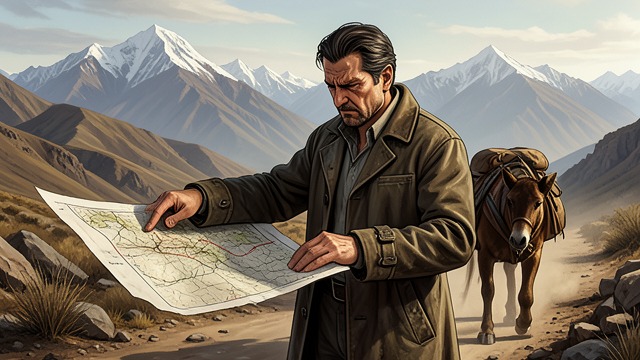
Schneider knows the dangers of a long journey into Colorado and doubts that Miller’s remembered herd still exists. He would rather hunt closer to Butcher’s Crossing than risk months away for an uncertain return.
A wage instead of a share
He eventually agrees to go, but refuses a percentage and demands sixty dollars per month. The arrangement reflects his preference for an assured payment over a speculative fortune, even as Miller insists the trip is worthwhile.
Schneider’s practical caution does not keep him out of the expedition. It gives him a bargaining position, but once the group departs he must still live under the authority of the man whose judgment he questions.
Guarding the Limits
Guarding the Limits
A warning ignored
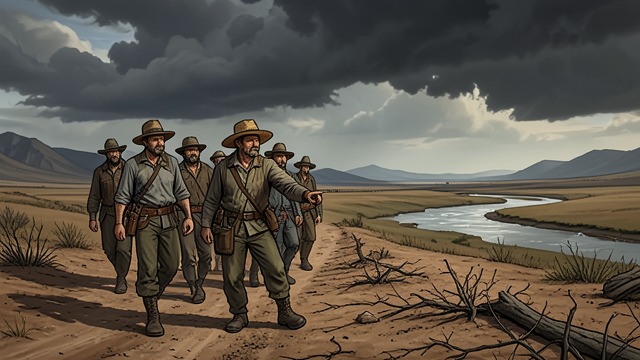
As the water dwindles, Schneider argues that Miller has lost his way and urges the party to turn south toward the Arkansas. He points to the dry ground and the absence of bison tracks as signs that the expected water may not be there.
Staying with the group
Miller argues that the animals cannot make the return journey without water. Schneider recognizes that the party is committed and eventually stays, even while continuing to make clear that the danger arose from Miller’s overconfidence.
His judgment is grounded in immediate survival rather than loyalty to the hunt’s promise. Yet his correct warnings cannot restore the water or give him an independent route through country he does not know.
Resentment in the Killing Ground
Resentment in the Killing Ground
Labor against excess
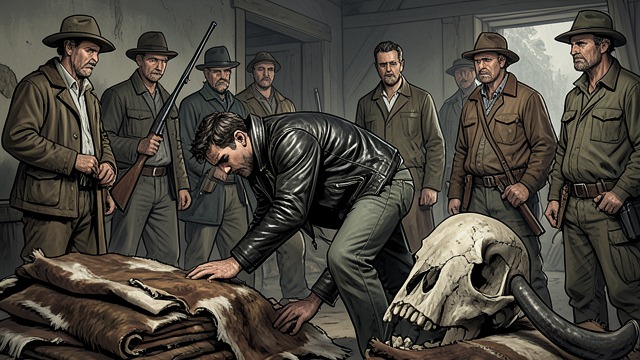
Schneider skins the bison Miller kills and repeatedly warns that the pace creates more carcasses than the crew can process. When Miller continues firing, Schneider is left to work longer and harder among hides that will soon stiffen.
Isolation as self-defense
He keeps his distance from the others, resents the demands of the hunt, and pushes back when Miller’s fixation threatens to consume the crew’s time and strength. His anger is sharpened by having accepted a wage for work that has become far more punishing than the original plan implied.
Schneider’s resistance identifies the expedition’s central imbalance: Miller controls the killing, while Schneider bears much of the immediate labor. But protest does not break the group’s dependence on Miller or end the slaughter.
A Separate Shelter
A Separate Shelter
Refusing dependence
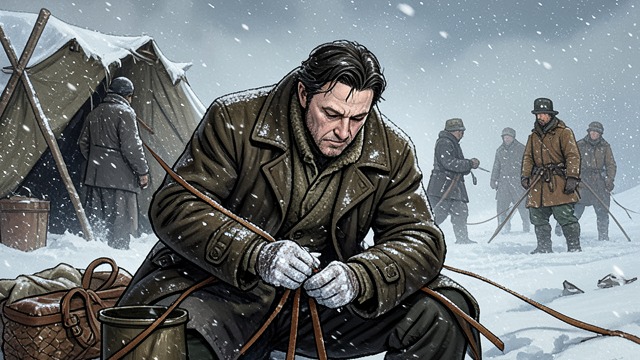
As the blizzard strips away the hide stacks, Miller constructs a shelter for Hoge and then another for Andrews and Schneider. Schneider refuses to enter the second shelter with Andrews, furious at the expedition and determined to make his own provision.
Survival on his own terms
He takes the remaining leather ties and builds a separate shelter, exposing himself to the storm rather than accept Miller’s help. When the survivors emerge, Schneider is found alive but blinded temporarily by the snow glare and suffering from frozen fingers and feet.
The decision expresses his fierce need to reclaim agency after months of being overruled. It also reveals the cost of that independence: he survives, but the isolation that protects his pride deepens his estrangement from the others.
The Spring Crossing
The Spring Crossing
A dangerous task refused
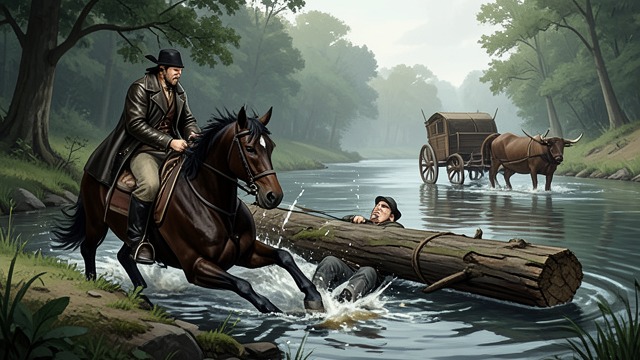
When the spring river has swollen with meltwater, Miller asks Schneider to ride beside the lead oxen during the crossing. Schneider refuses, saying that it is not his responsibility, and leaves Hoge to guide the animals while he crosses separately on horseback.
A sudden death
A large floating log strikes Schneider’s horse, opening its belly and overturning it. The animal falls on Schneider, and a hoof strikes his head; the river carries away Schneider, the wagon, the oxen, and the hides before the others can intervene.
His death is abrupt and indifferent to merit or argument. The man who repeatedly tried to calculate risk is killed by an accident at the moment the expedition appears close to returning, and his loss completes the destruction of the crew’s expected fortune.
Early in the story, when Miller asks Schneider to join the expedition
During the dry-plains crossing, when the party cannot find water
During the first weeks of the bison hunt in Bison Valley
During the first blizzard, after Schneider refuses to share Miller’s hide shelter
Near the ending, during the return journey across the swollen river
