
Miller and Schneider: Loyalty Under Strain
Butcher's CrossingThis flow traces the hard, practical bond between Miller and Schneider as shared experience and dependence give way to conflict, survival, and Schneider’s death.
increasing Bearing strength in each event
 decreasing
Bearing strength in each eventdecreasingAn Old Working Partnership
Familiarity and Skepticism
A History of Work
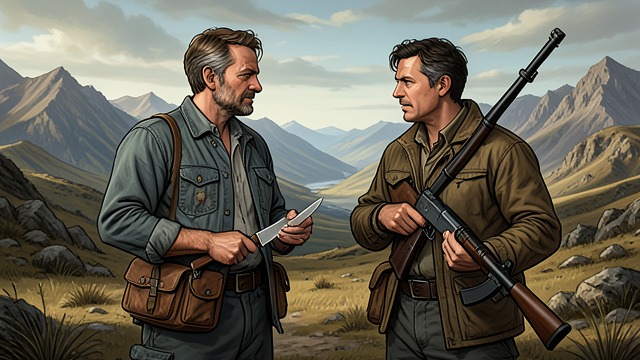
Miller identifies Schneider as a skilled hide skinner with whom he has worked before. Their ease is not warm or confessional, but each understands the other’s abilities and knows that a demanding expedition will require both.
Agreement After Bargaining
Schneider distrusts the plan to travel to the remote Colorado valley and initially prepares to leave. Miller persuades him with the promise of a large haul, and Schneider agrees to a fixed monthly wage rather than a share of the profits. Their partnership rests on competence and negotiated terms, not shared enthusiasm.
Following Miller into Risk
Loyalty Under Protest
Doubts About the Route
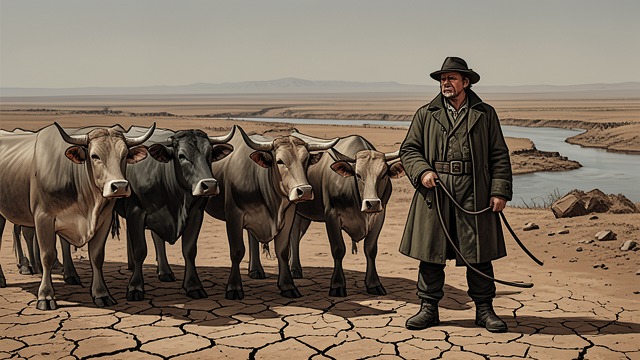
Schneider repeatedly questions Miller’s timetable and the risks of crossing country where water may be scarce. He warns that the oxen will tire and that the group may have trouble finding the route, but continues because he has already committed himself to the expedition.
A Necessary Dependence
When the party becomes lost and short of water, Schneider challenges Miller directly and proposes turning toward the Arkansas River. He nevertheless stays after recognizing that he does not know the country well enough to travel alone. His loyalty is reluctant, grounded in a hard assessment of survival rather than confidence in Miller’s judgment.
The Valley and the Growing Rift
Labor Against Obsession
Different Limits
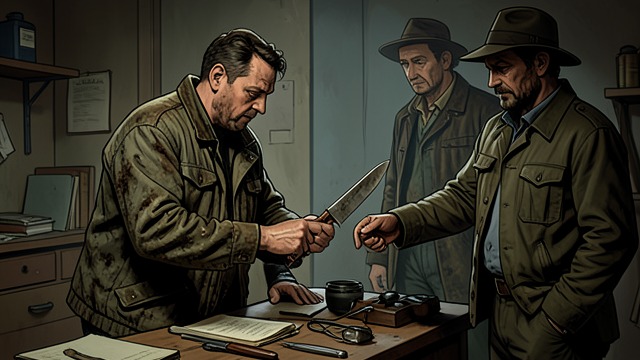
Schneider works beside Miller through the killing and skinning, but protests when Miller shoots more animals than the crew can process. He warns that the work will leave them with hides too stiff to handle, making clear that he sees the hunt as labor with human limits.
Remaining Despite Anger
Miller refuses to stop, and Schneider stays even as the days grow colder and the carcasses accumulate. Their shared dependence keeps them together, but their bond deteriorates: Schneider’s practical warnings are repeatedly subordinated to Miller’s determination to finish the herd.
Refusal in the Blizzard
Choosing Separation
A Last Act of Defiance
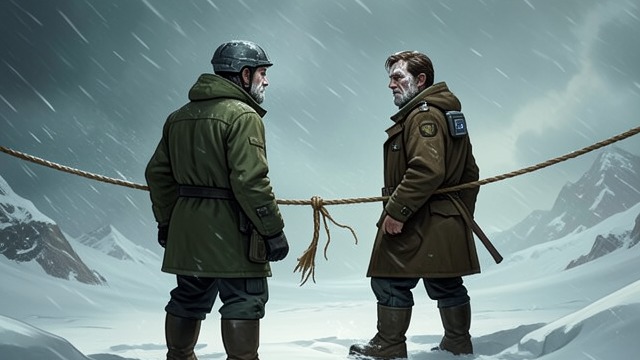
As the storm intensifies, Miller builds hide shelters and urges Schneider to share one with Andrews. Schneider refuses, accusing Miller of having repeatedly ignored his warnings and declaring that he will think only of himself.
Mutual Recognition Without Reconciliation
Miller argues that Schneider will die alone in the storm, but eventually gives him the remaining straps to build his own shelter. The gesture acknowledges Schneider’s autonomy without healing their anger. Each man turns away, forced to rely on his own judgment even while the storm makes survival a collective problem.
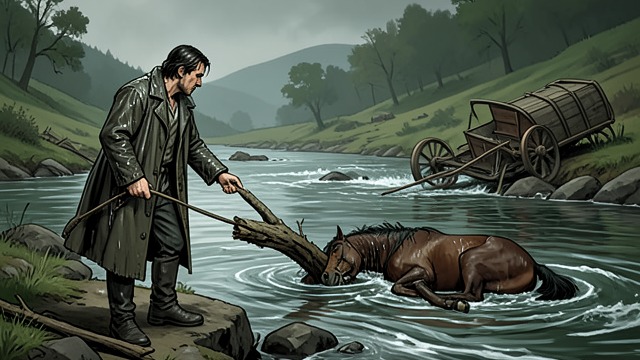
Death at the Spring Crossing
A Sudden Final Loss
The Crossing Turns Fatal
During the swollen spring crossing, a drifting log strikes Schneider’s horse. The animal falls and crushes him in the water; a second impact leaves him motionless as the current overturns the loaded wagon and sweeps away the hides and oxen.
A Practical Farewell
Andrews wants to search for Schneider, but Miller tells him that the force of the current makes rescue impossible. Miller’s response is controlled and decisive, while Andrews’s grief remains visible. Their different reactions expose how the expedition has trained one man to act and left the other unable to accept the loss.
The evening Andrews first meets Miller at Jackson’s Saloon
The expedition’s departure and its first days on the plains
The first weeks of the hunt in the Colorado valley
The opening hours of the two-day blizzard
The spring return journey, at the flooded river crossing
