
Charley Hoge’s Survival and Psychological Ruin
Butcher's CrossingThis thread traces Charley Hoge’s movement from a resourceful one-handed companion sustained by faith and whiskey to a survivor whose memories and sense of self fracture under the expedition’s violence and isolation.
increasing Bearing strength in each event
 decreasing
Bearing strength in each eventdecreasingThe Hand Lost to Winter
The Hand Lost to Winter
A dangerous injury
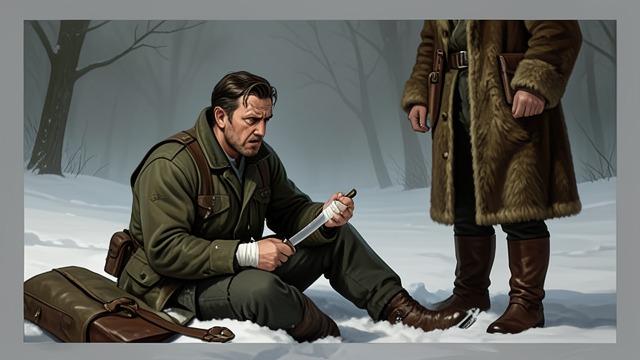
Hoge tells Andrews that he lost his right hand after a fall left it exposed to freezing weather during a blizzard. Miller found him, made shelter, and eventually convinced him that the dead, discolored hand had to be cut off.
An ordeal turned into story
Hoge recounts the amputation with humor and theatrical relish, even as the memory continues to produce physical trembling. His account makes clear that survival has already required pain, dependence on Miller, and an ability to turn terror into a tale.
The loss shapes his practical role on the later expedition: despite the missing hand, he is considered an excellent driver. His competence coexists with vulnerability that the others sometimes underestimate.
Faith and the Expedition
Faith and the Expedition
A damaged Bible as anchor
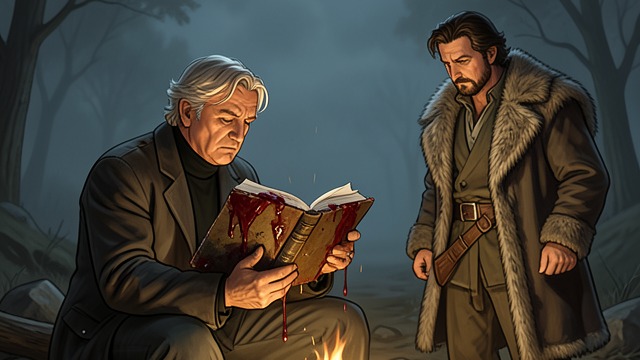
Hoge carries a battered Bible marked by bison blood and worries that the stain may be sacrilegious. He discusses scripture with Andrews, whose limited religious knowledge unsettles Hoge’s assumption that a minister’s son will share his faith.
Ritual amid hardship
On the trail, Hoge drives the oxen, prepares food, sings hymns, and reads by the campfire. These habits give daily travel a structure, while whiskey remains another repeated means of easing discomfort and fear.
His faith is neither an uncomplicated source of courage nor merely a joke. It is a framework he depends on, especially as the journey moves beyond familiar routes and the expedition’s control begins to fail.
Terror in the Blizzard
Terror in the Blizzard
A broken confidence
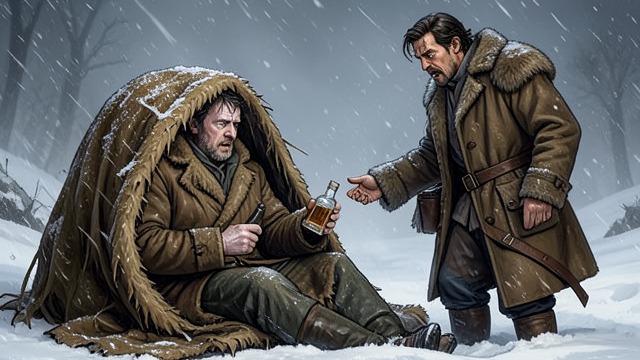
When snow arrives earlier than expected, Hoge is overwhelmed by Miller’s assurance that the expedition will finish before winter. He cries out that Miller promised they would be safe, and in the storm he appears unable to orient himself or respond steadily to others.
Dependent survival
During the two-day blizzard, Hoge is wrapped in a hide shelter and later has to be helped toward the fire. He repeats that Miller will get them out, clinging to the leader as a source of order even when that leader’s earlier decisions helped leave them trapped.
The storm exposes how fragile Hoge’s bravado has been. He survives physically, but his fear signals a psychological rupture that the eventual thaw will not undo.
Losing the Shared Past
Losing the Shared Past
A mind that cannot return
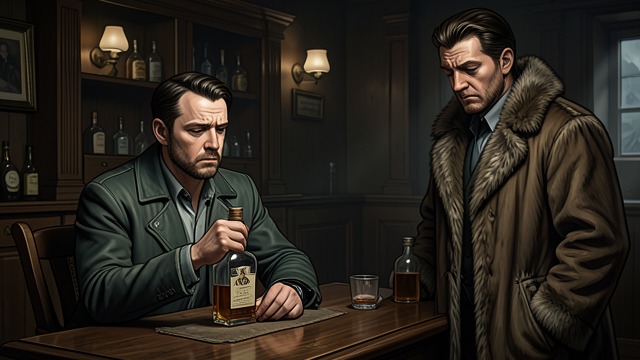
After the expedition’s return, Andrews finds Hoge alone with whiskey at Jackson’s Saloon. Hoge does not initially recognize him and speaks as if Miller is preparing a new bison hunt with a skinner named Schneider.
Faith as a substitute memory
When Andrews insists that Schneider is dead, Hoge denies that anyone dies and repeats that the Lord provides. His religious phrases now occupy the place of events he cannot recall, and his eyes seem to Andrews empty of recognition.
The man who once preserved the expedition’s routines through work, song, and scripture has lost access to the experience that gave those routines their context. His survival is therefore not a return to his former life but an unresolved form of psychological devastation.
Following Miller into the Night
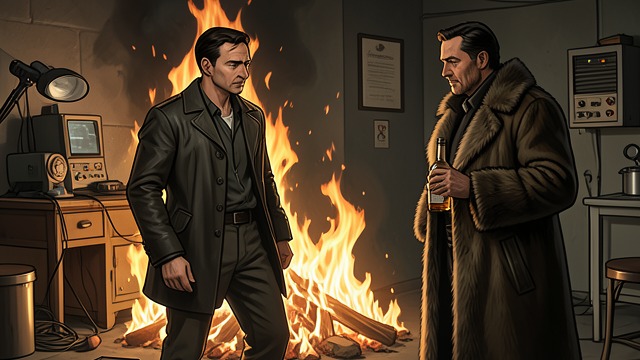
Following Miller into the Night
The fire’s spectacle
Hoge watches the burning hides with a fixed, frightened intensity and resists Andrews’s attempt to pull him away. He calls it Miller’s fire and seems to accept the blaze not as a practical act but as an overwhelming event that has claimed his attention.
A final attachment
When Miller rides out after destroying the hides, Hoge leaves the fire and follows him into the darkness. The choice echoes his dependence on Miller during earlier crises, though Hoge’s altered state makes it unclear whether he understands what he is choosing.
His last movement is away from the town and the people who knew his former self. The journey ends without recovery or explanation, leaving Hoge bound to the one surviving figure he continues to recognize as a guide.
Years before the expedition, during a winter trapping trip in Colorado
Before departure and during the first weeks on the plains
At the beginning of winter, when the first major blizzard strikes the valley
Near the end of the story, after the survivors return to Butcher’s Crossing
At the final scene in Butcher’s Crossing, after Miller burns the hides
