Fred Schneider
Butcher's CrossingFred Schneider is the expedition’s skilled skinner and the practical counterweight to Miller’s single-minded hunt. He joins the journey to Colorado on firm financial terms, works alongside William Andrews as the kill expands, and repeatedly presses to leave when the work and isolation become unbearable. After surviving a blizzard and a winter trapped in the valley, he dies in the spring river crossing: a log overturns his horse, which crushes him in the water.
Identity and Introduction
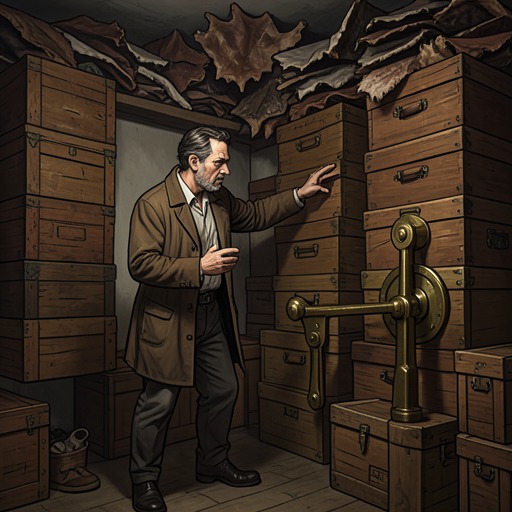
Charley Hoge identifies Schneider to William Andrews as the expedition’s skinner, a man who has worked with Miller before. Their first meeting confirms both his competence and his guarded manner. Schneider gives Andrews a quick, forceful handshake and little outward warmth; his alert, watchful bearing contrasts with his otherwise anonymous appearance. A small pistol rides high at his waist in a black leather holster, an early detail that returns during the winter, when he again carries it and handles it while talking to himself.
Schneider enters a trade already being depleted by its own success. Miller recalls that when he and J.D. McDonald arrived in Kansas four years earlier, the plains had been black with American bison, and a two-week hunt could yield a thousand or fifteen hundred hides. Now the animals travel in small herds, and a hunt may bring only two or three hundred. Miller predicts that Kansas will have nothing left to hunt within a year or two. Schneider’s work belongs to this changing economy: the hunt that employs him is both a source of income and part of the pressure that has emptied the plains.
Recruitment and Terms
When Miller returns to Butcher’s Crossing with Schneider, he recruits Andrews into the party and introduces the destination as the mountains in Colorado. Schneider recognizes the place and initially intends to return to Ellsworth the next morning. Miller’s proposed expedition changes that decision, but Schneider will not accept a share of uncertain profits. He demands a fixed sixty dollars a month, from the day they leave until they return, fifteen dollars more than the usual rate. Miller has called him the best and offered a percentage; Schneider answers that the destination is difficult and insists on being paid for the risk whether or not the venture succeeds.
His terms establish a distinction that structures the expedition’s conflicts. Miller treats the hunt as a project whose endpoint he controls; Schneider treats it as dangerous labor for which he expects compensation. Miller agrees, and assigns Andrews to help him. When Schneider asks whether Andrews has ever skinned an animal, Andrews says no, and Schneider’s mocking grin leaves the new assistant acutely self-conscious. The arrangement places Schneider in charge of the processing work while ensuring that Andrews must learn through its exhausting repetition.
Work and Conflict in the Valley
Schneider’s practical skepticism appears before the hunt begins in earnest. On the dry crossing, he asks Miller directly whether he knows where water is. Miller points to a remembered pile of stones and estimates that they will reach a stream after another half-day. Schneider responds by asking where they are, with a gentleness that makes the challenge more pointed rather than less. His questions expose the expedition’s dependence on Miller’s memory and judgment.
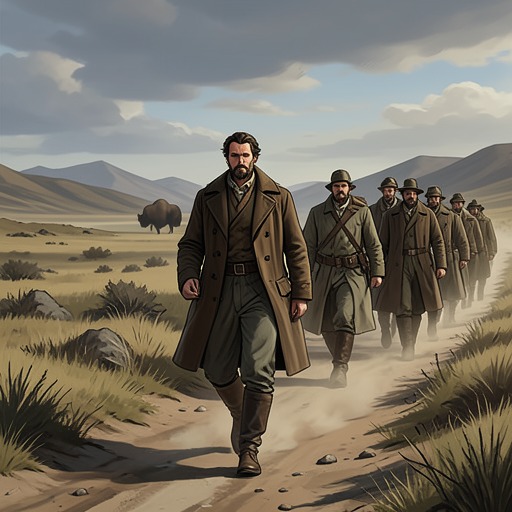
Once the party reaches the herd, Miller tells Schneider to wait while he and Andrews circle around to improve their position. Schneider drops prone and watches the animals. His role is not only to process carcasses after the shooting: he is part of the hunting party’s cautious approach, attentive to the herd and the terrain. But his central labor begins after the firing. When Miller counts 135 animals killed, Schneider accepts the number with visible dismay, gathers his skinning knives, and tells Andrews that they face a long afternoon and night. He asks Miller to help; Miller stands staring at the dead animals, apparently detached, and takes a moment to understand the request.
The workload becomes a conflict in its own right. Schneider and Andrews skin and butcher at an increasingly desperate pace, often failing to finish before dark and rising before dawn to work on stiff carcasses. Miller’s rifle continues its regular, relentless report while they labor. Schneider has to keep up with the animals Miller leaves behind, while the sounds of the hunt wear on both workers. The number of hides accumulates faster than their ability to process them, turning Miller’s success into Schneider’s punishing routine.
After two weeks, Schneider makes the case for departure: the hunt has gone well, they have more hides than they can load, and they have already stayed four days beyond the expected schedule. He wants fresh vegetables, potatoes, and a woman, but beneath these demands is a practical conclusion: they should leave the next day. He adds that Charley Hoge is ready to go. Miller reacts as if he cannot recognize the seriousness of the request. Schneider, unlike Miller, counts the days and measures the expedition by the limits of its people and supplies. Andrews gradually understands that Miller will not leave while even one American bison remains alive. The shrinking herd, not the calendar, governs Miller’s sense of when the work is finished.
The Blizzard and Winter Isolation
Schneider’s attention to danger becomes especially clear when he listens, smells the air, and calmly tells Miller that they should move. He cannot identify what is wrong, only that something does not seem right. Later, when the blizzard traps the party and Miller urges him into shelter, Schneider refuses. Snow and ice cover him; he remains outside despite Miller warning that he will freeze. When he finally emerges from beneath the snow, he has wrapped himself in American bison hides like a mummy. He throws them off with his eyes squeezed shut and says that the light is so intense he cannot see. He has survived the storm, but the scene leaves his body visibly exposed to the conditions that have imprisoned them.
Miller tells Andrews and Schneider that they must stay until the pass they entered through is clear. Three or four weeks of good weather will be needed, he says, but such weather will not come before the end of winter. Schneider’s complaints gradually lose force and then stop. He sleeps in the hide shelter with the others but spends more and more time alone, speaking to his companions only when addressed. While Miller is away hunting, Schneider often leaves camp and does not return until late afternoon, without explaining where he has been.
His withdrawal takes on a disturbing form when he begins speaking to himself as if addressing a woman. Andrews once hears him murmuring and retreats, embarrassed and frightened. Schneider turns toward him, but his eyes seem vacant and unfocused. He carries the small pistol he had worn in Butcher’s Crossing, and when he mutters to himself his hand sometimes moves to its grip. Andrews sees him as a man retreating behind solitude, moving heavily through the snow and looking through the narrow slits of an American bison-hide mask as though the snow were alive and something he might eventually escape. The mask protects his eyes from the glare but also makes his separation from the other men visible.
Death and Significance
Schneider survives the winter confinement, but the return journey ends in the river. During the crossing, William Andrews spots a large, splintered trunk racing downstream and shouts a warning. Schneider, on horseback, turns toward the faint voice but cannot hear it over the river. The log strikes the horse’s side. The animal struggles, then falls toward the wagon, throwing Schneider into the water and rolling onto him. Its torn belly colors the current red. Schneider surfaces briefly among the horse’s legs and reaches out as if to push the animal away; a hind hoof strikes him in the head. His body stiffens, blood runs over his face, and he sinks beside the horse.
The accident occurs amid the wider disaster of the crossing. The log and horse strike the wagon, drive it against the rocks, and help overturn it; the current also sweeps through the rear of the train. Schneider’s death is later confirmed when Miller and the survivors reach J.D. McDonald. Asked where the skinner is, Miller answers that Schneider is dead and drowned during the return crossing. The plainness of the report contrasts with the brief, brutal confusion of the death itself: the river gives no opportunity for a final reckoning, only a warning unheard, an impact, and a body disappearing into the water.
Schneider’s arc makes the expedition’s cost legible at the level of labor and bodily survival. He is not driven by Miller’s fixation on killing the entire herd; he bargains for wages, notices the strain of the work, challenges the uncertain route, and argues that the party already has enough hides. His practical limits cannot redirect Miller, and his caution cannot master the river. After his death, McDonald observes that hunters are selling American bison meat to the railroad while leaving the hides to rot where they were skinned. That shift underscores the waste surrounding the enterprise Schneider served: his dangerous labor helped produce hides whose value has collapsed, while the slaughter continues to supply a different market. He dies on the return from a hunt whose apparent success has already lost its promised meaning.