J.D. McDonald
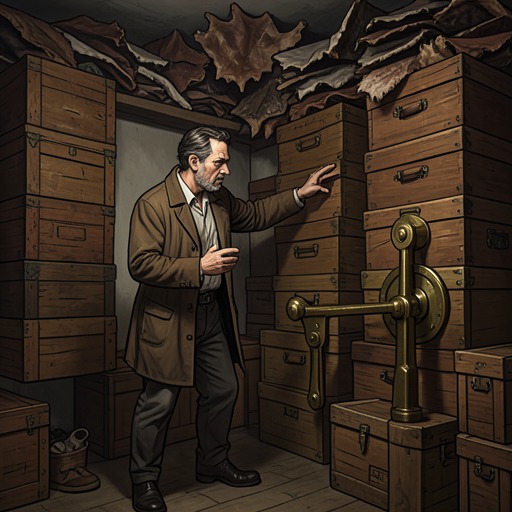
Butcher's CrossingJ.D. McDonald is a hide trader in Butcher’s Crossing whose rise and ruin trace the precarious trade built around the slaughter of bison. He buys the hunters’ hides, processes and resells them, and believes the town’s future is tied to expanding commerce and the coming railroad. But the business depends not only on what hunters can kill and transport; it also depends on distant buyers continuing to want the hides. When that demand vanishes, McDonald’s confidence cannot protect either his enterprise or the men who have staked their labor on it.
Identity and Commercial Rise
When William Andrews arrives in town, the hotel porter identifies McDonald as the well-known trader in hides and directs him to an office near the salt vats. McDonald initially fails to recognize the young visitor, but the letter from William’s father, Benjamin Andrews, revives his memory of visits to the family home in Boston before the Civil War. The recognition establishes McDonald’s connection to William’s earlier life: years before, he had known the family socially, and he now treats the father’s letter as an obligation to help the son.
McDonald says he left his former employer four or five years earlier and now runs a business on his own. Its work is both commercial and hands-on: he buys raw bison hides from hunters, tans them himself, and sells them wholesale to Saint Louis. He reports processing nearly one hundred thousand hides the previous year and expects two or three times as many in the current one. The figures express the scale of the boom, while his overflowing paperwork shows the strain of trying to manage it alone. He offers William work with the records, presenting the job as an entry point into a trade with money to be made.
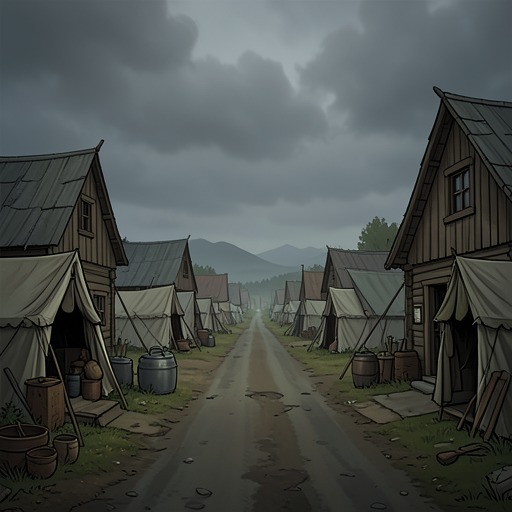
McDonald’s faith in growth extends beyond his own books. He takes William outside and contrasts the sparse settlement he found a year earlier—three tents, a shack, a saloon, a brothel, a general store, and a blacksmith—with the busier village before them. He predicts that it will prosper within two or three years, points to hides already stored in his warehouse, and expects to bring back more stock from Kansas City. The railroad is central to his forecast: he believes that when it reaches the settlement, the place will become a real town. He also urges William to claim land through a filing at the land office and wait for its value to rise. His confidence is practical and speculative at once, grounded in present trade but dependent on a future that has not yet arrived.
The Trade and Its Vanishing Supply
McDonald’s business connected the killing grounds to distant buyers, but the arrangement divided risk and reward unevenly. Miller describes McDonald as sending thirty or forty hunting parties across the country and paying fifty cents a head for raw summer hides, which were thin and worth less than winter pelts. The hunters supplied the labor and endured the seasons between expeditions; under the terms Miller describes, they could be lucky to make it through the winter. Miller rejects that system, saying that he hunts for himself or not at all. His account reveals the commercial structure behind McDonald’s expanding trade: a large flow of hides depended on dispersed hunters, while the trader controlled their purchase and wholesale sale.
The supply on which that trade depended was already shrinking. Miller recalls arriving in the same year as McDonald, when the spring plains had been black with bison as far as the eye could reach. Two weeks of hunting could then yield a thousand or fifteen hundred animals and good spring hides. By the time he speaks with William Andrews, the herds have broken into small groups, and a successful hunt may bring only two or three hundred. Miller expects Kansas to be hunted out within another year or two. His recollection places McDonald’s business boom against an accelerating ecological collapse: the rising volume he anticipates is not evidence of abundance restored, but the commercial harvest of a resource being exhausted.
The remains of that harvest make the change visible on the ground. Miller points to a bison skeleton estimated at two thousand pounds and remembers when piles of bones stretched from Pawnee Fork to the end of Smoky Hill, a landscape produced by the great Kansas hunts. He foresees that a farmer may later collect the bones for fertilizer, though he doubts they will do much good. The bones had once served many purposes: Miller describes Indigenous uses ranging from needles and knives to arrow points, ornaments, toys, and combs. His response to the prospect of their reduction to fertilizer exposes a contrast between varied uses of the animal and the hide trade’s narrow focus on saleable pelts. The carcasses and bones are the material remainder of a business whose apparent growth conceals the depletion on which it rests.
McDonald’s dealings with Miller bring that commodity chain into the expedition itself. The men have not yet settled the terms when Miller proposes the hunt, but he later tells the party that McDonald will buy their hides so they will not have to haul them to Ellsworth. The offer is four dollars apiece for winter hides, with a buyer already arranged in the East. McDonald’s role is therefore more than that of a local shopkeeper: he provides a promised route from remote hunting grounds to an eastern market, and his price helps make the arduous expedition seem financially worthwhile. The agreement binds the hunters’ labor and transport to demand they cannot directly control.
The Broken Agreement and the Collapse of His Business
When Miller, Will Andrews, and Charley Hoge return, J.D. McDonald first reacts as if men risen from the dead. He had apparently believed them lost, and his hands tremble as he grips Will Andrews’s arms. Miller, however, has not come back empty-handed: he says that three thousand first-rate winter hides are waiting in the mountains, worth more than ten thousand dollars even after the hunters pay to transport them. He expects J.D. McDonald to honor their agreement of four dollars per hide, a price established when J.D. McDonald promised to buy the expedition’s pelts and already had an eastern buyer.
J.D. McDonald admits that the agreement was real but refuses to pay. The market has collapsed, he explains: buyers who wanted bison fur have already bought what they wanted, and no one wants more. He compares the sudden loss of demand to the decline of beaver pelts after beaver hats went out of fashion, stressing how little a trader can know about the shifts in distant consumers’ tastes. A new use for bison hides might emerge in four or five years, he allows, but by then winter hides could be worth no more than summer ones—thirty or forty cents apiece. The three thousand pelts remain substantial as physical goods, yet the market that once made them valuable has disappeared.
The delay has made the failure personal as well as commercial. J.D. McDonald tells Miller he is seven months too late: had the hunters returned on schedule, the money would still have been available, and their sale would have helped bring about J.D. McDonald’s ruin. Miller insists that one year should not have changed everything, but J.D. McDonald points to the signs of a transformation already under way. The railroad is coming, yet its tracks will pass fifty miles north of the settlement. Hunters now sell bison meat to the railway company while leaving the hides to rot where they were stripped from the carcasses. The new market rewards a part of the animal Miller’s expedition left behind, while the pelts they labored to preserve have lost their buyers.
J.D. McDonald’s earlier confidence in the railroad and the settlement’s future thus turns inside out. He offers Miller land, but warns that keeping it will require learning to farm the desert; the promise of rising value has become a liability to be surrendered. As Miller rejects the news and accuses him of lying, J.D. McDonald maintains that there is no money to pay and no way to draw water from stone. His commercial failure is not simply a matter of poor bookkeeping or a broken personal promise: the trade’s distant demand has vanished, and the railroad’s arrival does not rescue the local economy he had imagined.
In the aftermath, the dispute becomes a grotesque physical pursuit across an ash-covered field. J.D. McDonald rushes at Miller with raised fists, but Miller, still mounted, waits until he is close and then repeatedly evades him; for several minutes J.D. McDonald strikes only empty air. At last he stops, lowers his arms, and returns to Will Andrews and Charley Hoge with soot on his face and an eyebrow singed by a flying ember. When Will Andrews tells him that he seems to have lost his mind, J.D. McDonald agrees. The scene reduces the former promoter of expansion to a man chasing an opponent he cannot catch, amid the remains of the wealth his trade promised.
An Old Acquaintance from Boston
McDonald’s connection to William Andrews begins as a failure of recognition. He scrutinizes the young visitor but cannot place him until William presents a letter from Benjamin Andrews. The name Boston gradually restores a memory of visiting the Andrews family before the Civil War: McDonald recalls taking tea in their parlor twelve or fourteen years earlier, though he admits he may have seen William without remembering him. He recognizes Benjamin as a preacher and reads the letter carefully before setting it aside among his papers.
The reunion is therefore built on an uneven memory: Benjamin’s son arrives carrying a family connection that McDonald can retrieve only after prompting. That connection becomes a practical obligation when McDonald accepts the letter’s request to help William, even though William’s reasons for coming west are not what McDonald first assumes. The old social acquaintance links Boston to the frontier, but it cannot reconcile the different futures the two men have pursued.