
Miller and Schneider Contest the Expedition’s Direction
Butcher's CrossingThis flow follows the contest between Miller’s command of the expedition and Schneider’s insistence on practical limits, from the choice to join the hunt to their uneasy dependence during the trapped winter.
increasing Bearing strength in each event
 decreasing
Bearing strength in each eventdecreasingThe Reluctant Skinner
The Reluctant Skinner
A Risky Destination
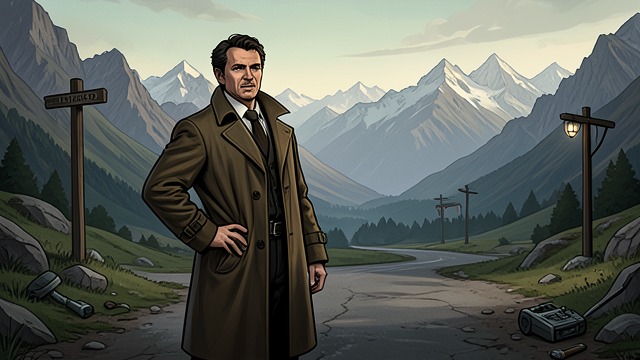
When Miller tells Schneider the party is going to Colorado rather than hunting nearby, Schneider questions the need to cross so much country. He knows the expedition is risky, especially because Miller has not visited the supposed herd in years, and says he will return to Ellsworth rather than proceed on trust alone.
Terms of Agreement
Miller argues that the distant herd could yield far more valuable winter hides, and he pressures Schneider by emphasizing the size of the possible return. Schneider eventually agrees, but refuses a share of the profits and demands a fixed monthly wage. His decision allows the expedition to proceed while establishing a continuing tension over who bears the risk and who controls the work.
The Route Beyond Smoky Hill
The Route Beyond Smoky Hill
Schneider Questions the Crossing
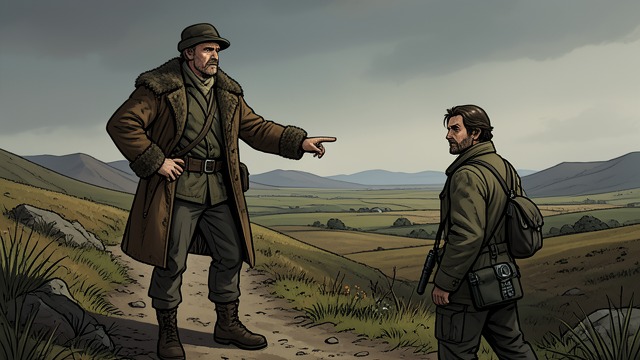
At the end of the Smoky Hill Trail, Miller proposes cutting across open country instead of following the river toward the Arkansas. Schneider objects that an unfamiliar dry route could leave the animals without water, while Andrews admits he cannot judge the terrain for himself.
Miller Keeps the Lead
Miller insists he knows where water can be found and frames the detour as a matter of experience rather than negotiation. Schneider follows, but his compliance is conditional and wary. The disagreement establishes a pattern: Miller claims authority through knowledge of the country, while Schneider measures that authority against immediate risks to the party and its animals.
The Water Dispute
The Water Dispute
A Mistaken Route
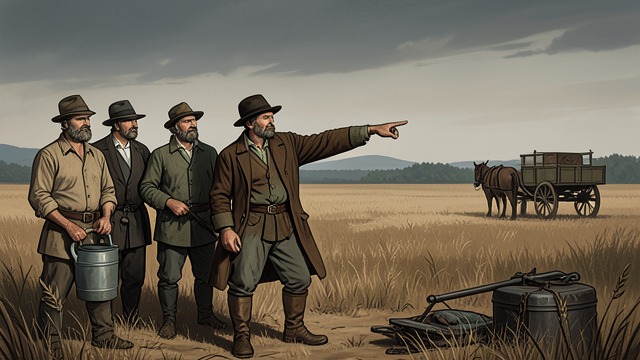
As the water runs low and the cattle weaken, Schneider tells Miller that the party is lost and urges him to turn south toward reliable water. Miller refuses, insisting that a remembered landmark will lead them to a stream. The shortage gives Schneider’s earlier doubts new urgency, while Miller’s confidence becomes increasingly difficult to separate from the danger of continuing.
Authority Under Pressure
When Miller explains that the party can no longer return to the Smoky Hill River with the animals in their present condition, Schneider challenges his leadership directly. Andrews chooses to keep following Miller, leaving Schneider outnumbered but not convinced. Miller’s decision to ration water and wet the animals’ mouths rather than abandon the expedition preserves the group, but it does not repair trust.
The Hunt Becomes a Quarrel
The Hunt Becomes a Quarrel
Too Many Carcasses
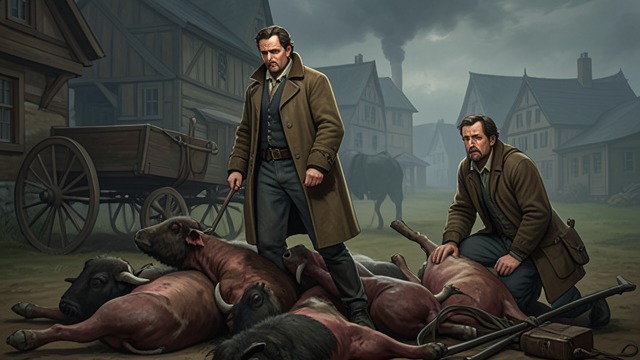
After Miller kills 135 bison in a single day, Schneider warns that the party cannot skin so many animals before their hides and bodies become difficult to work. He asks Miller to stop, pointing out that Andrews is inexperienced and that the dead animals already guarantee a long night of labor.
Miller’s Command
Miller refuses to slow down and orders Schneider to skin every animal, even if that means working through the night. Schneider protests but ultimately follows the order, while Andrews struggles to learn the work beside him. The dispute reveals the widening gulf between Miller’s expanding ambition and Schneider’s practical sense of capacity; the expedition’s success is measured in kills, while its cost falls on the men who must process them.
No Road Home
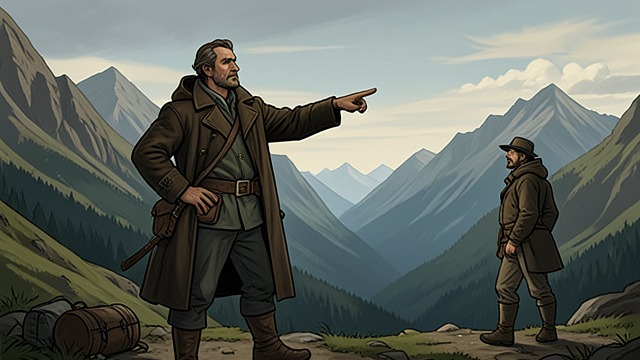
No Road Home
Schneider’s Attempt to Leave
After the blizzard blocks the mountain pass, Schneider insists he will find a way back on his own. Miller explains the dangers of crossing the mountains through deep snow and refuses to provide a route, arguing that Schneider would probably die alone and that the remaining party needs his labor to move the wagon and hides later.
Reluctant Dependence
Schneider accuses Miller of denying him a real choice, then stays when he sees no safe alternative. His anger does not disappear; it becomes a quieter hostility that shapes life in the shelter. Miller has retained command, but the winter exposes the limits of command: survival requires the cooperation of a man who no longer trusts him.
The evening Miller returns from Ellsworth
The sixth day of the westward journey
The second day on the arid plains
The first afternoon of the hunt in the valley
The first days after the two-day blizzard
