The two-day blizzard
Butcher's CrossingThe two-day blizzard traps the hunting party beneath deep snow on a mountain plateau, making the hides gathered during their hunt both the material of their work and the barrier between their bodies and the storm. Its force is measured not only in the blocked pass and buried camp, but in the narrowed world it imposes on William Andrews: for days, he lies in darkness with his thoughts and senses reduced to warmth, breath, and the faint possibility of daylight.
Causes and Exposure
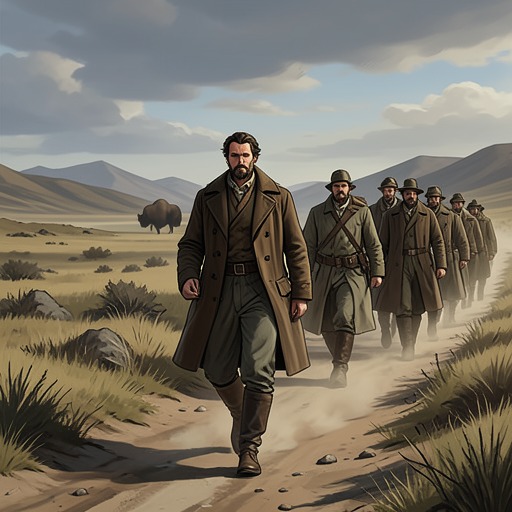
Before the storm, the expedition had already crossed exposed country under difficult conditions. On the plains, the oxen’s persistent complaints about water had awakened William Andrews repeatedly; Miller then emptied the men’s remaining water into a wooden keg, leaving about four inches. The party eventually reached the foothills and followed a creek toward the mountains, but once in the valley the work of the hunt gathered its own momentum. Fred Schneider and William Andrews struggled to keep pace with Miller’s shooting and the carcasses accumulating for them to skin.
The hunt had also altered the landscape around them. William Andrews saw the herd diminish among the bodies, and understood that Miller would not leave while a single bison remained alive. The blizzard is not presented as a consequence of that slaughter, but it overtakes men who are already exhausted by the hunt and far from the world they had crossed to reach the valley. Their immediate shelter is made from bison hides, a practical refuge fashioned from the animals whose killing has occupied their days.
First Snow and Burial
The first flakes fall while the men are together in the high country. Fred Schneider points toward the falling snow; William Andrews initially responds with laughter, but stops when he sees that Miller and Schneider are staring tensely at the darkening sky. Charley Hoge sits rigidly on the wagon seat, his face turned upward and his arms drawn against his chest. The sudden shift from an ordinary evening to alarm is registered in their stillness before the full force of the weather arrives.
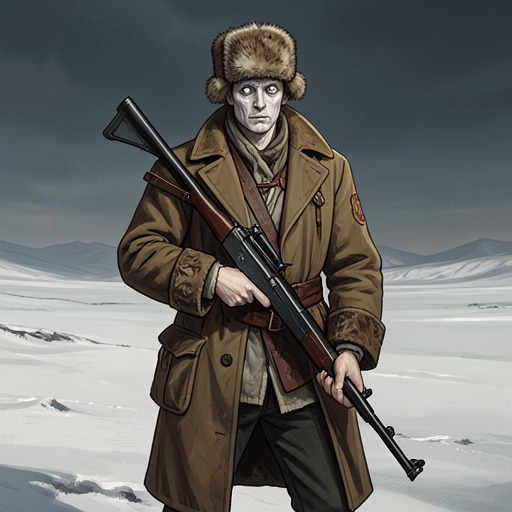
For two days and three nights, the blizzard roars over the plateau. The men lie under the snow, emerging only occasionally for relief or to dig holes that admit fresh air into their cramped shelters of hides. William Andrews has to crawl outside to urinate after holding on until pain pulses through his groin and upper thighs. In the darkness, he cannot see where he is going; unwilling to venture away from the shelter, he urinates where he has emerged and then struggles back into the little pocket of warmth his body has left behind.
The Storm Inside the Shelter
Most of the time William Andrews sleeps or lies curled on his side with his knees drawn toward his chest. When awake, he feels his thoughts moving as slowly and indistinctly as his blood. Memories of his comfortable home in Boston surface only as sensations: a soft feather bed, the shadowed ease of a sitting room, and the muted sound of conversation downstairs. These fragments do not restore the life he has left; under the hides and snow, that life feels remote and unreal.
Francine, too, comes to him less as a clearly pictured person than as flesh, softness, and warmth. In his weakened, half-dreaming state, he thinks of her as a part of himself that he had once put away, and imagines sinking toward that remembered warmth without understanding why. The scene makes the storm’s confinement intimate as well as physical: with the wider world unavailable, William Andrews’s consciousness contracts to bodily need and broken recollection.
Emergence and the Blocked Pass
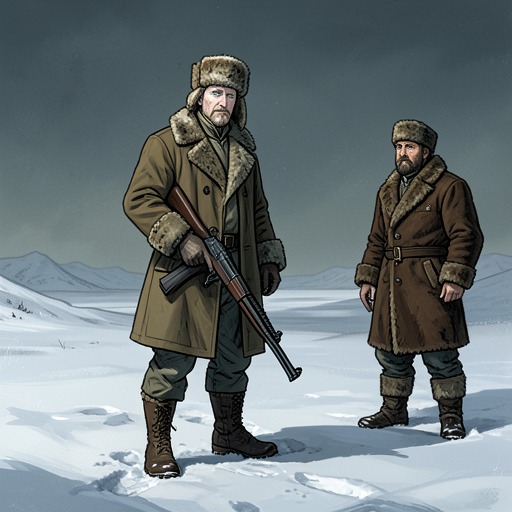
On the morning of the third day, William Andrews digs upward through the snow above his shelter. The daylight strikes his eyes with such force that he has to use melting snow to soothe them before he can look around. The familiar valley has become unfamiliar: the snow rounds its slopes into wave-like forms, covers the scattered pines almost to their tips, and conceals the mountain’s green. Snow reaches his waist as he struggles a few steps from the shelter. In the quiet, his own breathing seems overwhelming; he hears a branch break under the weight and a horse snort from the distant enclosure.
He calls out and listens as his voice dwindles across the snow. When he turns toward the drifts where Miller and Charley Hoge remain buried, he sees no movement and is seized by fear. Then the snow above Miller shifts and splits. Miller’s head appears, followed by his arms as he sweeps the snow away and rises, blinking furiously. His first concern is whether William Andrews is all right. Charley Hoge is still beneath the snow at this point; the scene does not establish his condition beyond his continued burial.
The storm’s end does not mean the party can leave. After riding out to assess the route, Miller returns almost two hours later with the report that the pass is blocked. He had to turn back half a mile short of it, where the snow was about twelve feet deep and appeared even worse farther on. The blizzard has therefore changed the immediate problem from surviving the storm to enduring the isolation it has enforced.
Significance
The episode makes the expedition’s dependence on the landscape unmistakable. The men can shelter in the hides and dig air holes, but neither their labor nor their hunting skill can clear the pass. The valley that William Andrews had come to experience as the defining place of his life becomes, beneath the snow, a sealed world from which ordinary movement and even clear memory are temporarily cut off.
The storm also gives the expedition’s materials a stark reversal of use. Bison hides taken in the hunt keep the men alive, while the snow buries the camp and makes those improvised shelters necessary. When daylight returns, it does not restore the previous landscape: it reveals a white, altered valley and a route still impassable. Survival is real, but release remains beyond the party’s control.