Bridal Shop
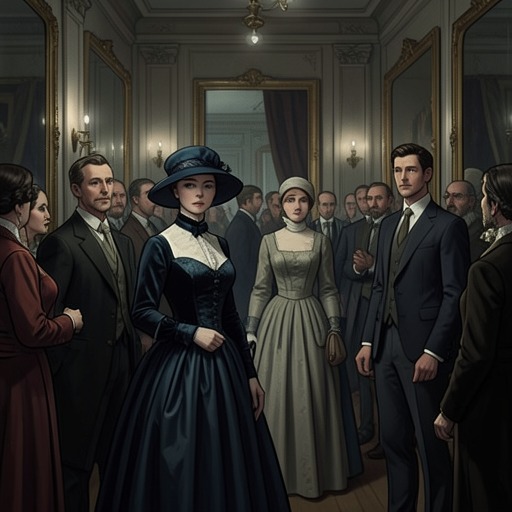
CEO's Beloved Honey GirlThe Bridal Shop is more than a retail setting for Su Xiangwan’s wedding clothes. It is where the promise of marriage becomes a visible object, where Su Xiangwan discovers that the title of Mrs. Lu can feel like a shackle, and where Lu Xun’s authority collides with Lin Yanche and Song Yun’er’s public intimacy. The shop concentrates the book’s tensions between appearance and consent, luxury and personal taste, marital status and emotional security.
Definition and Setting
The Bridal Shop enters the story through an unexpected telephone call. An employee asks whether the woman answering is Mrs. Lu, and Su Xiangwan confirms that she is. The formal address initially sounds glorious, but its effect is immediately double-edged: the title carries social prestige while also reminding her that marriage has become a role imposed upon her. She drives to the shop with that contradiction already active, approaching a place intended to celebrate her marriage while feeling the weight of the identity attached to it.
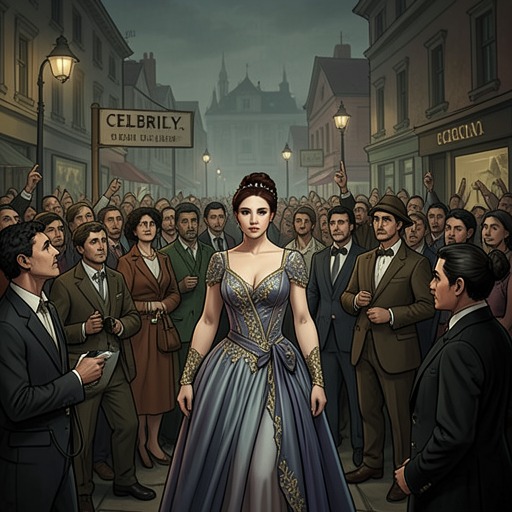
Inside, the shop displays an extravagant and exaggerated wedding dress. Su Xiangwan’s reaction is not delight but dimmed eyes and clear dislike. The dress appears designed according to Lu Xun’s idea of what would be worthy of his wife, not according to her own preferences. The Bridal Shop therefore makes the power structure of the marriage tangible. The garment is ostensibly hers, yet its scale and style express his expectations; it is a beautiful object that exposes how little room she has been given to choose.
The Wedding Dress and Its Conflicting Meanings
The dress becomes a contested object before Su Xiangwan can claim it as her own. While she is away, the shop calls to say that another customer has taken a fancy to it and asks whether she wishes to sell it. Su Xiangwan rejects the possibility emphatically. A wedding dress, in her understanding, is not merely an ordinary set of clothes that can be exchanged when a buyer offers enough money. Its value lies in its connection to a marriage and to the person for whom it was chosen, even though she herself does not like the extravagant design.
The dress’s meaning changes again when Su Xiangwan and Su Qingrou return to the shop. Before entering, they hear Song Yun’er praising the outfit’s design and ornaments, especially the colored diamond at the waist, and calling it her dream wedding dress. Lin Yanche responds that he will buy it for her. The scene turns the garment into a visible token of competing claims. What was presented to Su Xiangwan as part of her marital identity is now being admired by Song Yun’er and offered to her by Lin Yanche, making the dress a material form of displacement and humiliation.
This reversal gives the shop a distinctly dramatic function. The dress moves from promise to discomfort, from personal possession to threatened sale, and from bridal display to public rivalry. Its luxury does not stabilize the relationships around it; instead, the colored diamond and elaborate ornaments make the struggle over recognition impossible to ignore. The object carries the contradiction of a marriage that looks magnificent from the outside while remaining emotionally insecure within.
The Confrontation in the Showroom
When Su Xiangwan opens the door, Lin Yanche and Song Yun’er are seated on a large sofa. The available space does not produce distance between them: Song Yun’er is sitting on Lin Yanche’s lap, and the pair are cuddling intimately. Their posture turns the Bridal Shop into a stage of deliberate visibility. They are not simply purchasing clothing; they are displaying an attachment in front of the woman whose wedding dress Song Yun’er now wants.
Su Xiangwan answers the scene with a faint smile and mocks the wealthy customer who has frightened the shop assistant, only to discover that the customer is Song Yun’er. Her response preserves a surface of composure while acknowledging the absurdity of the spectacle. The shop’s commercial language and its romantic language have become indistinguishable: money, clothing, possession, and affection are all being performed in the same room.
Lu Xun is also present. Lin Yanche mocks the formidable mouth of his woman, and only then does Su Xiangwan notice Lu Xun standing behind her, his emotions restrained rather than openly angry. He tells her to come with him and grips her wrist hard enough to hurt as he pulls her toward the changing room. Although his calm appearance conceals his anger, the physical force of the movement makes his authority unmistakable. He handles the situation not through explanation or negotiation but by removing his wife from the public exchange and placing her under his direct control.
The conflict continues through the shop assistant. Lu Xun asks who put the clothes there and orders them to be put away. When the employee explains that Su Xiangwan’s previous clothes did not fit properly and had been adjusted at the waist, Lu Xun orders all of them removed. His intervention protects the exclusivity of the wedding dress as an emblem of his marriage, but it also reinforces the possessive structure that has made the title Mrs. Lu feel restrictive. The Bridal Shop thus stages both marital defense and marital domination in the same gesture.
Relations, Status, and Emotional Stakes
The shop gathers several relationships whose boundaries are unstable. Su Xiangwan is legally and socially attached to Lu Xun, yet the encounter forces her to watch Song Yun’er occupy the dress and the intimacy that seem to belong to her. Lin Yanche’s promise to purchase the dress for Song Yun’er turns romantic reassurance into an economic act, while Lu Xun’s command to remove the garments turns marital authority into an administrative order. The room makes status visible, but visibility does not settle desire.
The larger emotional context sharpens the scene. Su Qingrou is already in a vulnerable condition, weeping silently and bearing deep and shallow kiss marks after Lin Yanche has locked her up. Su Xiangwan’s pain at seeing her sister’s condition connects the Bridal Shop to the violence and betrayal surrounding the family. At another point, Su Qingrou discusses holding a small engagement ceremony with Jin Zhengnan, mainly for the benefit of their two companies, and worries about Lin Yanche’s reaction. Marriage and engagement therefore appear throughout this section not only as intimate bonds but also as public arrangements shaped by family power, corporate interests, and the threat of male retaliation.
The shop’s social choreography also depends on nonstandard kinship labels. Lu Xun’s cousin Shen Yiyun is described as a child adopted by his uncle, and Lu Xun explains that he arranged nearby housing for her when she came to Cloud City to perform. Later, Su Xiangwan rejects the idea that a non-blood relative should automatically be treated as harmless family, arguing that such a relationship is still between a man and a woman. The Bridal Shop’s confrontation anticipates this wider concern: names such as wife, cousin, sister, and fiancée are not neutral descriptions but social protections and claims that can conceal or expose desire.
Narrative Significance
As a location, the Bridal Shop condenses the romance’s central pattern of attraction followed by resistance, proximity, jealousy, and attempted reassurance. The meeting appears to promise a ceremonial future for Su Xiangwan and Lu Xun, yet the dress she is expected to wear becomes the object of another woman’s desire. Lu Xun’s entrance then restores his physical presence without resolving the underlying insecurity. The scene moves the relationship closer in space while making its emotional conflict more severe.
The shop also connects external display with bodily vulnerability. Su Xiangwan later develops a fever after sleeping without clothes, becoming so weak that she can scarcely summon strength and must ask Manager Wu to buy antipyretic medicine. Her body, like the dress, refuses to remain a polished symbol of marital happiness. When she later collapses at an elevator before reaching the button, the contrast between public composure and private fragility becomes even sharper. The Bridal Shop is one of the places where that contrast first becomes visible.
Finally, the location gives the book’s marriage imagery a material vocabulary. The dress, its colored diamond, the changing room, the sofa, the shop assistant’s alterations, and the repeated address of Mrs. Lu all convert abstract questions of love and ownership into things that can be displayed, purchased, moved, or taken away. The Bridal Shop matters because it shows that a wedding can be staged before affection is secure, and that a symbol intended to confirm belonging can instead reveal who is being controlled, who is being replaced, and who is still trying to decide what the marriage means.