Lin Yanche Imprisons and Sexually Assaults Su Qingrou
CEO's Beloved Honey GirlLin Yanche Imprisons and Sexually Assaults Su Qingrou is the episode in which Lin Yanche’s possessive attachment becomes explicit captivity and sexual violence. Su Qingrou enters the confrontation seeking to end their relationship, but Lin Yanche answers her attempt at separation with a threat against Jin Zhengnan, physical restraint, and force. The scene is therefore not a romantic reconciliation: it establishes that his desire to keep her overrides her freedom, her refusal, and her bodily autonomy.
Causes and Background
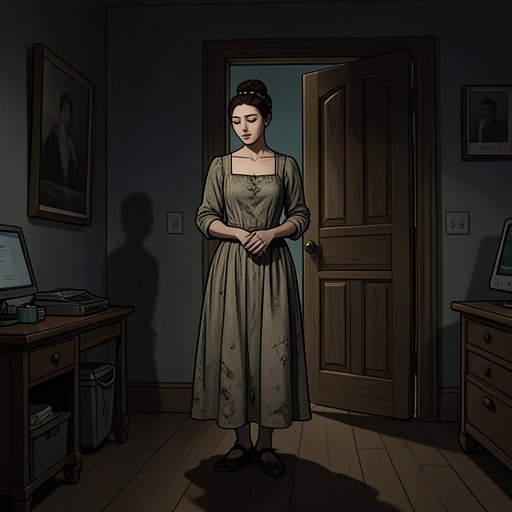
The immediate cause is Su Qingrou’s decision to leave. After Lin Yanche emerges from the bathroom, still carrying the coldness that defines his presence in the scene, she tells him plainly that their relationship must end. Her tone is controlled rather than impulsive, and when he asks why, she does not enter a prolonged argument; after his silence, she stands and says that she is leaving. The movement from declaration to departure gives the episode its basic structure: Su Qingrou attempts to convert an emotional decision into a physical exit, while Lin Yanche treats the exit itself as an act of disobedience.
The conflict is sharpened by Jin Zhengnan’s position in Su Qingrou’s life. Lin Yanche claims that she has lived under the same roof as Jin Zhengnan for so long that their loyalty must already be false, reducing her friendship to sexual suspicion. Su Qingrou immediately rejects that accusation and insists that Jin Zhengnan is merely her friend. Her defense also shows the stakes of Lin Yanche’s jealousy: the dispute is not confined to the couple, because Lin Yanche uses another man’s safety as leverage over her choice.
Confinement and Assault
When Su Qingrou says she is leaving, Lin Yanche grabs her arm and threatens that Jin Zhengnan will never leave the Hospital if she steps even half a pace outside the manor. The threat turns the residence into a prison. Its walls do not need visible locks; Lin Yanche makes departure conditional on the survival of someone Su Qingrou cares about, forcing her to remain through fear for another person. This is coercive control expressed as a personal ultimatum, with the threatened harm directed outward but the punishment imposed on Su Qingrou.
Lin Yanche then closes the physical distance between them and flings Su Qingrou onto the bed. He locks her arms and legs in place, leaving no room for resistance. His tie and belt become instruments of restraint, while her question about what he is trying to do and whether he has gone mad receives no meaningful answer. Instead, Lin Yanche declares that he has been mad since the moment she told him that he owed her his life, presenting an old emotional debt as the origin of his violence. The claim does not establish consent or mutuality; it reveals how he converts indebtedness into a justification for possession.
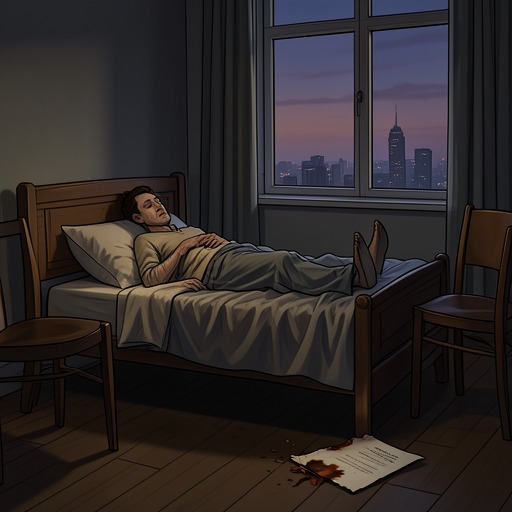
The assault proceeds while Su Qingrou struggles and cannot break free. Lin Yanche’s force prevents her from speaking, and the narration closes on her despairing eyes gradually shutting. The surrounding sky darkens beneath gathering rain, but the central darkness is produced by the relationship itself: their bodies are forced together while their hearts remain separated by an unbridgeable distance. The scene’s final contrast makes the violation unmistakable. Physical proximity does not signify intimacy when one person has removed the other’s ability to refuse.
Consequences and Aftermath
The episode leaves Su Qingrou not merely distressed but physically and psychologically overwhelmed. The narration records that her despairing eyes gradually close after Lin Yanche’s force has exhausted her resistance, while the surrounding sky darkens and rain threatens. That imagery extends the immediate scene into an atmosphere of suspended danger: the assault is not presented as a momentary quarrel resolved by renewed closeness, but as the point at which intimacy becomes inseparable from fear, captivity, and bodily helplessness. Lin Yanche’s claim that his madness began with the life debt Su Qingrou once imposed on him also gives the violence a continuing logic within their relationship, suggesting that the past will remain available to him as a pretext for further control.
Legal and Thematic Significance
The episode places several unequal systems of power in the same frame: romantic attachment, residence, bodily force, and an implied debt of life. Su Qingrou’s attempt to end the relationship is a clear exercise of personal choice, yet Lin Yanche answers it by making another person’s medical safety contingent on her obedience. The threatened consequence is directed at Jin Zhengnan, but its function is to deprive Su Qingrou of meaningful freedom; her decision is no longer evaluated as a choice she may make, but treated as conduct that must be punished. The manor consequently becomes more than a domestic setting. Under Lin Yanche’s control, it operates as a space where private authority replaces consent and where the threat of violence makes ordinary legal and moral protections practically unavailable.
The scene also exposes the danger of treating emotional debt as a claim over another person. Lin Yanche identifies the beginning of his madness with the moment Su Qingrou told him that he owed her his life. That remembered obligation may explain the intensity of his resentment, but it cannot authorize confinement or sexual access. The episode’s decisive reversal lies in this distinction: a favor, sacrifice, or past bond can create gratitude and conflict, yet it does not transfer ownership of the recipient’s body. By turning indebtedness into a warrant for restraint, Lin Yanche transforms a history of attachment into an instrument of domination.
The narration refuses to let physical closeness disguise the violation. Lin Yanche forces Su Qingrou’s body into contact with his while the narrative insists that their hearts remain separated by an ocean-like distance. This contrast overturns the familiar romantic association between possession and intimacy. His pursuit does not produce mutual surrender or reconciliation; it produces silence, struggle, despair, and the closure of her eyes under coercion. The scene therefore marks a rupture in the relationship’s emotional vocabulary: what might once have been described through love, loyalty, or repayment is now defined by captivity, threat, and the destruction of refusal.
Narrative Significance
The episode’s lasting significance lies in how it strips away the language that might otherwise soften Lin Yanche’s conduct. Su Qingrou’s decision to end the relationship is deliberate, her defense of Jin Zhengnan is explicit, and her attempted departure should establish a boundary; Lin Yanche instead converts that boundary into the trigger for coercion. He treats the life debt between them as a continuing claim, invokes Jin Zhengnan’s safety as leverage, and uses the manor’s domestic space to make resistance practically impossible. The result is a decisive exposure of the relationship’s power structure: Lin Yanche’s attachment is not demonstrated through care or reciprocal trust, but through the ability to threaten, confine, silence, and override. The later image of Mo Beiyu condemning a man who has tortured his woman until she collapses by the roadside confirms the episode’s moral consequence from outside the couple’s private world. What Lin Yanche frames as passion or madness is recognized instead as abuse, and Su Qingrou’s suffering becomes the measure by which the supposed intimacy is judged.