Lin Yanche's Manor
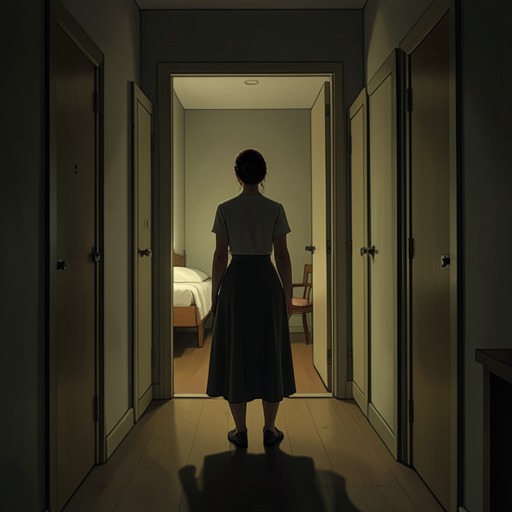
CEO's Beloved Honey GirlLin Yanche's Manor occupies a double role in the story: it is introduced as a new home associated with family intimacy, yet it becomes the setting for Su Qingrou's house arrest and the confrontation that follows. Its significance lies in this contradiction. The manor is not merely a residence belonging to Lin Yanche; it is a space whose meaning changes according to who controls its boundaries, who is invited inside, and who is prevented from leaving.
A New Domestic Space
Lin Yanche's Manor first appears in the Western Suburbs during Lu Xun's attempt to coax Su Xiangwan into accompanying him somewhere. As their car continued inward, Su Xiangwan increasingly suspected that they were heading toward Lin Yanche's Manor. The suspicion proved correct, although Lu Xun did not take her into the manor itself. Instead, he brought her to an estate nearby, separating the manor from the new residence he had prepared for her while keeping Lin Yanche's property close in the surrounding landscape.
This proximity gives the manor an important architectural and emotional function. Lu Xun's estate was arranged almost exactly like the Su Clan's residence, with a swing, rocking chair, and seesaw reproducing the environment of Su Xiangwan's earlier family life. The resemblance made the new house intimate and recognizable, while its brand-new furnishings marked it as a reconstruction rather than the original home. Su Xiangwan understood the gesture as the creation of a shared household and wondered whether Lu Xun had prepared it without her knowledge even if the accident had not intervened. In contrast, Lin Yanche's Manor stands nearby as a different kind of domestic space: it belongs to a married household, but the events within it reveal how easily domesticity can conceal domination.
From Home to Enclosure
The manor's meaning changes when Su Qingrou calls Su Xiangwan late at night for help. Su Qingrou reports that Lin Yanche has locked her inside the manor and that she cannot leave. Su Xiangwan immediately runs to Lu Xun's study and tells him that Lin Yanche has gone mad and placed her sister under house arrest. The location therefore shifts from a neighboring residence associated with ordinary domestic life into an emergency site where freedom and safety are at stake.
The phrase house arrest is made concrete by the manor's physical defenses. Half an hour after receiving the call, Lu Xun and his entourage arrive at the entrance, where numerous bodyguards prevent outsiders from entering. The guards do not function as ordinary household staff. They form a human barrier, enforcing Lin Yanche's authority over the property and making the boundary of the manor a mechanism of confinement. Their presence also turns a private marital crisis into an organized confrontation between rival groups.
The Confrontation at the Entrance
At the gate, the leader of the bodyguards asks Young Master Lu not to make matters difficult, appealing to the personal relationship between the two sides rather than surrendering access. The exchange reveals that the guards understand the danger of direct conflict: Lu Xun's bodyguards are regarded as formidable, and the manor's defenders know that they would not be able to match them individually. The entrance thus becomes a point where social familiarity, masculine alliance, and physical force meet.
Lu Xun nevertheless brings his men inside after several rounds of confrontation. The movement through the gate is a decisive change in the manor's power structure. Until that moment, Lin Yanche's control appears absolute because the guards determine who may enter. Once Lu Xun breaks through, the enclosure is penetrated and the authority represented by its walls is challenged. The manor is still Lin Yanche's territory, but it can no longer remain sealed against outside intervention.
Su Qingrou at the Balcony
From a distance, Su Xiangwan sees Su Qingrou sitting at a balcony window and runs toward the house, warning her sister not to act recklessly. The balcony makes the logic of confinement visible: Su Qingrou is not simply inside a room but positioned above the ground, separated from rescuers by the height of the building and surrounded by the danger created by her desperation. Her tear-stained face and proximity to the second-floor drop show that the threat within the manor is both emotional and physical.
Su Xiangwan reaches up and pulls at Su Qingrou's face, urging her to consider the consequences of falling. The sisters' physical contact briefly transforms the balcony from a site of peril into a point of mutual protection. Lu Xun, watching the two women, reacts with an impulse he cannot easily suppress, while his bodyguard opens the door and enables Su Xiangwan to reach the balcony. The scene therefore places family solidarity against the manor's system of restriction: the house confines Su Qingrou, but the rescue begins when her sister crosses the barriers built around her.
Power, Marriage, and Spatial Meaning
Lin Yanche's threat to Su Qingrou extends the manor's coercive power beyond its walls. When she tries to leave, he grabs her arm and warns that Jin Zhengnan will never leave the Hospital if she steps outside even half a pace. The threat links the manor to an external hostage situation: Su Qingrou's movement is controlled through the threatened injury of someone she cares about. The building becomes the center of a network of leverage in which confinement, jealousy, and medical vulnerability reinforce one another.
The manor is consequently a distorted version of the home it claims to be. Lu Xun's nearby estate uses familiar domestic objects to offer Su Xiangwan a reconstructed sense of belonging, whereas Lin Yanche's Manor uses its domestic status, guards, and controlled entrances to deny Su Qingrou freedom. The contrast demonstrates that a house does not become a home through appearance alone. Its emotional meaning depends on whether intimacy permits movement and protection or turns into surveillance and possession.
The location also reappears within the wider pattern of the narrative's contested spaces. A noble-looking man accompanied by bodyguards appears behind police officers investigating whether Mo Beiyu is sheltering a young woman, while Lu Xun and Lin Yanche later travel directly to Yan City, where Chu Fei's men are already waiting at the airport. These episodes extend the same spatial logic beyond the manor: entrances, roads, airports, and residences are all controlled by competing networks of power. Within that pattern, Lin Yanche's Manor remains especially significant because it brings the struggle into the supposedly private sphere of marriage and makes the boundary between shelter and imprisonment impossible to ignore.