Lin Yanche’s liver cancer
CEO's Beloved Honey GirlLin Yanche’s liver cancer is a late-stage revelation that recasts his frailty, silence, and withdrawal as signs of a terminal medical crisis rather than merely the aftermath of his conflicts with Su Qingrou and the Su Family. He is described as waiting for a suitable liver donor or facing death, while the people closest to him deliberately conceal the diagnosis from Su Qingrou. The illness therefore functions both as a physical condition and as a force that reorganizes intimacy, responsibility, and choice.
Diagnosis and Physical Decline
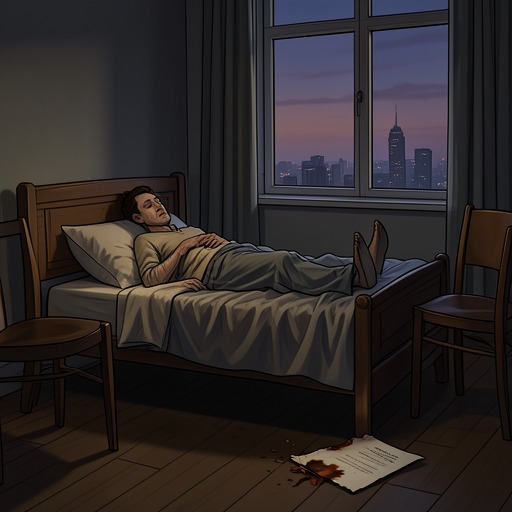
The diagnosis becomes visible through Lin Yanche’s body before it is fully explained to the reader. When a black truck arrives at the villa carrying Chu Fei, Lu Xun, and Lin Yanche, Su Xiangwan barely recognizes him: he is unshaven, unkempt, and extremely thin. His altered appearance is so striking that Su Xiangwan wonders whether the deterioration is connected to the knife Su Qingrou once gave him. The question links his failing body to the violent history between the two families, but the later disclosure supplies a more immediate cause.
Yun Yun explains that Lin Yanche has liver cancer and is waiting for a suitable source from which his liver can be replaced. Without that exchange, death is presented as the remaining certainty. The medical information is therefore concrete but incomplete: the narrative establishes the organ involved, the need for a suitable donor or transplant source, and the fatal alternative, while leaving the treatment process and prognosis otherwise unspecified. His extreme thinness becomes the outward sign of a hidden condition that others have been interpreting through the language of anger, revenge, and emotional collapse.
The illness also changes the meaning of Lin Yanche’s manner. When Su Qingrou asks whether something is wrong, he confirms that there is, though he forces a smile and insists that he will not die. His former coldness remains on the surface, but it no longer carries the same force. He appears like an old man in his seventies, with everything drained of color and no visible desire to struggle. The description makes the cancer a condition of exhaustion as much as a threat of death: it has reduced the future from a field of possible actions to a brief interval that he can only endure.
Secrecy and the Politics of Care
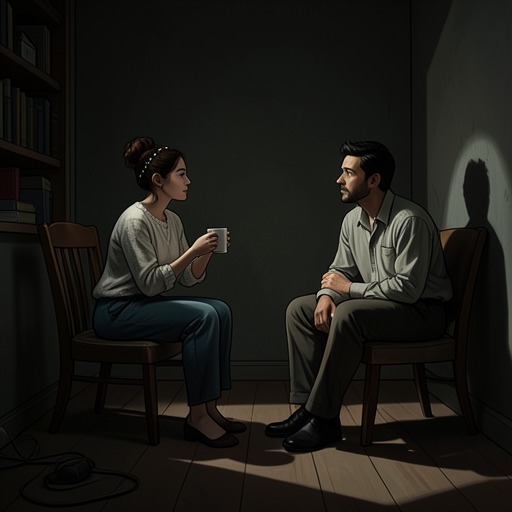
Lin Yanche’s diagnosis is not immediately given to Su Qingrou. Yun Yun states that Chu Fei does not want her to know and that Lin Yancheng also does not want her to know. The concealment places control over medical knowledge in the hands of other people. Su Qingrou is physically present in the same social world, but she is excluded from information that would determine how she understands Lin Yanche’s conduct and what choices she might make in response to his condition.
This secrecy has a double effect. It is presented as protection, since knowledge of a terminal illness could burden or distress Su Qingrou, but it also deprives her of agency. Her relationship with Lin Yanche has already been marked by imprisonment, coercion, separation, and unresolved attachment; hiding the cancer prevents her from confronting that history with the full facts of his present condition. The illness thus does not simply make Lin Yanche vulnerable. It creates a new asymmetry in which the ill man, his allies, and his relatives decide who is permitted to know what his body is undergoing.
The surrounding characters respond to the illness through partial knowledge. Su Xiangwan initially notices only Lin Yanche’s appearance and wonders whether Su Qingrou knows the reason for it. Yun Yun supplies the explanation and closes off further inquiry by confirming that the truth has been intentionally withheld. Later, Song Yun’er tells Su Qingrou that Lin Yanche does not have much time left. Su Qingrou first considers the statement absurd, but after recalling how thin he has become and how drastically he has changed, she begins to believe that he may truly be near death. The diagnosis therefore travels through rumor and observation before it becomes emotionally credible.
Illness Within the Su–Lin Conflict
The cancer arrives after a long sequence of personal and family violence. Lin Yanche’s relationship with Su Qingrou has involved domination, estrangement, and attempts at retaliation, while his conflict with the Su Family has drawn in Lu Xun, Chu Fei, Song Yun’er, and other relatives. In that setting, the disease does not erase responsibility for his previous actions, but it changes the balance of the conflict. A man once treated as a powerful aggressor is now visibly dependent on a medical resource he cannot command by force alone.
That reversal is especially sharp because Lin Yanche’s earlier identity is associated with control and intimidation. His hospitalization is announced as a serious disruption, and at one point his manic state is so severe that the sound of objects falling can be heard from his ward. The hospital setting turns private instability into a condition that others must witness and manage. His body, previously an instrument of threat, becomes evidence of limitation.
The disease also affects the people competing for Su Qingrou’s future. Su Qingrou discusses holding a small engagement ceremony with Jin Zhengnan, partly for the benefit of their two companies, and worries that Lin Yanche may interfere. She then reminds Su Xiangwan that the family has a brother who can provide protection. Against that background, Lin Yanche’s cancer introduces a different kind of threat: not the certainty that he will overpower the arrangement, but the possibility that his remaining time will make every decision morally and emotionally unstable. Su Qingrou’s proposed engagement with Jin Zhengnan is no longer only a family and business arrangement; it exists beside the knowledge that Lin Yanche may be dying.
Consequences for Su Qingrou and the Other Characters
Su Qingrou’s reaction is shaped by the contrast between brief relief and renewed devastation. After seeing Lin Yanche only once, she finds him changed again within minutes, and Su Xiangwan feels sorrow without knowing how to display it. Su Qingrou repeats Song Yun’er’s warning that he has little time left, moving from disbelief to reluctant recognition. His weight loss and altered appearance become the evidence that forces her to reconsider what she has been told.
Lin Yanche does not openly ask Su Qingrou to rescue him or remain with him. When she asks whether the illness is serious, he acknowledges it, smiles with difficulty, and says that he will not die before walking away. His answer combines denial, pride, and resignation without resolving any of them. He neither offers a full confession nor allows her to become an informed participant in his care. The result is a painful distance: Su Qingrou can see the signs of his decline, but she cannot obtain the complete truth directly from him.
His illness also draws Lu Xun into renewed action. When Lu Xun receives word that Lin Yanche has been hospitalized, he tells Su Xiangwan that he will wait at the Hospital and that they will take Grandfather home together. In another confrontation, Lin Yanche taunts Lu Xun by suggesting that Su Xiangwan may be dangerously ill and advising him to prepare to identify her body. Lu Xun reacts with sudden physical distress, his face turning deathly pale. Later, when Su Xiangwan finds Lu Xun injured, his concern for her safety overrides attention to his own wounds. These parallel scenes place Lin Yanche’s life-threatening illness within a broader narrative where bodily vulnerability repeatedly governs loyalty, fear, and protective action.
The diagnosis also affects Chu Fei and the family’s willingness to tell Su Qingrou the truth. Yun Yun reports that Chu Fei does not want the information disclosed, while Lin Yancheng shares that decision. Their concealment suggests that Lin Yanche’s illness is treated as a burden to be managed collectively, not solely as private medical information. At the same time, the secrecy ensures that Su Qingrou’s eventual knowledge comes through another person’s disclosure rather than through Lin Yanche’s own choice.
Narrative and Thematic Significance
Lin Yanche’s liver cancer changes the story’s governing value from power and retaliation toward time and mortality. Earlier conflicts are structured around who can control whom, who can protect a relative, and whether old injuries can be repaid. The cancer introduces a limit that cannot be defeated through the same social and physical instruments. Even a man surrounded by powerful allies must wait for a suitable liver source, and without it he can only wait for death.
The condition also exposes the fragility beneath the story’s language of strength. Lin Yanche’s former violence and manic instability do not disappear, but they are placed beside an image of a gaunt man who has lost the energy to struggle. His body becomes a record of consequences that cannot be reduced to a single moral judgment. He remains capable of concealment, pride, and emotional injury, yet he is also dependent, diminished, and facing an ending that his family cannot fully control.
Most importantly, the cancer makes knowledge itself a source of power. The people who know can interpret Lin Yanche’s behavior, protect Su Qingrou, conceal facts, or use the possibility of death to alter her decisions. Su Qingrou, kept outside that circle, must reconstruct the truth from a warning, a changed body, and an evasive answer. The illness therefore remains unresolved not only as a medical emergency but also as an ethical and relational crisis: it asks whether care can be genuine when it is built on withholding, and whether a damaged relationship can be understood clearly once death becomes its unspoken horizon.