Lu Xun Destroys the Wedding Dress Prepared for Su Xiangwan
CEO's Beloved Honey GirlLu Xun Destroys the Wedding Dress Prepared for Su Xiangwan is a confrontation centered on a lavish wedding dress that carries several competing claims of love, status, and possession. Song Yun'er admires the dress as the realization of her dream, while Su Xiangwan gives it away with deliberate indifference after feeling that Lu Xun’s gift does not represent her. Lu Xun then destroys the dress rather than allow it to become part of Song Yun'er and Lin Yanche’s wedding image. The act is both retaliation and a possessive declaration: if the woman for whom he prepared the dress does not want it, nobody else will receive it as a substitute for her affection.
The Dress as a Contested Gift
Before the destruction, the dress is displayed at a Bridal Shop, where Song Yun'er praises its design, ornaments, and colored diamond at the waist as the wedding dress she has always dreamed of. Lin Yanche answers that he will buy it for her, placing the garment within the visible courtship between himself and Song Yun'er. The scene is overheard by Su Xiangwan and Su Qingrou, so the dress immediately becomes more than clothing: it is evidence of an intimacy that humiliates Su Xiangwan and exposes the rivalry between the two couples.
Su Xiangwan’s response is to give the dress to Song Yun'er. When Lin Yanche points out that it was the wedding gown Lu Xun prepared for her, Su Xiangwan insists that a gift belongs to its recipient and says that she never truly liked its exaggeration. Her generosity is therefore edged with injury. She presents the transfer as helping Lu Xun fulfill a dream through someone who appreciates the garment, while also implying that the dress is unworthy of her. The object passes from one woman to another, but the emotional debt attached to Lu Xun’s gift does not disappear with it.
Lu Xun’s Destruction of the Garment
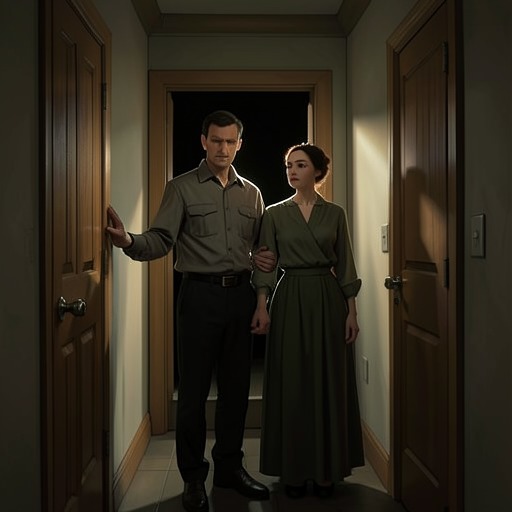
Lu Xun confronts Su Xiangwan after dragging her into a room by the wrist, his grip tight despite an outward lack of obvious anger. He asks why she gave away the wedding gown he gave her. Su Xiangwan denies that she disliked the sentiment behind it, but then declares that his wedding dress is not worthy of her. Her remark reverses the expected value of the gift: what Lu Xun intended as proof of devotion is recast as an inadequate offering, and his pride is placed directly on trial.
The decisive action follows in the shop. Lu Xun orders the frightened assistant to remove the clothes and then commands that all of them be taken away. When Song Yun'er protests that he should not vent his anger on clothing merely because he is angry with her and Lin Yanche, Lu Xun makes the destruction personal. He states that if his woman does not like something, he will tear it down and remake it until she likes it, because he is willing to do so. He then looks at Lin Yanche and adds that he is not so poor that he must be thrifty enough to sell it. The dress is destroyed as a public performance of wealth, authority, and exclusive attachment.
Rivalry, Humiliation, and Reversal
The action echoes an earlier injury involving Lin Yanche and Su Qingrou. Su Xiangwan sees Su Qingrou weeping, notices deep and shallow kiss marks on her body, and discovers on Su Qingrou’s phone a photograph of Lin Yanche passionately embracing Song Yun'er at the same time. Against that background, the wedding-shop confrontation is not an isolated quarrel over taste. It belongs to a chain of betrayals in which gifts, spouses, and public appearances are repeatedly used to humiliate another person.
Lu Xun’s destruction also answers Lin Yanche’s treatment of Su Qingrou. The narration explicitly connects Lu Xun’s gesture with Lin Yanche’s earlier coercion of Su Qingrou into selling her wedding ring. Lu Xun therefore uses the dress to imitate and reverse Lin Yanche’s logic: an object that another man treated as disposable becomes, in Lu Xun’s hands, something he can destroy precisely because he possesses the resources to replace it. The competition is not simply over Song Yun'er or Su Xiangwan; it is over which man can define the value of a woman’s romantic symbols and dictate what happens to them.
Song Yun'er’s complaint that Lu Xun should have her own man buy the dress elsewhere sharpens the division he is enforcing. Lu Xun rejects the possibility that she can receive a substitute from him and tells her to have her own man purchase another wedding dress. His response separates the women and the men into rival emotional territories, even as the shared dress has momentarily blurred those boundaries.
Consequences and Narrative Significance
The dress’s destruction converts a romantic promise into a damaged emblem of the marriage between Lu Xun and Su Xiangwan. Lu Xun’s language presents the act as care—he will rebuild what she dislikes—but the form that care takes is control. Su Xiangwan is allowed to reject the object, yet Lu Xun decides that no rival may inherit it. The gesture thus contains both accommodation and domination: he offers to remake the dress for her while refusing to surrender the meaning of the original gift.
The surrounding story repeatedly links intimate conflict to bodily vulnerability and the need for protection. Su Qingrou’s visible injuries, Su Xiangwan’s later fever and collapse at an elevator, and Lu Xun’s gentle reassurance when Su Xiangwan is frightened all place romantic possession beside physical distress. Lu Xun’s response to danger is often forceful intervention, whether destroying property or threatening a rival, while his response to Su Xiangwan’s fear is protective presence. The wedding-dress scene shows the unstable overlap between those impulses: his wish to protect the bond becomes an attempt to control its symbols.
The scene also stands against the characters’ inherited wounds. Su Xiangwan recalls that her mother, believing she had a terminal illness and did not want to implicate the family, walked onto a balcony and died by suicide after seeing a drawing of the family holding hands. Lu Xun, in turn, reveals that he was kidnapped at twelve, drugged by the kidnappers, and nearly lost his life before developing resistance to drugs. These histories help explain why intimacy in their relationship is repeatedly expressed through vigilance, possession, rescue, and fear of abandonment rather than through uncomplicated trust. The ruined dress is therefore a material trace of a larger pattern: love is offered as protection, tested through rivalry, and defended through acts that can themselves become violent or coercive.
Place in the Relationship Arc
Within Lu Xun and Su Xiangwan’s romance, the wedding-shop action marks a value reversal. A garment that should signify anticipation and union becomes the scene of anger, public embarrassment, and competitive display. Yet its destruction does not end the attachment represented by the dress. Lu Xun’s insistence that he will remake it until Su Xiangwan approves preserves the possibility of reconciliation while reaffirming that the relationship is organized around his power to act decisively on her behalf.
That contradiction gives the event its lasting force. Su Xiangwan can mock the dress, give it away, and claim that it is not worthy of her, but Lu Xun refuses to let the object become evidence that his devotion has been displaced. He destroys the rival version of the wedding fantasy and reserves the right to create another one. The dress is consequently less a failed romantic gift than a battlefield where wounded dignity, marital status, wealth, jealousy, and the demand for exclusive recognition are made visible.