Lu Xun Takes Su Xiangwan Back from the Mo Residence
CEO's Beloved Honey GirlLu Xun Takes Su Xiangwan Back from the Mo Residence is a decisive retrieval scene in the strained marriage between Su Xiangwan and Lu Xun. Lu Xun arrives at Mo Beiyu’s home with police after learning that Su Xiangwan has been brought there, but the recovery is neither a peaceful reunion nor an unambiguous rescue. Su Xiangwan is feverish, frightened, and physically collapsing; Lu Xun claims her as his wife, while Mo Beiyu challenges the violence that drove her into hiding. The event therefore shifts the immediate balance of power without resolving the deeper question of whether Lu Xun’s insistence on taking her home is protection, possession, or both.
Causes and Background
Su Xiangwan’s presence in Mo Beiyu’s apartment follows a period in which she has separated herself from Lu Xun and fallen into severe weakness and fever. The residence is described as an ordinary commercial two-room apartment, with Su Xiangwan lying in one bedroom while her face remains flushed and her body still appears feverish. Mo Beiyu and Liu Xi have brought her there out of what they understand as good intentions, creating a temporary refuge outside Lu Xun’s immediate control.
Lu Xun’s arrival is shaped by the history of the marriage rather than by the neutral language of a welfare check. Earlier, Lu Xun had used the East District land as a condition in his conflict with Lin Yanche, demanding that Lin Yanche stop interfering in his affairs with Su Qingrou if he wanted Su Xiangwan to leave Lu Xun. Su Xiangwan realizes that Lu Xun was willing to fight Lin Yanche for her sake and had used the transaction to force a severing of ties. That history explains why the retrieval carries such force: Lu Xun repeatedly converts love, danger, and family conflict into commands that determine where Su Xiangwan may go and whom she may see.
The episode also occurs against a background of concealed trauma. Su Xiangwan recalls that her mother, believing herself terminally ill and unwilling to implicate the family, walked onto a balcony after seeing a drawing of herself and Su Xiangwan’s father holding the child’s hand. Lu Xun, hearing the memory, is pained and regrets not investigating the matter himself. Lu Xun has his own childhood trauma as well: at twelve, he was kidnapped, given various medicines by his captors, and nearly lost his life; afterward, he developed resistance to drugs. These histories help explain why bodily danger and abandonment provoke such intense reactions in both characters, even though neither trauma makes Lu Xun’s coercive conduct harmless.
The Confrontation at the Mo Residence
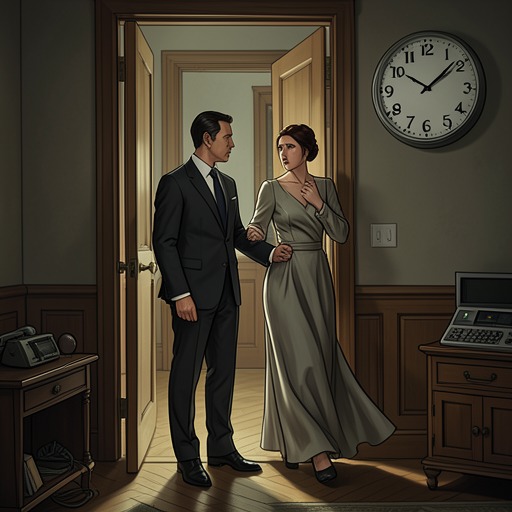
Mo Beiyu refuses to admit Lu Xun and the police without proof, objecting that they have arrived at the door and entered the home rashly. The police leader counters that surveillance shows a young woman brought Mrs. Lu back to the apartment and that, after contacting the family, the authorities should hand her over. Formal procedure thus becomes the mechanism through which Lu Xun’s private claim is restored. The police do not settle the moral dispute between the men; they simply identify Lu Xun as the contacted family member and facilitate the transfer.
Lu Xun finally raises his head and tells Mo Beiyu that he has come to fetch his wife, asking whether Mo Beiyu objects. The statement is restrained in wording but absolute in implication. It treats the marital title as sufficient authority over Su Xiangwan’s location, while Mo Beiyu treats Lu Xun’s conduct as disqualifying him from that authority. Mo Beiyu says that he cannot tolerate a man who has tortured his woman until she fainted beside the road and calls Lu Xun scum; he then accuses him of being a rapist who has no qualification to stand in the sunlight. Their meeting becomes a direct collision between legal family status and moral condemnation.
Liu Xi tries to prevent the conflict from worsening, insisting that the siblings acted out of good intentions and should not allow the authorities to misunderstand them. Mo Beiyu nevertheless walks through the police crowd with his hands in his pockets until he stands before Lu Xun. The two men meet each other’s eyes while the atmosphere becomes openly hostile. Lu Xun does not answer the accusation in the scene; instead, he glares at Mo Beiyu, turns, and proceeds inside. His silence preserves his authority in action but leaves the charge against him hanging over the retrieval.
Su Xiangwan’s Condition and Forced Return
Inside the apartment, Lu Xun finds Su Xiangwan asleep with a high fever. In her delirium, she calls for her father and begs him not to leave her behind. Lu Xun notices that she would not ordinarily call for her father in a dream, and the recognition unsettles him. He takes her hand and tries to wake her, but when she opens her eyes and sees him, she immediately breaks free from his grip on the blanket and warns him not to act recklessly outside the home.
Her reaction makes the value shift of the event unmistakable. Lu Xun arrives presenting himself as the person who will take her home, but Su Xiangwan experiences his presence as a threat even while she is too ill to stand safely. He calls her foolish for still having a fever and urges her to return with him. He remains seated beside the bed, watching her like a frightened bird while conflicting feelings rise within him. The scene places tenderness and coercion in the same frame: his concern is real, yet his concern does not give her a meaningful choice.
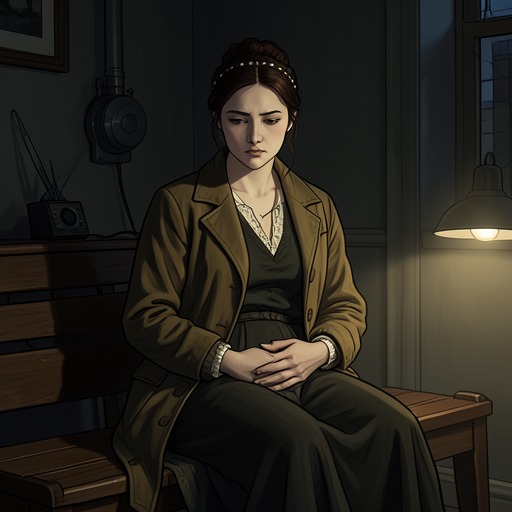
Su Xiangwan knows the consequences of provoking Lu Xun. She remembers having to plead with him to release her family and does not want to endure that experience again. Under the eyes of everyone present, she slowly walks out rather than openly resisting him. Her body records the cost of that submission: her feet feel as though they are stepping on cotton, her legs are sore and weak, she is burning with fever, and her consciousness is fading.
The return collapses before it can be completed. At the elevator entrance, Su Xiangwan reaches toward the button but faints before her fingertips touch it. Lu Xun immediately responds with another expression of control, ordering his bodyguards to contact Hua Shuo and tell him to wait at Scenic Mountain Villa. Lu Xun says that he will not be able to see Hua Shuo when he returns and threatens to raze Hua Shuo’s studio to the ground. The bodyguards are embarrassed by the ruthlessness of the order, but the threat demonstrates how quickly Lu Xun’s fear for Su Xiangwan becomes punishment directed at others.
Aftermath and Repeated Patterns
The retrieval does not restore trust. Su Xiangwan is taken away from Mo Beiyu, but the physical evidence of her illness and her instinctive fear of Lu Xun remain unresolved. Her collapse at the elevator shows that the return is not a stable homecoming; it is an interrupted act of obedience in which the body refuses the demand imposed on it. Lu Xun can secure her transfer through police involvement and marital status, yet he cannot make her feel safe by force.
The event also establishes a recurring pattern in the relationship. Lu Xun’s pursuit appears whenever Su Xiangwan attempts to leave, and his strategy combines personal tenderness with threats against anyone who shelters or approaches her. Earlier, he used business power against Lin Yanche; here, he invokes the police and then threatens Hua Shuo. The methods differ, but the result is similar: Lu Xun narrows the space available to Su Xiangwan until returning seems less dangerous than resisting.
At the same time, the narrative refuses to reduce Lu Xun to indifference. His pain at Su Xiangwan’s account of her mother’s death, his awareness of her feverish delirium, and his later attempt to comfort her show a man whose attachment is bodily and urgent. When Su Xiangwan later becomes frightened and tells Lu Xun that she is scared, he holds her and reassures her that he has been there all along. Yet the reassurance is shadowed by the earlier retrieval: the person claiming to be her protection is also the person from whom she has tried to escape.
The event’s later relational echoes sharpen this contradiction. Lu Xun explains that Shen Yiyun is the child his uncle adopted and therefore his cousin, while Su Xiangwan objects that this resembles the earlier situation involving Song Yun’er and accuses him of failing to tell her things directly. Lu Xun accepts that he must correct his mistakes. In another scene, while Su Xiangwan is intoxicated, she identifies Lu Xun as her husband, giving him the recognition he had been anxiously seeking. But Lu Xun’s suspicion that she may not know whom she is calling her husband reveals the instability beneath the apparent affirmation. Even when the marital title is spoken, the relationship remains caught between genuine attachment, jealousy, testing, and control.
Narrative Significance
Lu Xun Takes Su Xiangwan Back from the Mo Residence belongs to the main chronological narration and functions as a battle over the meaning of care. Mo Beiyu’s intervention protects Su Xiangwan from immediate abandonment and exposes Lu Xun’s abuse, while Lu Xun’s intervention removes her from that refuge and reasserts the marriage as a private jurisdiction. The police provide the formal bridge between those positions, but the scene’s emotional truth lies outside the official procedure, in Su Xiangwan’s fever, fear, and collapse.
The event also links present danger to older wounds. Su Xiangwan’s memory of her mother’s suicide and Lu Xun’s recollection of kidnapping place both characters in histories marked by helplessness, threatened disappearance, and the fear of being left behind. Lu Xun responds to that fear by pursuing and enclosing Su Xiangwan; Su Xiangwan responds by fleeing, hiding, and physically shutting down. Their pattern converts trauma into repetition: rescue becomes possession, refuge becomes a contested space, and the promise of being taken home becomes inseparable from the loss of freedom.
Its decisive consequence is therefore not merely that Lu Xun recovers Su Xiangwan from the Mo residence. The scene makes visible the cost of that recovery. He wins access to her, but the victory produces no emotional security; he demonstrates that he can bring his wife back, but not that he can become a safe person for her to return to. The unresolved tension between marital claim and personal consent gives the event its lasting significance in the wider story.