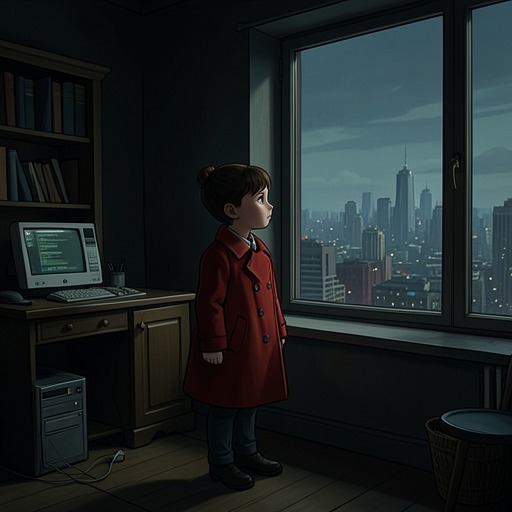
Lu Xun's Kidnapping at Age Twelve
CEO's Beloved Honey GirlLu Xun's Kidnapping at Age Twelve is both a concealed childhood ordeal and a key to understanding Lu Xun's adult behavior. At twelve, he was kidnapped, drugged by the kidnappers, and brought close to death; the episode left him resistant to many drugs and bound his first love to betrayal, danger, and survival. Its importance emerges not through a direct action sequence but through Lu Xun's later, controlled recollection, when the past suddenly explains the body and temperament of the man Su Xiangwan knows.
The Abduction and Its Physical Consequences
Lu Xun tells Su Xiangwan that he was kidnapped when he was twelve. The kidnappers took various medicines, and he nearly lost his life. The experience produced an unusual drug resistance, so attempts to affect him through medication became ineffective. The physical consequence is presented as a lasting trace of violence rather than a temporary danger: the child survived, but the abduction remained inscribed in his body.
Lu Xun recounts the memory while staring steadily at the pain of the past, as though describing someone else's experience. Time has made the feeling less immediate, yet the memory remains unforgettable. His composure therefore does not erase the trauma; it shows how thoroughly he has learned to contain it. The event explains why methods that might incapacitate another person can be superfluous when used against him, while also revealing the cost behind that apparent invulnerability.
The Girl Who Shared His Captivity
The kidnapping was not endured by Lu Xun alone. He recalls that a girl around Su Xiangwan's age was killed alongside him, making the abduction inseparable from the death of another child. He also says that she later escaped, creating a fractured account in which captivity, apparent death, escape, and deception remain entangled. Lu Xun presents this girl as his first love at twelve, but also as a crafty figure who deceived him and nearly caused his death.
This contradiction gives the event its emotional force. The girl is remembered as both beloved and dangerous, while Lu Xun's youthful affection is connected to being manipulated at the moment when he was most vulnerable. His later relationships consequently carry the shadow of an early bond in which intimacy could not be separated from threat. The kidnapping is not merely an origin story for drug resistance; it is an early lesson that trust may expose a person to mortal danger.
The Memory's Disclosure
The event is revealed during a conversation with Su Xiangwan after Lu Xun dismisses the idea that he could be easily changed or surprised. His disclosure corrects her understanding of his apparent immunity to drugs and opens a previously concealed part of his history. He does not narrate the abduction as an uncontrolled confession. Instead, he speaks with an unwavering gaze, treating the pain as if it belonged to someone else, and then redirects the conversation away from unhappy subjects.
Su Xiangwan responds without jealousy when she realizes that the girl was someone Lu Xun once liked. Her reaction shifts the emotional meaning of the recollection: she feels pity for the twelve-year-old who suffered and nearly died. The scene turns testimony into a form of relationship-building. Lu Xun exposes a dangerous vulnerability, and Su Xiangwan answers not with rivalry but with concern, establishing a moment of recognition between two people whose intimacy is shaped by fear and loss.
Trauma, Attachment, and Recurring Danger
The kidnapping's influence extends beyond the remembered facts. Lu Xun's adult insistence on control, his suspicion of manipulation, and his intense response to threats can be read against the childhood situation in which he was drugged, imprisoned, deceived, and nearly killed. The narrative does not state that every later act is caused by the abduction, but it places the event beside repeated scenes of illness, fainting, rescue, and protective care. When Su Xiangwan later collapses from a high fever before she can press an elevator button, bodily helplessness again becomes the trigger for urgent protection; when she wakes frightened and says she is scared, Lu Xun comforts her by assuring her that he has been there all along.
These later moments do not reproduce the kidnapping literally, but they echo its structure. A vulnerable person faces a threat, the body becomes unreliable, and safety depends on whether another person can remain present. Lu Xun's childhood trauma thus helps explain why protection in his relationships can become inseparable from possession and control. The same past that makes him difficult to incapacitate also makes danger emotionally charged, turning care into both a refuge and a possible repetition of the power imbalance created by captivity.
Narrative Significance
As a recalled event, Lu Xun's Kidnapping at Age Twelve belongs to the story's flashback layer rather than its ordinary chronological action. Its delayed placement matters: readers first encounter Lu Xun as powerful and difficult to defeat, then learn that this strength was forged through an experience in which he was a frightened child who almost died. The revelation reverses the surface image of invulnerability without removing his authority.
The kidnapping also deepens the novel's pattern of mistaken identities, unstable affection, and emotional debts. Lu Xun's first love is associated with a girl who deceived him, while Su Xiangwan's response offers a contrasting possibility of care founded on witnessing rather than manipulation. The memory therefore functions as both explanation and test. It accounts for Lu Xun's bodily resistance and guarded narration, but it also asks whether later intimacy can escape the original cycle in which love, fear, and survival became indistinguishable.