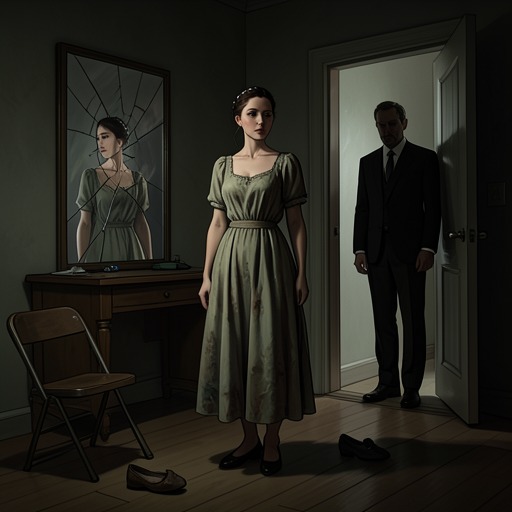
Song Yuner and Mo Beichen Collaborate to Set a Trap
CEO's Beloved Honey GirlSong Yuner and Mo Beichen Collaborate to Set a Trap is a coordinated deception in which Song Yuner uses Mo Beichen’s influence and men to manufacture appearances, pressure Lu Xun, and destabilize the relationships around her. The action matters because it converts private intimacy into a strategic instrument: what looks like betrayal, seduction, or victimhood is gradually revealed as an arrangement designed to manipulate several people at once.
Causes and Commercial Leverage
The scheme develops within a world where family enterprises and intimate relationships are constantly exchanged for protection. Su Xiangcheng is asked to approach Lu Xun about an upcoming bid for land in the Western District because her company will struggle to compete for it. Lu Xun’s eventual decision to give Lin Yanche the land demonstrates the scale of his commercial power: a business asset can be granted or withheld through personal and family alliances. This background explains why Song Yuner can treat Mo Beichen not simply as a dangerous associate but as a source of leverage.
Song Yuner’s later account makes the arrangement explicit. She says that she made a deal with Mo Beichen and that his men cooperated with her. She also insists that she had never stayed at Lin Yanche’s house and that the men in the private room had not touched her. These claims do not restore her innocence; instead, they reveal that the apparent evidence of sexual misconduct was part of a constructed situation. The trap depends on uncertainty: each person sees only a fragment, while Song Yuner and Mo Beichen control the larger design.
The Trap in Operation
The conspiracy reaches its most volatile point in a chaotic night at the dining hall. Su Qingrou informs Lin Yanche, while Song Yuner calls Lu Xun. The simultaneous calls divide attention and intensify suspicion, making the private crisis appear to involve several overlapping betrayals. Song Yuner’s appeal to Lu Xun is framed as a plea for help, but her words also place emotional pressure on him by invoking their shared history and her abandonment.
When Lu Xun’s phone is opened, a message from Song Yuner asks whether he believes her and claims that she and Mo Beichen were discussing business. She adds that she does not know when Su Qingrou began speaking with her, but fears that Su Qingrou will tell Lin Yanche whatever she knows. The message therefore performs several actions at once: it denies romantic wrongdoing, links Mo Beichen to legitimate business, casts Su Qingrou as a possible informant, and attempts to recruit Lu Xun as a protector. Its language is defensive on the surface, yet strategically expansive, drawing Lu Xun deeper into the conflict.
The physical staging of the later confrontation exposes the scheme more clearly than the phone call does. Su Xiangcheng enters and sees Song Yuner disheveled on a bed while Lu Xun stands by the window with his shirt partly open and a cigarette in hand. Song Yuner asks why Lu Xun did not want her despite his apparent physical response. The scene is designed to make bodily reaction stand in for consent and desire, while the surrounding disorder supplies visual evidence that can be interpreted as sexual betrayal. Su Xiangcheng’s cold reaction confirms that the intended appearance has taken effect before the full explanation is heard.
Exposure and Reversal
The decisive reversal comes when Song Yuner admits that she had never stayed at Lin Yanche’s home and that Mo Beichen’s men had not touched her. She states that the men cooperated with her because of the deal she made with Mo Beichen. Su Xiangcheng immediately recognizes that the suspicion was justified: the scene was not an accidental encounter but a planned manipulation. Song Yuner’s later question about why Lu Xun rejected her continues the performance, attempting to turn his refusal into evidence of hidden desire and to force him into answering on the emotional terms she has established.
The trap’s effectiveness lies in its ability to distribute contradictory roles. Song Yuner presents herself as abandoned and wronged, yet she has also arranged the conditions under which others will appear guilty or faithless. Lu Xun is positioned simultaneously as former intimate, possible rescuer, and target of emotional coercion. Mo Beichen remains the enabling power behind the scene, supplying the men whose presence makes the deception credible. Su Qingrou and Lin Yanche become vulnerable to the suspicion the scheme generates, even though the actual arrangement belongs to Song Yuner and Mo Beichen.
Immediate Consequences
The conspiracy triggers a chain of violent and relational consequences. Jun Xi, unable to tolerate what she understands as Song Yuner secretly betraying Lin Yanche, acts impulsively. Mo Beichen’s bodyguard ambushes Jun Xi, and Lu Nianjin takes the fatal blow meant for her. Lu Xun returns only at dawn after spending the night dealing with the aftermath. Thus a scheme initially presented through calls, accusations, and sexual appearances produces physical injury and forces Lu Xun into a crisis-management role.
The action also changes the meaning of Song Yuner’s appeals to Lu Xun. Earlier, she clings to his trouser leg, asks for his help, and describes herself as someone who has received retribution and been abandoned. Lu Xun responds coldly, mocking the comparison between her appearance and his own condition. Once her cooperation with Mo Beichen becomes clear, the language of abandonment acquires a second meaning: it is not merely the confession of a rejected woman but part of a continuing effort to make Lu Xun answer for her losses.
Narrative Significance
The collaboration is a major example of the novel’s mistaken-identity and manufactured-evidence pattern. The central question is not simply who slept with whom, but who has arranged the scene that makes a particular conclusion seem unavoidable. The bed, the disordered clothing, the half-open shirt, the phone calls, and the claims of business all function as pieces of staged evidence. Their power comes from the speed with which observers convert appearances into moral judgment.
The action also links romantic plotting to corporate rivalry. Lu Xun can resolve a land dispute by assigning a Western District parcel to Lin Yanche, while Mo Beichen can influence a personal crisis through his bodyguards and a private agreement. Both forms of power operate through relationships rather than transparent procedures. Against that system, Su Xiangcheng’s recognition of the truth is important because it interrupts the scene’s intended interpretation. The trap succeeds in causing fear, jealousy, and injury, but its exposure reveals the deeper mechanism: affection and commercial influence have been organized into the same instrument of control.