Su Qingrou Terminates Her Pregnancy with Lin Yanche
CEO's Beloved Honey GirlSu Qingrou Terminates Her Pregnancy with Lin Yanche marks one of the clearest breaks between personal autonomy and possessive intimacy in the relationship between Su Qingrou and Lin Yanche. Lin Yanche treats the lost child as his stolen flesh and blood, while Su Xiangwan’s defense of Su Qingrou frames the decision as one she had the right to make. The event therefore does not remain a private medical decision: it becomes a confrontation over consent, responsibility, betrayal, and who is permitted to decide what happens to a woman’s body.
Causes and Background
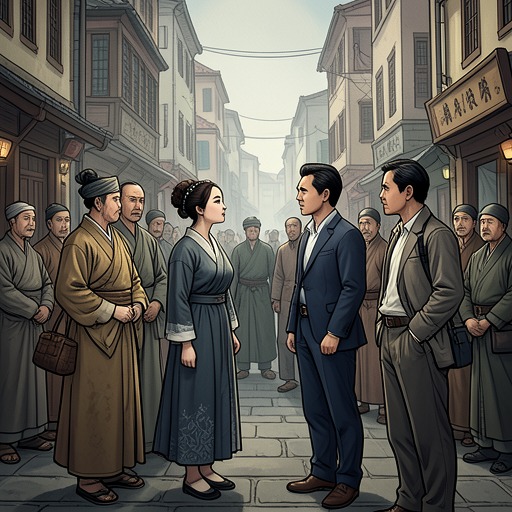
Lin Yanche’s anger is immediate and absolute. He says that Su Qingrou ended the pregnancy without obtaining his permission, reducing the loss to an act committed against his presumed authority as the father. His language reveals that he understands the pregnancy not only as a shared relationship or future responsibility but as possession of his own flesh and blood. That interpretation turns grief into accusation and makes the termination a new front in the couple’s already embittered conflict.
Su Xiangwan does not excuse the act by denying its seriousness. Instead, when Lin Yanche presents the termination as an unforgivable offense, she answers that she would have done the same. Her response places the decisive question elsewhere: whether Su Qingrou needed Lin Yanche’s authorization to make a medical and reproductive decision about herself. The calmness of Su Xiangwan’s reply is important because it refuses the emotional terms Lin Yanche tries to impose. She recognizes the weight of the event while rejecting the idea that his anger automatically creates a right of control.
The dispute is intensified by Lin Yanche’s conduct during the period when he and Su Qingrou were preparing to remarry. Su Xiangwan identifies two concrete failures: Lin Yanche had not truly broken off his relationship with Song Yun’er, and he suspected the circumstances surrounding the earlier child Su Qingrou had lost without accepting sufficient responsibility himself. The pregnancy termination is thus presented against a history in which Lin Yanche demands accountability from Su Qingrou while failing to provide the trust, fidelity, and responsibility he expects from her.
What the Confrontation Reveals
Su Xiangwan acknowledges that Lin Yanche has grounds to feel pain, but she refuses to let that pain erase the conditions that produced the rupture. She observes that his anger toward her elder sister had already made him ill from taking medicine and driven him to shut himself away in his study. His suffering is visible, yet the narrative does not treat suffering as proof of moral innocence. Su Xiangwan sees him as pitiful in one respect but also recognizes that the injured person can possess hateful qualities and therefore does not deserve automatic sympathy.
Lin Yanche refuses reconciliation through explanation. He says that Su Xiangwan’s account may make sense but that he will not simply let the matter go. His response preserves the conflict rather than resolving it: understanding does not become forgiveness, and the acknowledgment of his pain does not restore his authority. Su Xiangwan consequently leaves the decision with him, telling him that whether he accepts what she has said is his own business. The exchange ends not with agreement but with a boundary: she has stated the circumstances and will not take responsibility for managing his reaction.
The pregnancy termination also exposes the asymmetry in the couple’s claims to responsibility. Lin Yanche insists on his right to be consulted about the child, but the broader account places his demand beside his continuing connection with Song Yun’er and his suspicion concerning Su Qingrou’s earlier loss. The narrative therefore presents his outrage as emotionally real but ethically compromised. He grieves as a prospective father while behaving as a partner who has not supplied the security or accountability that would make his claim persuasive.
Evidence of a Wider Pattern of Harm
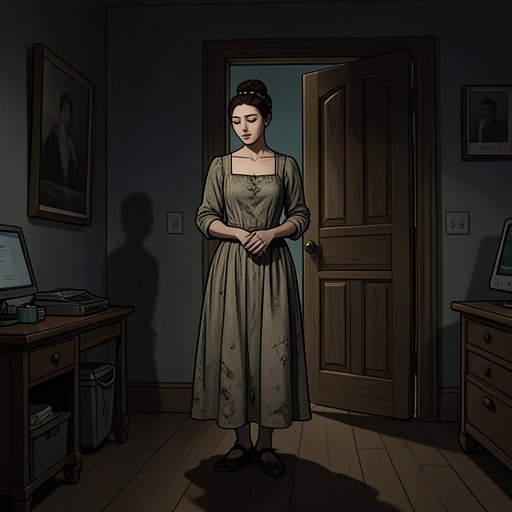
The termination is not isolated from the physical and emotional violence surrounding Su Qingrou. In another scene, Su Xiangwan finds her elder sister weeping silently, with deep and shallow kiss marks visible on her body. At the same time, she sees a picture of Lin Yanche passionately embracing Song Yun’er, taken at the very time the message has just arrived. These details connect the reproductive conflict to sexual betrayal and bodily violation: Su Qingrou’s body bears evidence of an intimate history, while Lin Yanche’s image with Song Yun’er supplies a competing picture of his own attachments.
The surrounding narrative repeatedly places women’s bodies under pressure from illness, desire, and male control. Su Qingrou’s reproductive decision is argued over as though the pregnancy were property belonging to Lin Yanche, while Su Xiangwan later collapses from a high fever at an elevator entrance and must be physically protected by others. Su Xiangwan’s own childhood memory is also shaped by bodily and familial trauma: she remembers being told that her mother had a terminal illness and watching her walk onto a balcony after believing that she was protecting the family. These episodes do not make the pregnancy termination identical to the other crises, but they establish a recurring narrative environment in which women’s bodies carry family conflict and are repeatedly treated as sites of responsibility, danger, or control.
Lin Yanche’s own history complicates the emotional landscape without canceling his conduct. Lu Xun recalls that he was kidnapped at the age of twelve, drugged by his kidnappers, and nearly lost his life; the experience left him resistant to many drugs. That history shows how the novel links present control and fear to earlier bodily trauma, but it does not provide evidence that trauma absolves anyone of responsibility. The action remains defined by the clash between Lin Yanche’s wounded claim and Su Qingrou’s decision to end the pregnancy.
Consequences and Relationships
The termination deepens the estrangement between Su Qingrou and Lin Yanche rather than producing a shared process of mourning. Lin Yanche’s declaration that he will not let the matter go signals continuing retaliation or confrontation, while Su Xiangwan’s refusal to plead with him removes one possible avenue for restoring the relationship. The couple’s plans to remarry are already compromised by Song Yun’er’s continued presence and by Lin Yanche’s unresolved suspicions; the lost pregnancy becomes the event through which those earlier failures are concentrated and made impossible to ignore.
The event also strengthens the alliance between the sisters. Su Xiangwan does not speak as a detached observer. She accepts that Su Qingrou’s choice may provoke pain, yet she stands against the demand that Su Qingrou surrender decision-making power to Lin Yanche. Later, when Su Qingrou considers holding a small engagement ceremony with Jin Zhengnan for the benefit of their two companies, the proposal appears as part of her attempt to construct an alternative future beyond Lin Yanche’s anger and instability. The plan is not presented as a simple emotional resolution; it is tied to family and corporate interests, showing how marriage and engagement function both as intimate bonds and as strategic protections.
The relationship between Su Qingrou and Lin Yanche therefore moves from failed reconciliation toward open rupture. Lin Yanche’s accusation, Su Xiangwan’s defense, and the evidence of his continued involvement with Song Yun’er together transform the pregnancy termination into a test that he fails to meet through responsibility or self-examination. Its lasting consequence is not merely the loss of a child but the exposure of a relationship whose promises of remarriage cannot withstand conflicting loyalties and unequal ideas of consent.
Narrative Significance
As an action, Su Qingrou Terminates Her Pregnancy with Lin Yanche condenses several of the book’s central tensions: love against freedom, marital expectation against bodily autonomy, family duty against individual choice, and emotional injury against moral accountability. Lin Yanche’s grief is given space, but the narrative refuses to make grief a license to command. Su Xiangwan’s answer supplies the event’s ethical center: the person who bears the physical consequences cannot be treated as a subordinate awaiting permission.
The episode also belongs to the novel’s recurring pattern of trauma returning through the body. Earlier losses, family suicide, illness, fever, coercive intimacy, and possessive attachment all surround the reproductive conflict. Physical suffering becomes a language that the characters often understand more readily than mutual responsibility: Lin Yanche speaks through rage over flesh and blood, Su Qingrou’s distress is visible on her body, and Su Xiangwan’s fever culminates in collapse. Against that pattern, Su Qingrou’s termination is an act of decision, even though the decision produces further pain. Its significance lies precisely in that contradiction: the choice does not make the surrounding world safe, but it denies Lin Yanche the power to define her body and future entirely through his wounded claim.