Su Xiangwan's Wedding Dress
CEO's Beloved Honey GirlSu Xiangwan's Wedding Dress is the extravagant bridal garment Lu Xun commissions for Su Xiangwan after their unstable marriage reaches a moment of apparent reconciliation. It begins as a public sign of marital status and an attempt to prepare a future wedding, yet becomes a contested object when Su Xiangwan discovers that it embodies Lu Xun's taste, Song Yuner's desire, and the emotional history she is trying to escape. Her refusal to accept its meaning, followed by Lu Xun's decision to destroy it and make another, exposes the possessive logic beneath the ceremony: the dress is treated as proof of love, but also as property that can be claimed, surrendered, or remade according to competing wills.
Commission and Marital Meaning
Lu Xun has already reserved the dress when he tells Su Xiangwan that, if there are no problems, they will go and take wedding photographs. He wraps an arm around her waist while speaking earnestly, making the garment part of a hurried plan to formalize or renew their union. Su Xiangwan responds with a smile and asks whether they can proceed more slowly; Lu Xun answers that haste is necessary because he fears she may run away. The dress therefore carries a double function from its first appearance. It promises a wedding, but it also registers Lu Xun's anxiety about abandonment and his effort to secure Su Xiangwan through ceremony.
The garment is associated with the title of Mrs. Lu even before Su Xiangwan accepts it emotionally. When the Bridal Shop calls to say that her wedding dress has arrived and addresses her as Mrs. Lu, the title strikes her as glorious but also as a shackle. The dress materializes that contradiction. It gives her a recognized marital identity while binding her to a relationship in which status does not necessarily provide emotional safety or freedom.
Su Xiangwan's Rejection
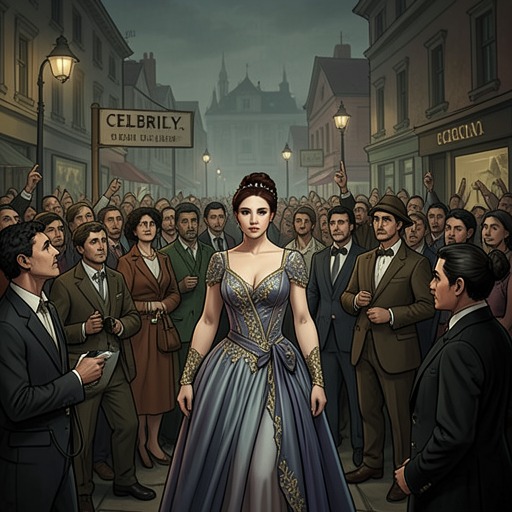
When Su Xiangwan goes to the Bridal Shop, she sees an extravagant and exaggerated dress and immediately feels her enthusiasm disappear. The dress does not suit her preferences. Its scale and ornamentation appear to reflect what Lu Xun thinks should be worthy of his wife rather than what she herself wants to wear. The object is lavish, but that lavishness becomes alienating because it presents marriage as an externally designed spectacle.
Her rejection is specific rather than merely emotional. Su Xiangwan explains that she dislikes a low-cut style and prefers sloping shoulders; she does not want luxury diamonds and favors simplicity; and she cannot accept the infatuated expression in Song Yuner's eyes when Song Yuner looks at the dress. These objections connect design to memory and rivalry. The problem is not only the neckline, the diamonds, or the extravagance. The dress has become saturated with another woman's desire and with Lu Xun's unresolved attachment to that desire.
Transfer, Rivalry, and Destruction
At the Bridal Shop, Su Xiangwan and Su Qingrou hear Song Yuner praising the dress as her dream wedding dress, especially admiring the colored diamond at its waist. Lin Yanche offers to buy it for her. Su Xiangwan then tells Song Yuner that she can have it. Her offer is startling because the garment was commissioned for her, yet she refuses to defend it as a sacred symbol of her marriage. By giving it away, she strips it of the power to dictate her feelings and turns Lu Xun's expensive gesture into something she can dispose of on her own terms.
Lin Yanche questions whether it is appropriate for Su Xiangwan to give away the wedding gown Lu Xun prepared for her. Su Xiangwan answers that once Lu Xun gave it to her, it became hers. She says that she never particularly liked its exaggeration and frames the transfer as a favor to Lu Xun: Song Yuner can wear the wedding dress he designed even if she cannot marry the person who designed it. The gesture is generous on its surface but pointed in its implication. It forces Song Yuner's longing, Lin Yanche's engagement to her, and Lu Xun's emotional investment into the same visible object.
Lu Xun refuses to let that transfer stand. He turns to the frightened shop assistant and orders the dress to be put away, then commands that all of it be removed. When Song Yuner protests that he should not vent his anger on clothing merely because of her and Lin Yanche, Lu Xun declares that if his woman does not like it, he will tear it down and make it again until she does. He presents the destruction as proof of devotion and wealth, insisting that he is willing to spend rather than preserve what Su Xiangwan rejects. Yet the act also reveals control: instead of accepting her decision to give the dress away, he reasserts authority over the object and over the meaning of the marriage it represents.
The scene gains an additional edge because Lu Xun's response echoes Lin Yanche's earlier treatment of Su Qingrou. Lin Yanche has threatened Su Qingrou with harm to Jin Zhengnan if she leaves his manor, and he has used her vulnerability to confine and intimidate her. Lu Xun's destruction of the dress is not equivalent to that coercion, but the narrative places the two men's possessive gestures in the same field of comparison. The wedding garment becomes a surface on which different forms of male ownership, rivalry, and retaliation are made visible.
Redesign and Aftermath
After leaving, Lu Xun stops the car near the old residence rather than immediately taking Su Xiangwan onward. He asks what style of wedding dress she likes and lights a cigarette while waiting for an answer. His question acknowledges that the first commission failed, but it does not erase the pressure surrounding it. Su Xiangwan says that she can tour wedding shops when she has time; Lu Xun rejects this as an attempt to fool herself or someone else, arguing that she cannot simply choose an arbitrary dress after dismissing an internationally famous designer's work.
Su Xiangwan's answer establishes the terms of a possible replacement. She wants a sloping-shoulder design, simplicity instead of luxury diamonds, and a garment free from Song Yuner's visible fascination. Lu Xun reacts unhappily, particularly when Su Xiangwan suggests that Song Yuner is more infatuated with him than with Lin Yanche and will not marry into the Lu Family. The replacement dress is therefore not a neutral second attempt. It must be designed against the first dress's failures: against ostentation, against borrowed desire, and against the triangular emotional arrangement that made the original impossible for Su Xiangwan to wear.
The object also belongs to a broader pattern in which marriage is negotiated through money and material claims. Su Xiangwan later proposes divorce, refuses Lu Xun's property and alimony, and offers to convert his five hundred million in capital into shares and return it with interest. Her position treats the marriage as an account that can be settled, while Lu Xun's insistence on remaking the wedding dress treats it as a bond that can be visually and materially renewed. The contrast explains why the garment carries such weight: it stands between contractual calculation and possessive romantic repair.
Symbolic and Narrative Significance
Su Xiangwan's Wedding Dress functions as an object of displaced conflict. Song Yuner's admiration makes it a fantasy of marriage; Lin Yanche's willingness to buy it turns that fantasy into a transaction; Su Xiangwan's offer converts it into a relinquished possession; and Lu Xun's destruction transforms it into an instrument of anger and renewed control. Each person sees a different object, although the physical garment remains the same until Lu Xun orders it removed and remade.
Its symbolism is sharpened by the surrounding bodily and emotional violence. Su Qingrou's tear-stained face and visible kiss marks reveal the coercive conditions from which Su Xiangwan is trying to protect her, while Su Xiangwan herself later develops a fever after sleeping without clothes and is left physically weak. Against these vulnerable bodies, the wedding dress appears as a polished, expensive promise of order. The narrative repeatedly shows that ceremonial surfaces cannot by themselves guarantee safety, consent, or trust.
The dress consequently marks a turning point in Su Xiangwan and Lu Xun's relationship. Lu Xun begins with a garment designed according to his own idea of magnificence, then destroys it when Su Xiangwan refuses its emotional baggage, and finally asks her to specify what she can accept. The movement from commission to rejection, from rejection to destruction, and from destruction to redesign does not resolve the marriage's deeper imbalance. It does, however, make the central conflict unmistakable: a wedding dress can symbolize union only when the woman who must wear it is allowed to recognize herself in it.