Su Xiangwan’s weakness and fever
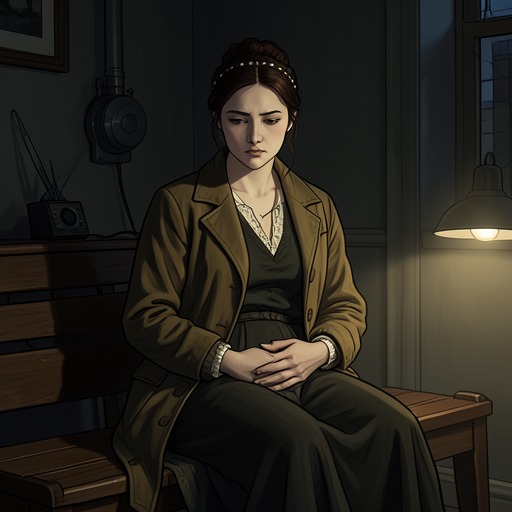
CEO's Beloved Honey GirlSu Xiangwan’s weakness and fever are a recurring condition that shapes her movements, relationships, and place within the household. The narrative presents her as someone who resists being treated as delicate even while her body repeatedly forces others to recognize its limits: menstruation is described as feeling like dying once, a cold can produce a fever lasting three days and three nights, and one severe episode leaves her unable to stand. Her illness therefore becomes both a lived physical burden and a source of contested authority, because Lu Xun responds by arranging care while Su Xiangwan continues to defend her independence.
Bodily Experience and Longstanding Vulnerability
Su Xiangwan’s fragility is not confined to a single attack of fever. When Lu Xun asks whether she feels uncomfortable every month, she explains that menstruation is intensely painful and that she may need painkillers merely to function. Her answer gives a concrete measure of the condition that others around her have failed to notice. Lu Xun then realizes that, since their marriage, she may have been taking painkillers every month without his awareness. The revelation changes his understanding of her apparent strength: what looked like ordinary endurance has also involved repeated, concealed suffering.
Her physical weakness is also described as longstanding. Lin Yanche tells Lu Xun that she has been weak since childhood and warns that even an ordinary flu can affect her severely. The warning is not abstract. It links her bodily history to the possibility of a fever lasting several days and presents her health as a danger that Lu Xun has underestimated. The condition thus carries a temporal depth, reaching back before the immediate crisis and making her present vulnerability part of an established pattern rather than an accidental collapse.
The Three-Day Fever Crisis
The most visible crisis occurs after Su Xiangwan has been ill for approximately three days. When she wakes in an unfamiliar small bedroom, she is too weak to sit up properly. Mo Beiyu identifies himself, gives her warm water, and supports her against him while feeding her. She is reluctant even to drink, but he insists that someone who has been feverish for two days cannot refuse fluids. His intervention shows the practical consequences of the fever: Su Xiangwan is not merely uncomfortable but unable to manage basic care independently.
The illness reaches its decisive physical expression when she tries to leave. Her feet feel as though they are stepping on cotton, her legs are sore and weak, and her body burns with fever while her consciousness fades. At the elevator, she reaches for the button but loses consciousness before touching it and falls to the floor. The collapse converts the earlier warnings into visible fact. Her determination to move forward cannot overcome the immediate authority of her body, and the people around her must respond to her as a medical emergency.
Lu Xun’s reaction is shaped by alarm and anger. He is told that she has fainted from a fever lasting three days, and a doctor rebukes him for failing to take her to a hospital sooner. The episode exposes a contradiction in his protectiveness: he is capable of commanding others and threatening consequences, yet he has not recognized how serious Su Xiangwan’s condition has become. His urgency after the collapse is therefore also an acknowledgment of earlier neglect.
Care, Marriage, and Control
After the crisis, Lu Xun attempts to institutionalize Su Xiangwan’s recovery within the home. He tells her that a traditional doctor will come to check her pulse and that she must take the prescribed medicine. He frames the request gently, asking her to cooperate so that he can leave for the company without worrying. Su Xiangwan rejects the implication that she is fragile, insisting that she is not so delicate, but eventually agrees to the examination and treatment.
The exchange makes care inseparable from marital power. Lu Xun’s concern is genuine in the immediate scene, yet it is expressed through instructions, supervision, and the expectation of obedience. Su Xiangwan’s body becomes evidence used to justify intervention, while her resistance becomes another way of asserting that illness has not erased her agency. The condition consequently intensifies an existing tension in their marriage: protection can preserve her safety, but it can also place decisions about her body in Lu Xun’s hands.
The same pattern appears when Lu Xun waits for her at the Hospital and proposes that they take his grandfather home together. His message places her illness within a wider network of family obligations, but the hospital setting also signals how quickly ordinary domestic plans can be displaced by medical emergencies. Even after the immediate danger passes, Lu Xun remains attentive to her health, and the household is reorganized around recuperation rather than routine.
Illness as Relational Knowledge
Su Xiangwan’s weakness repeatedly reveals truths that characters had ignored or misunderstood. Lu Xun’s discovery of her monthly pain undermines his assumption that he understands her completely. Lin Yanche’s warning forces him to confront the severity of her constitution, while Mo Beiyu’s hands-on care demonstrates how dependent she becomes during fever. Each disclosure changes the balance between appearance and reality: the woman who resists sympathy is also the woman who cannot reach an elevator button without collapsing.
The condition also contrasts with the illnesses of other characters. Lu Xun suffers a recurrence of his own illness and uses medication to stabilize himself, while Lin Yanche is later revealed to have liver cancer and to be waiting for a suitable liver donor, with death as the alternative. Su Qingrou’s acute appendicitis requires surgery and hospitalization. Against these different medical crises, Su Xiangwan’s fever is less a single diagnosis than a recurring state of bodily vulnerability, one that becomes especially consequential because it is woven into marriage, movement, and everyday care.
Narrative and Thematic Significance
Su Xiangwan’s weakness and fever give physical form to the gap between self-reliance and dependence. She repeatedly tries to continue, conceal discomfort, or reject the language of delicacy, yet pain and fever return as forces that cannot be argued away. The narrative uses these returns to make illness a witness to hidden suffering: the pain she has endured privately becomes legible only when another person notices the medication, hears the warning, or sees her collapse.
At the same time, the condition drives a cycle of protection and lost decision-making power. Mo Beiyu’s insistence that she drink water keeps her alive and functioning during the fever, while Lu Xun’s insistence on medical examination creates a structure of recuperation around her. Their care is necessary, but it also confirms that Su Xiangwan’s social position is altered whenever her body fails her. The illness therefore does not merely make her sympathetic; it tests whether intimacy will become attentive support or another form of control. By the end of the documented episodes, her weakness remains unresolved, but it has become central evidence of the limits beneath her defiance and of the emotional responsibility demanded by her marriage.