The Trauma of a Mother’s Suicide
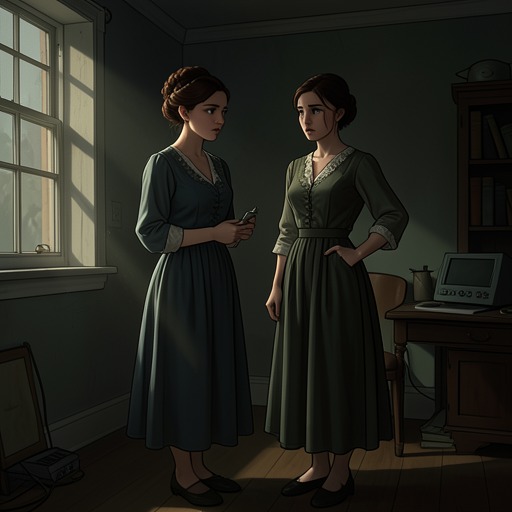
CEO's Beloved Honey GirlThe Trauma of a Mother’s Suicide is one of the deepest psychological forces shaping Su Xiangwan’s conduct and relationships. Her mother’s death is remembered as a suicide witnessed indirectly through a child’s drawing and the balcony from which her mother walked away, while the adults around her attempted to soften or conceal the truth. Years later, the memory returns through fever, sleep, fear, and pleas to be taken away, making the past an active presence rather than a completed family tragedy.
The Childhood Wound
Su Xiangwan remembers that her grandfather said her mother had a terminal illness and did not want to implicate the family. The explanation was meant to make the mother’s departure appear self-sacrificial, but it could not erase what Su Xiangwan herself recalled. While drawing a picture of her father and mother holding her hands, she believed the drawing was somehow at fault; after seeing it, her mother walked onto the balcony. The memory binds ordinary childhood creativity to catastrophic loss, leaving Su Xiangwan with a form of guilt that is irrational in cause but emotionally durable.
The family’s silence intensifies the wound. Su Xiangwan tells Lu Xun that her grandfather believed she could not remember, although she did remember. She then asks Lu Xun not to mention the matter to her grandfather or to anyone else. Her request is not simply a wish to avoid sadness. It shows how the family has organized survival around omission, allowing the event to remain both known and unspoken. Lu Xun promises that they will not discuss the two dead relatives again and comforts her by imagining that they are happy elsewhere, but his reassurance does not resolve the memory’s force.
Trauma Returning Through the Body
The novel gives the trauma a bodily form. When Su Xiangwan is ill, she dreams that someone is touching her face with the gentleness of her mother’s hand. She calls out to her mother, asks whether she has come, and begs to be taken away because she is tired. Lu Xun, disguised by a hat and mask, watches from the edge of the bed while her fever rises and she speaks in her sleep. The scene links present illness to childhood bereavement: physical weakness lowers the boundary between past and present, and the lost mother becomes both a source of tenderness and an imagined route out of exhaustion.
Her fever is not an isolated symptom. On another occasion, Su Xiangwan wakes with severe bodily soreness and almost no strength after becoming ill during the night, then asks Manager Wu to buy antipyretic medicine. Later, while leaving a building, she is so weak and feverish that her legs feel insubstantial and she loses consciousness before pressing the elevator button. These episodes make vulnerability visible, but they also expose how easily a woman in distress becomes dependent on whoever controls access to care. The body carries the old fear while the surrounding relationships reproduce new forms of uncertainty.
Intimacy, Control, and Repetition
The trauma is repeatedly activated within Su Xiangwan’s marriage to Lu Xun. When she proposes divorce, she offers to return his five hundred million in capital as shares, including the interest, and says she will take none of his property or alimony. Her attempt to convert the marriage into an accounting of debt suggests a desire to regain control by making herself financially absent. Yet the relationship has also involved coercion and possessive authority, so the security she seeks from Lu Xun remains inseparable from the danger he represents.
The same pattern appears in the novel’s wider treatment of intimate power. Lin Yanche threatens Su Qingrou with harm to Jin Zhengnan if she leaves the manor, turning attachment into confinement and fear. Mo Beiyu later condemns Lu Xun for leaving his wife in such a condition that she faints beside the road, while Lu Xun and Mo Beiyu confront one another over the legitimacy of a man claiming authority over a woman he has harmed. These conflicts do not duplicate Su Xiangwan’s childhood loss exactly, but they place her within a recurring structure in which love, protection, possession, and physical danger are difficult to separate.
Lu Xun’s response to Su Xiangwan’s distress is correspondingly divided. When she is frightened, he embraces her and tells her that he is there; when she cries, he holds her and says he has been there all along. His care offers the stable presence absent from the story of her mother, and the language of constant presence directly answers her terror of being left. At the same time, the surrounding marriage remains marked by control, secrecy, and conflict. The comfort therefore works as both genuine emotional support and a reinforcement of dependence: Lu Xun becomes the person who can calm the fear because he is also central to the unstable world producing it.
Witnessing and Recognition
Lu Xun’s understanding changes when Su Xiangwan explains what happened to her mother. Before hearing the account, he reacts to her pain with confusion and irritation; afterward, he wipes away her tears and reproaches himself for having acted like a scoundrel. His recognition does not erase his earlier conduct, but it changes the moral temperature of their interactions. He begins to see that what may appear to him as excessive sensitivity is connected to a history of loss, concealment, and fear.
This recognition is complicated by Lu Xun’s own childhood trauma. He tells Su Xiangwan that he was kidnapped at twelve, drugged by the kidnappers, and nearly lost his life; afterward, he became resistant to many drugs. The parallel does not make the two wounds identical, but it creates a fragile basis for mutual recognition. Both characters carry memories in which helplessness is imposed by others, and both respond to danger through forms of control or guardedness. Their shared understanding remains incomplete because Lu Xun’s trauma does not excuse his treatment of Su Xiangwan, yet it helps explain why he responds to danger with severity while she responds through flight, illness, and pleas for protection.
Narrative Significance
The trauma gives the novel a recurring structure of return. A childhood scene that cannot be fully narrated reappears as a fever dream; a mother’s absent hand is replaced by another person’s touch; a frightened girl becomes an adult woman who still asks to be taken away when exhaustion overwhelms her. The repetition makes the past legible without allowing it to become safely distant. It also turns witnessing into an ethical demand: Lu Xun must hear what Su Xiangwan remembers before he can interpret her behavior responsibly.
The trauma further clarifies the contrast between care and control. Su Xiangwan has a grandfather who loved her and a cousin who doted on her, but she also grew up with an absent mother and a family story shaped by silence. Her later dependence on Lu Xun is therefore not merely romantic. It is tied to the longing for someone who will remain beside her when illness and fear return. The novel does not present that longing as simple healing. Instead, it shows how an unresolved loss can make protection feel indispensable even when the protector’s authority threatens freedom.
By the surrounding crises, the pattern has widened beyond the original family event. Fever, collapse, forced separation, threats against loved ones, and the need to be carried or guarded all echo the childhood experience of sudden abandonment and powerlessness. Yet the scenes of comfort also create moments in which Su Xiangwan is seen rather than dismissed: Lu Xun observes her fevered speech, wipes her tears, embraces her after danger, and remains present when she is afraid. The Trauma of a Mother’s Suicide thus functions as both wound and interpretive key. It explains why absence is never only absence, why illness becomes a doorway to memory, and why every promise of protection carries the unresolved question of whether closeness will finally mean safety or another form of captivity.