The house is empty without you
CEO's Beloved Honey GirlThe house is empty without you is a defining expression of Lu Xun’s attachment to Su Xiangcheng. Spoken after he has brought her back and tended the wounds on her body, it turns an apparently ordinary house into an emotional instrument: without her, it contains space but no life; with her, it becomes recognizably a home. The line therefore links intimacy to presence while also revealing the possessive, damaged conditions under which their relationship has been restored.
Definition and Immediate Context
The expression appears when Lu Xun carries Su Xiangcheng after she has returned to him. He tells her that getting her back has made life more interesting and that the house lacks even a trace of life without her. Su Xiangcheng responds with a cold sneer rather than accepting the declaration at face value. She continues to ignore him until he has finished applying medicine to the wounds on her body, then pulls up her blanket and prepares to sleep while her hair is still wet.
The surrounding actions prevent the sentence from functioning as uncomplicated romantic reassurance. Lu Xun’s words describe emotional dependence, but the scene also records the physical consequences of conflict and the need for care after harm. His tenderness appears through carrying her, treating her wounds, bringing her hot milk, and trying to comfort her; her silence and refusal to be coaxed preserve her resistance. The expression thus holds affection and injury in the same frame.
The House as Emotional Space
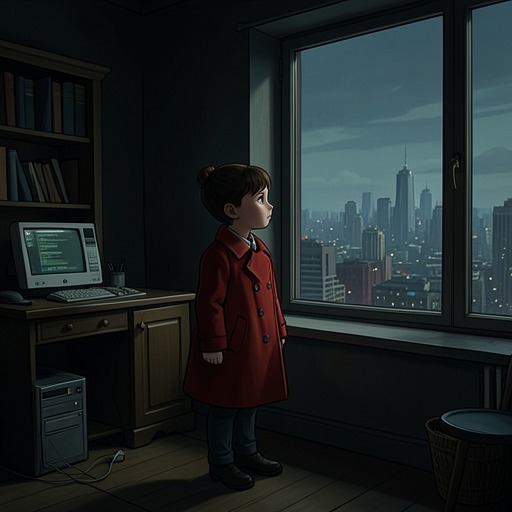
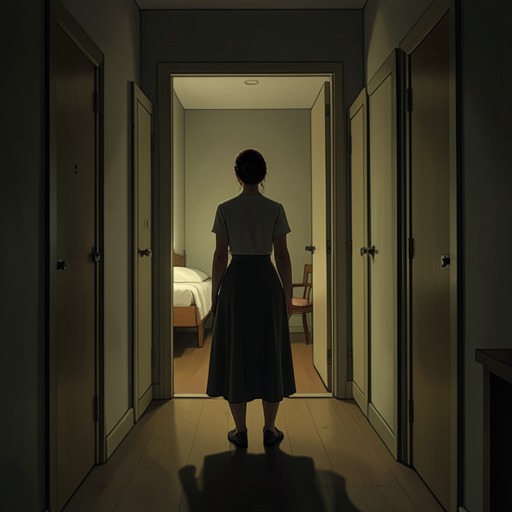
Lu Xun’s statement gives the house a human quality. It is not described as materially damaged or literally deserted; its emptiness is relational. The residence becomes lifeless because Su Xiangcheng is absent, and her return supplies the signs by which domestic life can be recognized. In this sense, the line changes the meaning of home from a building into a shared emotional arrangement.
This spatial image also explains the force of Su Xiangcheng’s absence. Her disappearance is not merely a break in routine, nor only a separation between two spouses. It removes the person through whom Lu Xun experiences the residence as inhabited. The contrast between an empty house and a home makes absence visible without requiring a long confession: the architecture becomes the language of attachment.
Trauma, Care, and Reassurance
The expression gains additional weight beside the characters’ remembered trauma. Su Xiangcheng recalls that her mother had a terminal illness, withdrew to avoid implicating the family, and later walked onto a balcony after seeing a drawing of her parents holding her hand. The memory reveals a childhood encounter with abandonment and suicide that remains bound to family love, guilt, and loss.
Lu Xun carries a different childhood wound. He recounts that he was kidnapped at twelve, that his kidnappers used various medicines, and that he nearly lost his life before becoming resistant to drugs. He narrates the experience with an unwavering gaze, as though describing someone else, suggesting that the old pain has been distanced without being erased. His later insistence on keeping Su Xiangcheng close can therefore be read alongside an established history of sudden danger and threatened loss, although the scene does not reduce his conduct to that history.
The domestic reassurance becomes especially exposed when Su Xiangcheng is frightened. After bringing her hot milk, Lu Xun finds her dazed and nearly unfocused. She cries that she is scared, and he holds her, telling her not to be afraid because he has been there all along. The wording makes presence into a promise of protection, while the earlier evidence shows why such reassurance is necessary: both characters carry memories in which the people or structures meant to provide safety have failed.
Value Shift and Narrative Function
The expression marks a shift from separation toward renewed proximity, but not toward uncomplicated security. Before Lu Xun retrieves Su Xiangcheng, the house signifies her absence and his emotional vacancy. After he gets her back, its value changes: the same domestic setting becomes charged with life, care, and conflict. The emotional movement is therefore from emptiness to presence, with the unresolved injuries of their relationship still active inside that change.
The line also condenses a recurring tension in Lu Xun and Su Xiangcheng’s relationship. Lu Xun seeks closeness through pursuit, caretaking, and declarations that the household cannot function emotionally without her. Su Xiangcheng answers through withdrawal, silence, skepticism, and control over when she will accept care. His sentence reaches toward reconciliation, but her refusal to respond warmly prevents the house from becoming a simple symbol of restored harmony.
As a repeated domestic image, the expression makes private space carry the burden of plot and character. The house does not merely shelter the couple after their separation; it registers whether their relationship is alive, fractured, or being forcibly reassembled. Its emptiness is consequently both emotional fact and narrative pressure: Lu Xun’s need for Su Xiangcheng’s presence explains the urgency of bringing her back, while her guarded response shows that physical return has not yet repaired trust.