Two Forms of Marriage
CEO's Beloved Honey GirlTwo Forms of Marriage is a concept voiced by Chu Fei during a conversation with Su Xiangwan about her troubled marriage to Lu Xun. It divides married life into two models: a dramatic union in which the spouses pledge themselves completely and love each other to the point of emotional ruin, and a quieter partnership founded on respect, coexistence, and practical mutual benefit. In the novel, the distinction is not an abstract social theory. It becomes a way to measure the distance between the marriage Su Xiangwan has and the peaceful life she wishes she could accept.
The Two Models
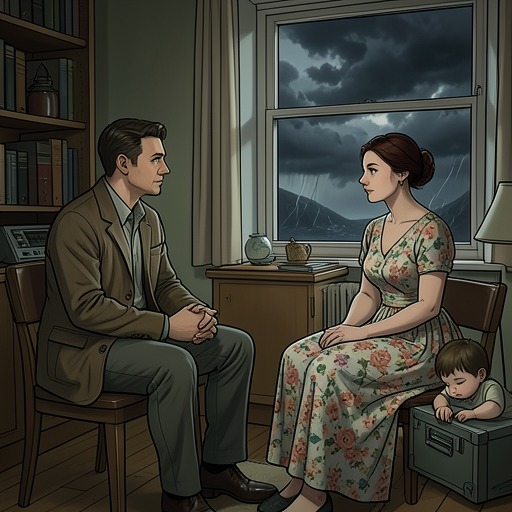
Chu Fei explains that one form of marriage promises life and death and treats love as an all-consuming force. The other asks the spouses to respect each other and live together, even if the relationship lacks the overwhelming intensity associated with romantic passion. He initially believes that Su Xiangwan and Lu Xun might belong to the second category, but he revises that judgment because their youth and impulsiveness have pushed them toward the first, more absolute and one-sided model.
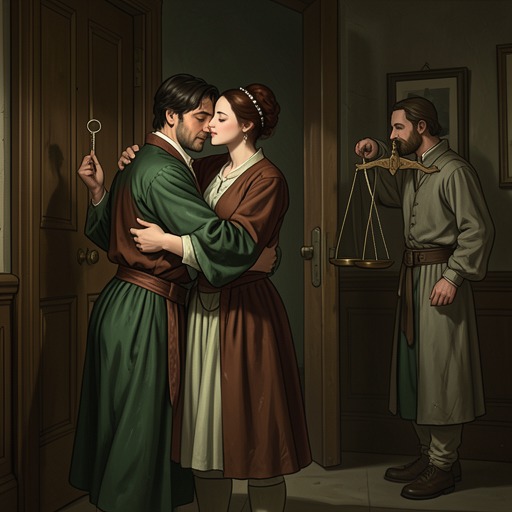
The distinction therefore carries a structural contrast between intensity and sustainability. The first form is emotionally magnificent but dangerous when devotion is not mutual. The second may appear less passionate, yet Chu Fei presents it as more beneficial to the body and mind. His formulation does not claim that quiet companionship is automatically loving; rather, it identifies respect and stable coexistence as conditions under which marriage might become livable instead of a continuous struggle for possession.
Su Xiangwan’s Crisis
Su Xiangwan’s response shows why the concept matters to the plot. She asks whether she has been foolish for allowing her life to become so disordered. Even after returning to the Su Family Ancestral Home and living peacefully, she cannot calm her heart. Her desire to escape Lu Xun is therefore not matched by emotional detachment. Physical distance offers tranquillity, but it does not dissolve the attachment that keeps drawing her back toward the marriage.
Her uncertainty is intensified by the unequal terms under which the relationship began. When she proposes divorce, she says that she will take none of Lu Xun’s property or alimony and will convert the five hundred million in capital from the marriage arrangement into shares, returning the capital with interest. The proposed settlement treats the relationship as an account that can be closed, yet Lu Xun answers by reducing their intimacy to a humiliating calculation about whether she is worth the money. The exchange exposes how contractual and emotional meanings collide: she seeks autonomy through financial separation, while he frames the marriage through power, sex, and insult.
The novel also places this conflict beside more extreme forms of marital coercion. Lin Yanche threatens Su Qingrou with harm to Jin Zhengnan if she leaves his manor, and Mo Beiyu later condemns Lu Xun after Su Xiangwan is found unconscious by the roadside, accusing him of having tortured his woman and calling him a rapist. These episodes make the ideal of respectful coexistence ethically significant. They show that the language of marriage can conceal confinement and violence when one partner has the power to enforce obedience and the other has no effective means of refusal.
Respect, Control, and Kinship
The theory is tested by the novel’s repeated confusion between marital, familial, and romantic boundaries. Lu Xun explains that Shen Yiyun is his adopted uncle’s child and therefore his cousin, while Su Xiangwan resents learning important information only after the fact. Later, she challenges the authority of bloodless kinship, arguing that a relative connected only by name remains a man or woman rather than an unquestionable family member. The argument reveals how labels such as cousin, sister, wife, and relative can function as social protections, sources of suspicion, or instruments of control.
Lu Xun’s own behavior repeatedly unsettles the respectful model. He demands emotional and marital recognition even when trust has been damaged, yet the relationship also contains gestures of reassurance and attachment. When Su Xiangwan, while intoxicated, pulls off his shirt and calls him her husband, Lu Xun remains uncertain whether she knows who he is. The scene makes the title of husband both intimate and unstable: it can signify genuine recognition, drunken performance, or the fragile security he needs to hear confirmed.
The same instability appears in the contrast between public status and private vulnerability. Su Xiangwan’s fever leaves her body sore and nearly without strength, forcing her to ask Manager Wu to buy antipyretic medicine. Illness makes the supposedly powerful wife dependent on household assistance, while the surrounding marital order still expects her to endure emotional pressure. Marriage thus appears not merely as a private bond but as a system in which money, family position, gender, bodily weakness, and social naming determine whose wishes can be acted upon.
The Hope of a Livable Marriage
Chu Fei’s argument offers Su Xiangwan a possible alternative to the romance of total surrender. He suggests that Lu Xun may not be completely beyond repair and that letting go could explain why another person is doing well. In this framework, emotional recovery depends less on winning absolute possession than on abandoning the demand that marriage must be soul-stirring in order to be meaningful.
Su Xiangwan does not suddenly become confident that Lu Xun loves her. Her hope remains deliberately modest. She has never dared to expect him to fall in love with her; she wants only a peaceful life. That wish echoes the second form of marriage, but the novel leaves its achievement uncertain. A peaceful household would require more than a title, a financial arrangement, or a temporary reconciliation. It would require the conversion of fear and rivalry into respect, and the replacement of enforced attachment with a relationship both people can inhabit without coercion.
By the later reflection that the hostility between them might gradually lessen until they could see each other as kin, the concept acquires an ending-oriented dimension. Su Xiangwan imagines not a triumphant declaration of perfect passion but the slow reduction of enmity. The possibility of becoming family in a less possessive sense offers a fragile form of emotional security, even as her continued concern for Lu Xun shows that she has not escaped the marriage’s pull. Two Forms of Marriage therefore functions as both diagnosis and aspiration: it names the destructive appeal of absolute love and proposes respect, endurance, and peace as the harder conditions of a genuinely sustainable union.