Western Suburbs
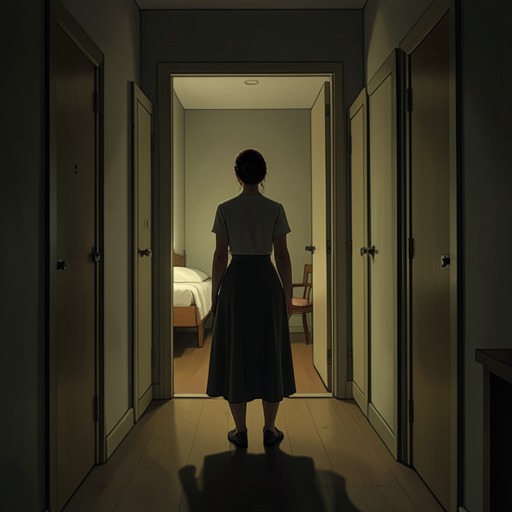
CEO's Beloved Honey GirlWestern Suburbs is an outer urban zone whose narrative importance lies less in its geography than in what movement through it reveals. Cars, estates, police visits, and departures turn the district into a threshold: people enter it seeking reconciliation, concealment, or strategic advantage, and emerge with relationships or dangers newly exposed.
Setting and Spatial Function
Western Suburbs is presented through travel rather than static description. Lu Xun brings Su Xiangwan there by car, and as the vehicle continues inward she increasingly suspects that they are approaching Lin Yanche’s manor. The suspicion gives the road a double function: it is both a physical route and a line of anticipation, carrying Su Xiangwan toward a place associated with Lin Yanche while keeping the actual destination uncertain.
The car ultimately stops near the manor but not at it. Lu Xun instead takes Su Xiangwan to an estate outside the manor grounds, transforming the Western Suburbs from a straightforward destination into a layered territory of adjacent properties and concealed intentions. The distinction between the manor and the separate estate matters because Lu Xun’s action depends on controlling where Su Xiangwan is taken without immediately disclosing why.
Lu Xun and Su Xiangwan’s Arrival
The journey follows Lu Xun’s effort to persuade Su Xiangwan not to return home. He asks her to accompany him somewhere and frames the request through intimacy, calling her his wife while trying to soften her resistance. Western Suburbs therefore receives them at a moment of relational negotiation: the drive is not merely transportation but an extension of coaxing, with Lu Xun using movement and destination to keep the encounter going.
When they arrive, Su Xiangwan pretends not to understand why she has been brought there and asks for an explanation. Lu Xun responds by holding her hand and asking what she thinks, replacing a direct explanation with a gesture and a controlled ambiguity. The Western Suburbs scene consequently links the location to the couple’s recurring tension between pursuit and disclosure: Lu Xun creates proximity, while Su Xiangwan tests the purpose behind it.
Estates, Entrances, and Restricted Space
The district’s association with estates gives it a broader spatial meaning. Lin Yanche’s manor represents a privately controlled zone where access can carry serious consequences. In another scene, Lin Yanche threatens Su Qingrou with harm to Jin Zhengnan if she leaves the manor, turning the estate boundary into an instrument of coercion. Although the threat occurs within the manor rather than at a specifically stated point in Western Suburbs, it clarifies the kind of territory toward which Su Xiangwan believes the car is heading: a space where private ownership, confinement, and interpersonal power overlap.
The contrast between Lu Xun’s separate estate and Lin Yanche’s manor also complicates the district’s apparent openness. The surrounding area permits movement between properties, yet each property imposes its own rules of entry and departure. Western Suburbs thus functions as a connective landscape whose roads appear open while the estates along them can be intensely controlled.
Wider Narrative Echoes
Other episodes extend this threshold pattern beyond Western Suburbs. When police officers visit Liu Xi and Mo Beiyu’s residence, four or five officers stand at the door, accompanied by a noble-looking man in a low hat and additional apparent bodyguards. They ask whether a young woman rescued by the roadside two days earlier is inside. The scene turns a residence into an investigative checkpoint, showing how an apparently private shelter can suddenly become exposed to official and unofficial scrutiny.
A different form of transit occurs when Lu Xun and another man fly directly to Yan City. Chu Fei’s men are already waiting at the airport, apparently having calculated their arrival time. Lu Xun has brought many people, so the travelers do not initially fear for their safety; instead, the appearance of Chu Fei’s forces resolves doubts they had been carrying. Like the road through Western Suburbs, the airport is a passage that ends in recognition of a concealed confrontation. Movement does not escape conflict; it reveals where conflict has been arranged.
Narrative Significance
Western Suburbs is significant as a liminal space between ordinary domestic life and the concentrated power of estates, surveillance, and organized confrontation. Its most intimate scene involves Lu Xun holding Su Xiangwan’s hand, while its surrounding associations include threats against a woman’s departure, police inquiries into a rescued woman, and the strategic reception of Lu Xun’s party in Yan City. These contrasts make the district a spatial hinge in the narrative. It is where persuasion can become controlled access, where a suspected destination can conceal a different one, and where travel repeatedly turns into knowledge about who is waiting, who is trapped, and who controls the next door.