
The Pursuit of Possession
CEO's Beloved Honey GirlThis flow examines how romantic pursuit repeatedly turns into possession across the novel’s major relationships.
increasing Bearing strength in each event
 decreasing
Bearing strength in each eventdecreasingBuying Access

Love Purchased
The contract
Lu Xun’s money gives him access to Su Xiangcheng’s life, even though the arrangement is described as mutual.
Consent under pressure
The novel begins by making romance inseparable from economic coercion. Every later expression of tenderness must answer that origin.
Jealous Surveillance
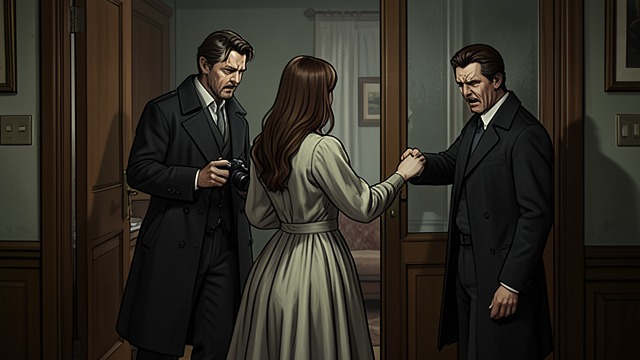
Watching the Wife
Photographs
Lu Xun has Su Xiangcheng followed and confronts her with photographs of Qin Mo touching her hand.
Control disguised as fear
His surveillance comes from genuine fear of losing her, but it denies her privacy. The relationship reveals how easily protection becomes ownership.
The Mo Beichen Claim

Gratitude Demanded
A forced claim
Mo Beichen insists that Su Xiangcheng owes him intimacy because she once saved him.
Rejection
She refuses the logic that kindness creates sexual debt. Her resistance clarifies the difference between emotional attachment and entitlement.
Lin Yanche's Cage

Love as Confinement
The estate
Lin Yanche treats Su Qingrou’s presence as something he can physically enforce. The manor becomes a symbol of a relationship that has lost mutuality.
The rescue
Su Qingrou’s escape shows that possession cannot create love. It can only prolong fear and delay separation.
Possession Questioned

Holding Without Owning
Lu Xun changes
Lu Xun begins asking Su Xiangcheng to stay rather than simply ordering her. His language becomes more vulnerable.
An unfinished lesson
The story does not declare possession solved, but it shows that love becomes less destructive when the beloved can refuse.
at the beginning of the marriage
after Qin Mo meets Su Xiangcheng
during Mo Beichen's pursuit
during Su Qingrou's imprisonment
near the ending
