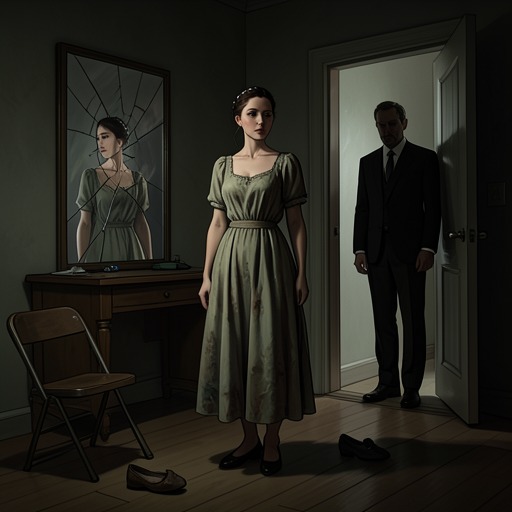
Lin Yanche and Song Yun'er's Romance and Engagement
CEO's Beloved Honey GirlLin Yanche and Song Yun'er’s romance and engagement are marked by a sharp divide between gestures that imply closeness and conduct that leaves Song feeling betrayed and abandoned. Lin invites her to accompany him to Europe, but when she later catches him embracing Su Qingrou, he refuses to explain himself. His subsequent proposal and willingness to buy Song’s chosen wedding dress suggest a renewed commitment, yet the available scenes do not confirm that this resolves the hurt or secures a lasting marriage.
Intimacy and the invitation to Europe
Lin’s invitation to Song presents the relationship in a moment of physical closeness. After calling her over, he pulls her into his arms and asks whether she wants to go to Europe. He says he is tired and wants to relax there, asking her to come with him. The scene gives Song reason to understand herself as someone Lin wants beside him: the invitation is not merely about travel, but is accompanied by an embrace and framed as a request for her company.
That apparent intimacy is important against the later scene of rupture. The narrative offers no account here of what happens on the proposed trip, so the invitation cannot establish that they travel together or that their relationship is secure. Instead, it supplies an early counterpoint to Lin’s later coldness: a man who draws Song close and asks her to accompany him can also leave her demanding an explanation for what she has witnessed.
The witnessed embrace and public rupture
Song’s sense of betrayal takes shape when she sees Lin holding Su Qingrou. She asks why he has done this to her, while Lin stands without answering. Su Qingrou moves in his arms, but he restrains her; the scene therefore makes Song a witness not only to their closeness but also to Lin’s physical control of the moment. Lu Xun urges them to take the dispute inside rather than continue it in front of others, but Song insists on receiving an explanation immediately.
Lin refuses to offer one. He answers that Song has seen what happened and asks what more there is to explain, speaking with a coldness that the people present—including Song—have not heard from him toward her before. The change in tone makes the encounter more than a discovery of an embrace: it is also a public break in the way Lin addresses Song. She asks what she has done wrong and challenges the way he is treating her. When she calls him a bastard and moves toward him, Lu Xun steps in and holds her by the waist, apparently to keep the confrontation from becoming physical. Song’s distress is thus witnessed and contained by others, while Lin gives her no account of his conduct.
Proposal and wedding preparations
A later report from Lu Xun presents a different turn: Lin has proposed to Song, and they are to arrange the wedding first, with the ceremony itself to take place after the mourning period. The distinction between preparing the wedding and holding it later matters. The proposal and arrangements give their relationship a formal direction, but the scene does not establish that the ceremony has occurred or explain how Song’s earlier demand for answers was addressed.
The wedding-shop episode makes the preparations tangible. Su Xiangwan and Su Qingrou hear Song admiring a wedding dress inside the shop, particularly its design, ornaments, and colored diamond at the waist, which she describes as the dress she has dreamed of wearing. Lin responds that he will buy it for her. His manner is still described as cold, so the offer combines a concrete act of provision with a lack of warmth in his voice. Song’s enthusiasm and Lin’s purchase offer show the engagement moving into the realm of objects and plans; they do not, by themselves, resolve the emotional rupture between them.
Abandonment and the unresolved bond
In a later conversation with Lu Xun, Song speaks of herself as having been abandoned and as having received what she deserved. She connects her own conduct to the way Lu has become, suggesting that she understands the damage between them as part of a wider history of hurt rather than as a single isolated quarrel. Her words register a changed position: the woman who once demanded an immediate explanation from Lin now describes herself in terms of loss and retribution. The account does not specify every step by which she reaches that understanding, so it cannot supply a complete history of the engagement’s outcome.
Taken together, the scenes leave the relationship suspended between formal commitment and personal injury. The embrace and invitation to Europe imply closeness; Lin’s refusal to explain himself turns a witnessed intimacy with Su Qingrou into a confrontation; the proposal and wedding dress point toward marriage without demonstrating reconciliation. Song’s later language of abandonment supplies the emotional aftermath, but the evidence does not confirm the final status of the engagement. The relationship’s defining tension is therefore not simply whether Lin and Song make wedding plans, but the distance between public preparations for a shared future and the unanswered hurt that shadows them.