Su Qingrou and Lin Yanche's Relationship Rupture
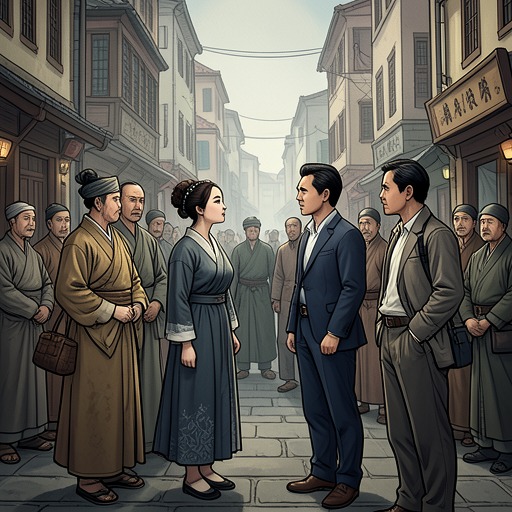
CEO's Beloved Honey GirlSu Qingrou and Lin Yanche's Relationship Rupture marks the point at which Su Qingrou refuses to continue treating a destructive attachment as a possible future. After enduring what Lin Yanche did to her and to her family, she acknowledges that hatred and love have remained bound together, making their relationship a form of self-torture. Her decision to leave him is therefore not a casual withdrawal but a conscious severing of emotional obligation, jealousy, and repeated pain.
Causes and Background
The rupture grows from a relationship already burdened by injury and competing loyalties. Su Qingrou has suffered because of Lin Yanche's actions, yet her feelings have never been simple. She later admits that she hated him for what he had done to her and her family while loving him more intensely because of that hatred. The contradiction kept her trapped: attachment drew her toward him, while memory and resentment made closeness unbearable.
Her pain was intensified by Lin Yanche's connection with Song Yun'er. Su Qingrou acknowledges that she had once been extremely jealous of the love and care Lin Yanche showed Song Yun'er. That jealousy was not an isolated romantic complaint; it became part of the larger emotional debt created by their history. She measured her own suffering against the devotion he had promised elsewhere, while the damage between them continued to make reconciliation morally and psychologically difficult.
The wider family history gives the break an additional tragic depth. Su Qingrou recalls that her mother had a terminal illness and left because she did not want to implicate the family. As a child, Su Qingrou drew an image of her father and mother holding her hand; after seeing it, her mother walked onto the balcony. The memory links family loss to childhood guilt and helps explain why intimate love is repeatedly associated with responsibility, abandonment, and harm rather than safety.
What Happens
The decisive confrontation occurs in the Hospital, where Prime Minister Lu accompanies Su Xiangcheng to his grandfather's ward and finds Su Qingrou and Jin Zhengnan already there. Su Qingrou warns Su Xiangwan that Lin Yanche has been hospitalized in the same Hospital and that Song Yun'er is also present. The setting places the former lovers amid illness, family observation, and the continuing consequences of their past actions.
Su Qingrou then declares that the matter is over. She says that she has already returned what Lin Yanche owed her and that they no longer need to remain entangled. Her words transform the relationship from an unresolved grievance into a settled account. The language of repayment is important: she is not asking Lin Yanche to repair the past, nor claiming that the past never happened. She is announcing that she will no longer carry the emotional debt created by it.
When Su Xiangcheng asks whether she truly no longer loves him, the question exposes the cost of the decision. Su Xiangcheng believes that she herself would be unable to harm Prime Minister Lu, revealing how difficult it is for those around Su Qingrou to understand a separation that still contains love. Su Qingrou's answer is conveyed through action as much as speech: she rises, leans over, and kisses Lin Yanche before explaining that love and hatred have coexisted within her.
The kiss is not a reconciliation. It is the last acknowledgment of an attachment she is about to abandon. Su Qingrou explains that being with Lin Yanche had meant torturing herself every day, because love brought back the memory of what he had done. She contrasts that former condition with her present state, saying that the grudges between them have been written off in a single stroke. Her acceptance that he fulfilled his promise to Song Yun'er also removes the jealousy that had once consumed her, but it does not restore the relationship.
She leaves with a final refusal to return. Su Qingrou states that being with the person one loves can be the most painful experience, so she does not want to be with Lin Yanche for the rest of her life. She resolves to take a detour whenever there is any chance of encountering him. After she exits the ward, Lin Yanche opens his eyes, showing that he heard her words, and Prime Minister Lu arrives as Su Qingrou says that her mission is complete and that she is leaving.
Immediate Consequences
The rupture changes the emotional meaning of the hospital encounter. Before Su Qingrou speaks, she and Prime Minister Lu appear neither friendly nor openly hostile; their calmness confuses Su Xiangcheng because it conceals the violence of the history between them. After Su Qingrou's declaration, that calm becomes the surface of a decision already made. The absence of a dramatic struggle is itself consequential: the relationship ends through recognition, repayment, and departure rather than another cycle of accusation.
Su Qingrou's exit also separates her from the network of obligations that has kept her near Lin Yanche. Her statement that she has returned what he owed her establishes a boundary against renewed claims. Her vow to avoid him wherever possible turns that boundary into a practical rule. The consequence is not emotional erasure but enforced distance: love may remain in memory, yet it will no longer dictate proximity or conduct.
The surrounding scenes emphasize how bodily vulnerability follows emotional rupture. Later, Su Xiangwan leaves while weak and feverish, loses consciousness at the elevator, and collapses before she can press the button. Prime Minister Lu reacts with fierce concern, ordering that Hua Shuo be contacted and then comforting Su Xiangcheng when fear overwhelms her. These parallel hospital scenes place Su Qingrou's deliberate separation beside Su Xiangwan's physical collapse, contrasting one woman's attempt to escape a destructive bond with another's dependence on immediate protection.
Narrative Significance
The event gives concrete form to the theme of letting go and wishing others well, but it does so without pretending that release is painless. Su Qingrou does not reach freedom by proving that she never loved Lin Yanche. She reaches it by admitting that she loved him, hated him, resented his obligations to Song Yun'er, and still could not survive continued intimacy. The rupture therefore treats separation as an act of self-preservation rather than a simple moral victory.
Its structure also reverses the usual romantic promise of reunion. A kiss, an admission of enduring love, and the presence of a listening lover might ordinarily prepare reconciliation; here they prepare departure. The emotional value shifts from hope for renewed union to the dignity of refusal. Su Qingrou's final detour becomes the image of her new life: she will not destroy the past, but she will stop walking toward it.
The event further exposes how trauma repeats through relationships. Su Qingrou's childhood memory of her mother's departure after seeing the family drawing, her conflicted attachment to Lin Yanche, and her later insistence on avoiding him all connect love with danger and separation with survival. The narrative does not resolve that history through a new romance or a public triumph. Instead, it gives her a boundary and a direction away from the person she still loves, making the relationship rupture one of the clearest statements that emotional truth and emotional continuation are not the same thing.