Su Xiangwan and Lu Xun's Separation and Reconciliation
CEO's Beloved Honey GirlSu Xiangwan and Lu Xun's Separation and Reconciliation is the relationship's decisive movement from separation back toward marital commitment. The rupture begins when Su Xiangwan leaves Lu Xun in Italy, taking her luggage and disappearing from the hotel after the decorations from the previous night have been removed. The return is not a simple restoration of domestic comfort: it follows accusations, jealousy, old wounds, and a confrontation over whether their marriage is genuine or merely an arrangement controlled by Lu Xun. Reconciliation arrives when Lu Xun refuses divorce, promises to fulfill his duties as a husband, and asks her to return home with him.
Causes and Background
The separation grows out of an unequal marriage in which Lu Xun's wealth, authority, and possessive protection repeatedly collide with Su Xiangwan's need for dignity and choice. The immediate emotional context is shaped by Song Yun'er's appeal to Lu Xun and by the older bond between them. Song Yun'er presents herself as abandoned and punished, arguing that Lu Xun could casually marry another woman and make do with her. Her words turn the marriage into a moral accusation: Su Xiangwan appears not as a fully chosen wife but as the consequence of an earlier emotional history.
Lu Xun answers Song Yun'er with cold resentment, treating her self-pity as an attempt to provoke guilt. Yet the exchange also exposes the pressure surrounding his marriage. Song Yun'er insists that what she wants cannot be denied forever and boasts that Su Xiangwan could be drawn back to her side. The threat matters because Lu Xun's relationship with Su Xiangwan is already unstable: he wants to protect and keep her, while she fears that his attachment is another form of possession.
That fear becomes explicit when Lu Xun reminds Su Xiangwan that he had once worked hard to take Su Qingrou's land from her family. Su Xiangwan interprets the history of their marriage through that transaction, describing herself as the pet he bought and played with, waiting for the day she would be released. Her image reduces romance to ownership and makes separation a bid to recover control over her own life. Lu Xun is shaken because the accusation reveals that his protective behavior has not necessarily been experienced as love.
The Separation
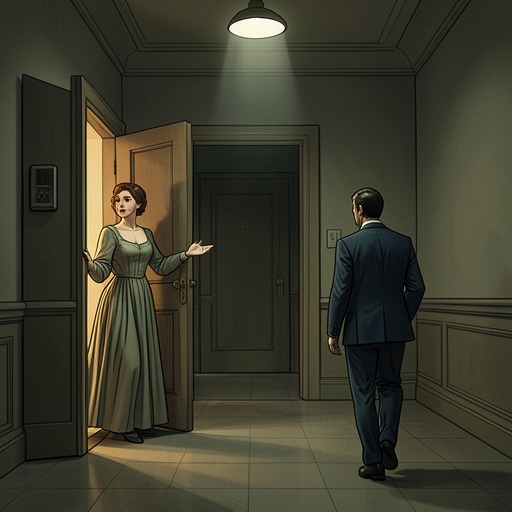
When Lu Xun returns to the hotel, the previous night's decorations have disappeared and Su Xiangwan is gone. She has taken all her luggage, leaving him only two possibilities: she has returned home or gone to find Su Qingrou. The physical removal of the decorations and baggage gives the separation a stark, practical form. The room is not merely quiet; the signs of shared celebration have been erased, and the marriage is suddenly represented by absence.
Lu Xun calls Su Xiangwan repeatedly, but her phone remains switched off. He only relaxes after Gordon sends information about her flight and confirms that she has returned to Cloud City. The confirmation provides relief without resolving the conflict. Lu Xun knows where she has gone, but he cannot reach her emotionally or force an answer from a disconnected phone. His repeated calls turn pursuit into a visible response to abandonment, while her silence establishes distance as the only power still available to her.
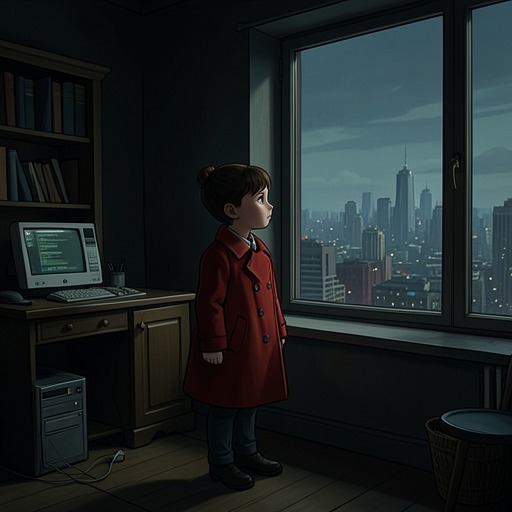
The separation continues even after Su Xiangwan is back in a familiar home. At three in the morning, Lu Xun calls again. She sees his number, hangs up, and turns off her phone. Although she is lying in a bed she knows well, she cannot sleep, suggesting that the physical return home has not restored emotional security. The familiar bed has become unfamiliar because her attachment has shifted toward Lu Xun's space, yet she resists answering him. Separation therefore operates as both geography and contradiction: she leaves him, misses the stability associated with him, and still refuses immediate reconciliation.
The Turn Toward Reconciliation
The value at stake changes when Lu Xun abandons argument and asks Su Xiangwan to come home. He tells her that he will not divorce her, that she need not promise perfect obedience, and that he will help settle trouble if she causes it. The appeal is significant because it combines possessiveness with concession. Lu Xun does not offer complete freedom from his authority, but he does retreat from making reconciliation conditional on her submission.
His more consequential promise is that marriage has responsibilities. Lu Xun tells Su Xiangwan that he will not marry her one day and throw her out the next, and that he is not playing house. Since she is his wife, he says, he will not allow others to bully her and will not make her bear the consequences of right or wrong alone. This statement reframes the relationship from purchase and possession into obligation. It does not erase the coercive history between them, but it gives Su Xiangwan a recognizable marital status and a form of protection that he presents as a duty rather than a favor.
Su Xiangwan accepts, and Lu Xun's expression finally relaxes into a smile. His joy is described as childlike when he lifts her into the air and calls her difficult to coax. The physical gesture converts the tense negotiation into renewed intimacy, while her immediate anxiety that he might drop her keeps the scene from becoming entirely secure. Lu Xun answers that even if he falls, he cannot let her fall. The promise echoes the larger reconciliation: his protection is emotional as well as practical, and the marriage is restored through an assurance that he will absorb the risk of her instability rather than punish her for it.
Trust, Trauma, and Protective Marriage
The reconciliation does not occur in an emotionally empty story. Both partners carry experiences that make abandonment and control especially charged. Su Xiangwan recalls that her mother had a terminal illness, withdrew to avoid implicating the family, and ultimately walked onto a balcony after seeing a drawing of herself holding her daughter's hand. The memory links love with disappearance and leaves Su Xiangwan vulnerable to interpreting departure as both punishment and self-protection. Lu Xun responds with pain and regret, wishing he had investigated the matter himself rather than learning it through her distress.
Lu Xun also discloses that he was kidnapped at the age of twelve. The kidnappers forced him to take various medicines, nearly killing him, and the experience left him resistant to drugs. His calm narration of the event contrasts with the severity of the memory and helps explain why threats to bodily safety provoke unusual vigilance. The couple's later pattern of pursuit, withdrawal, and overprotection is therefore shaped by more than romantic jealousy: childhood violence, maternal suicide, family conflict, and physical vulnerability return inside their marital arguments.
The body repeatedly carries the consequences of this unstable bond. Su Xiangwan becomes feverish and weak after the conflict, calling Manager Wu to buy antipyretic medicine. On another occasion, Su Xiangwan loses consciousness at an elevator after burning with fever and collapsing before pressing the button. Lu Xun's response is characteristically excessive: he threatens to destroy Hua Shuo's studio because he cannot see him as planned. Protection becomes anger when fear has no other outlet, and care is expressed through control as much as tenderness.
Relations, Boundaries, and Continuing Conflict
The reconciliation takes place amid a crowded network of relationships that continually tests the marriage's boundaries. Lu Xun explains that Shen Yiyun is his adopted uncle's child and therefore his cousin, and that he arranged nearby accommodation for her because she had come to Cloud City to perform. Su Xiangwan compares his failure to explain this relationship with the earlier problem involving Song Yun'er, treating secrecy itself as a breach of trust. Lu Xun accepts the criticism and promises that her husband will correct his mistakes.
The couple's language of kinship is repeatedly unstable. Lu Xun insists that a relative connected only by name is still a man or woman rather than a blood relation, rejecting the idea that kinship automatically removes romantic threat. Chu Fei makes the same boundary dangerous from another direction, acknowledging that he likes Su Xiangwan and regards Lu Xun as an eyesore. He claims not to force women and instead prefers the process of pursuit. These competing claims transform marriage into a struggle over who is entitled to define intimacy: blood, adoption, social naming, desire, or marital status.
Su Xiangwan's own recognition of Lu Xun is also dramatized as uncertain. In a drunken or impaired state, she pulls off his shirt and calls him her husband, while Lu Xun remains unsure whether she knows who he is. The moment is flirtatious but unstable, because the title of husband may be genuine recognition or merely a role assigned to whichever man is present. Its later force lies in contrast: reconciliation requires Lu Xun to make the title concrete through conduct, not simply claim it through authority.
The event's importance therefore lies in its incomplete resolution. Su Xiangwan returns, and Lu Xun promises that marriage means responsibility, protection, and continued possession of the relationship. Yet the same marriage remains marked by secrecy, jealousy, family power, illness, and rival claims. Their separation exposes the damage caused when love is experienced as ownership; their reconciliation offers a new marital oath without fully dismantling that structure. The couple moves forward not because conflict has vanished, but because Lu Xun converts pursuit into a promise to remain accountable and Su Xiangwan chooses, for the moment, to return.