Cooper family gender-conformity rule
Call Me YoursThe Cooper family gender-conformity rule is the demand that Jamie Cooper dress and behave as a boy, enforced most sharply when his mother finds him wearing a dress. The prohibition turns an intimate childhood expression of femininity into a family conflict: Jamie asks to be recognized as a girl, while his mother insists that he is her son. The flashback later acquires further significance when Jessica Cooper explains that Kayla Renae Morrison is an alter ego of Jamie’s, connecting the childhood struggle over gender expression with the story’s revelation of his divided identity.
The Rule in the Childhood Memory
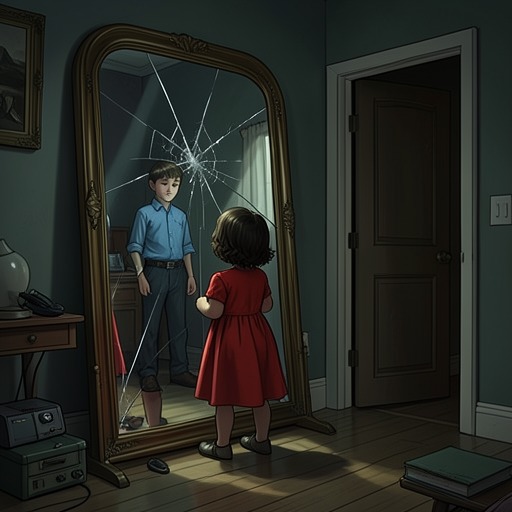
The rule is stated plainly when Jamie’s mother enters and finds him wearing a dress from a box in the attic. Jamie twirls in it and asks whether she likes his new dress; he says that he loves pink and dresses and asks to keep it because he is a girl. His mother answers that boys cannot wear dresses. When Jamie persists, she narrows the matter into a household command: “You are not allowed to wear dresses in my house, Jamie Cooper, you are a boy, and you better start behaving like one.” The wording makes the home itself the boundary of enforcement, while the order to behave “like” a boy reaches beyond clothing to Jamie’s manner of being.
Jamie links the command to a conversation he overheard between his parents. He tells his mother that she had wished he were a girl and asks why she cannot love him as one. His mother confirms that she had always dreamed of having a daughter and had expected a girl during her pregnancy, but says she does not love Jamie less for being a boy. She then explains that seeing him pretend to be a girl breaks her heart because she thinks he is doing so out of fear that she does not love him. Her reassurance does not resolve the conflict: she affirms her love for her son while also rejecting the gender Jamie is trying to express.
The Attic Clothes and Secret Expression
The attic complicates the scene’s prohibition. Jamie has found boxes of girls’ clothes there, and the memory specifies that his mother had bought clothes ranging from newborn sizes to those for a twelve-year-old. Some dresses are too small for him, but he still wears them secretly. The clothes are concrete evidence of a femininity that exists inside the family home even as the spoken rule denies Jamie permission to embody it. The story does not explain why the clothes were kept in the attic; it does show Jamie asking why they were hidden and treating their discovery as a decisive opportunity to stop denying who he is.
The rule shapes not only what Jamie wears in front of his mother but also the contrast between public obedience and private self-expression. The account says that throughout his life he has to pretend to be a boy, while he is free to be himself when his parents are out. In private, he wears his mother’s clothes, wig, and shoes, and learns makeup, how to walk like a lady, and how to speak like one. These are repeated, practiced acts rather than a single episode of dress-up. The narrative presents them as skills acquired under the pressure of concealment, while Jamie’s distress at being called by his assigned name and made to wear boys’ clothes makes clear that the performance expected of him is not experienced as self-expression.
From Household Prohibition to Adult Life
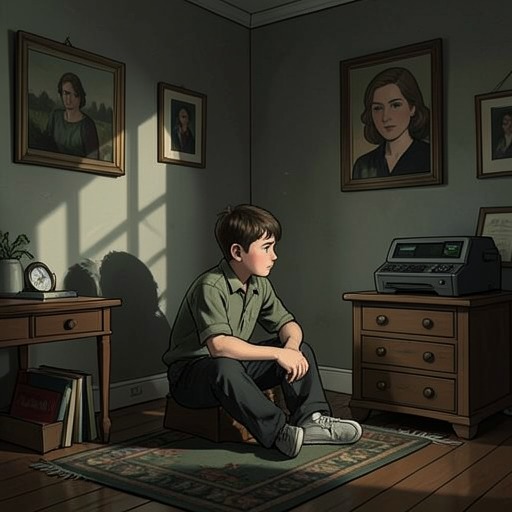
At eighteen, Jamie leaves home for good. The account places that departure after years of having to hide his feminine presentation and connects it to a broader break from the family setting in which the rule was imposed. His grandfather has died and left him enough money to live on, along with an old mansion. Jamie turns the mansion into a hotel and builds a hospitality business, learning from successful business owners and using his social connections rather than attending business school. These adult achievements establish a life beyond the household’s control, but they do not undo the loneliness that the narrative says persists despite his wealth and success.
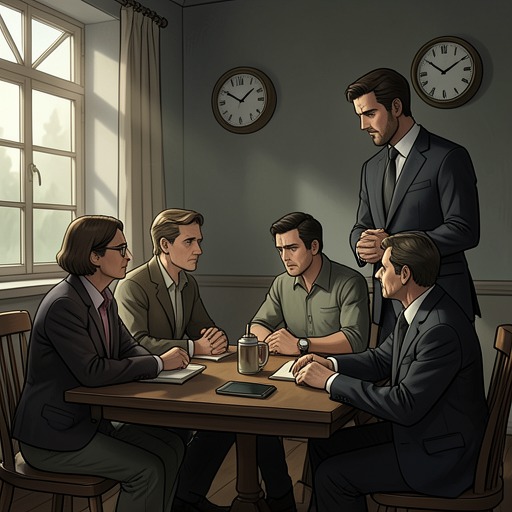
The story also relates Jamie’s later life to the identities established in its plot. Jessica explains that she discovered Jamie had an alter ego named Kayla Renae Morrison: a wealthy woman who owned hotel chains and a mansion. She further says that Jamie’s mind had blocked out Adi Morrison, his daughter, when he came around as Jamie, whereas Kayla accepted Adi as her own. This revelation does not make the childhood rule a simple explanation for every later event. It does, however, recast the memory: the child who insists on being a girl is later identified within the story as Kayla, an alter of Jamie, rather than as a brief departure from the boyhood his mother demands.
Meaning and Limits of the Rule
The family rule is important because its enforcement and the mother’s affection coexist without being reconciled. She says she loves Jamie, yet insists that he is a boy and forbids the dresses through which he tries to express himself. The attic boxes sharpen that contradiction: feminine clothing has a place in the home, but Jamie’s use of it must remain secret. The scene therefore gives the rule a material and relational form—clothes hidden away, a dress worn, a mother’s command, and a child’s plea to be seen.
The memory also makes a distinction between outward compliance and inward identity. Jamie learns the behaviors his mother prohibits in private, then leaves the household at eighteen; later, the narrative names Kayla as an alter identity. Read in that sequence, the rule helps explain the conditions of concealment in Jamie’s childhood and the emotional force of the later revelation, without treating gender nonconformity itself as a defect. Its lasting significance is the separation it enforces between what Jamie is allowed to show his family and what he privately recognizes as himself.