Depression and suicidal ideation
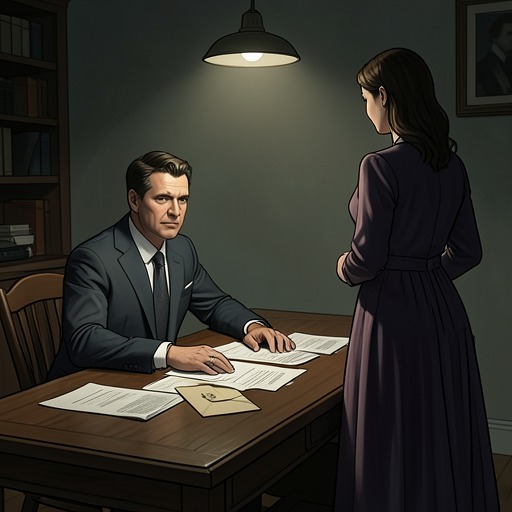
Call Me YoursDepression and suicidal ideation appear most explicitly in Jamie Cooper’s private struggle with shame, creative paralysis, insomnia, and recurrent thoughts of ending his life. His distress is concealed beneath ordinary domestic routines: he hides cuts from Jessica Cooper, resists medical help, and tries to remain alive for her even as death occupies his thoughts. The narrative presents this as an ongoing condition rather than a single crisis, while also distinguishing Jamie’s self-inflicted injuries from the violence others later inflict on him.
Pressures Behind the Crisis
Jamie’s despair develops amid the contraction of a once-successful artistic life. His home had formerly welcomed celebrities and admirers, and he and Jessica hosted parties; when he could no longer meet deadlines or produce work of sufficient quality, his reputation faded. Poor financial investments forced the couple into a smaller house, while friends and fans drifted away and his agent dropped him. Six months before the scene in which his thoughts of death are described, his childhood friend Ortiz Spencer became his agent, but the return of someone familiar does not immediately relieve Jamie’s sense of failure.
The cramped art studio in the couple’s three-bedroom house makes that decline part of his daily surroundings. Jamie feels compelled to regain his fame, not because public recognition itself matters to him, but because he wants to do more for Jessica, who continues to love and believe in him. That devotion becomes both a reason to endure and a source of pressure: he measures his worth against what he thinks he should be able to provide for her. With a deadline two months away and no painting he considers good enough for his agent, his inability to create feeds the shame from which he cannot easily detach.
Suicidal Thoughts and Concealed Self-Harm
Death enters Jamie’s mind whenever he struggles to produce a saleable painting, and the thought is not described as passing. He thinks constantly about dying, imagines a swift death by taking several pills, and pictures lying in bed beside Jessica while she holds his hand. He wants her face and warm smile to be his final memory. The imagined scene binds his wish to die to his attachment to her: even in planning an ending, he places the person he loves at its center.
Jamie has tried once to cut his wrists but stopped himself. Instead, he made a small cut on the inside of his forearm and continued cutting himself in tiny marks, using the pain and pleasure that followed to relieve the turmoil within him. The injuries are deliberately kept small enough, he hopes, for Jessica not to notice. He rolls his sleeves down to conceal the marks, and the couple never makes love with the lights on because he fears she will see his scars. His concealment protects him from a conversation he expects would frighten and confuse her, but it also leaves him alone with a recurring danger.
He explains his continued survival to himself through Jessica: he is trying to stay alive for her. That resolve coexists with suicidal thinking rather than erasing it. The narrative emphasizes the persistence of the conflict—the thought does not go away and seems to follow him—so his affection is neither a simple cure nor proof that the danger has passed.
Secrecy, Intimacy, and Resistance to Care
Jamie does not tell Jessica that he thinks about death or that he cuts himself. His silence is not presented as indifference to her; he hides the injuries because he anticipates her fear and does not believe she would understand that he is trying to endure for her sake. The contrast between his private crisis and their intimate life is especially sharp in the darkness he insists on during sex: the lights-off routine conceals the evidence on his body while allowing the marriage to continue without disclosure.
Insomnia has troubled Jamie for years, but fear keeps him from seeing a doctor. He worries that an examination could reveal something worse, perhaps a terminal illness. Jessica recognizes his poor sleep, overwork, and lack of eating, and books a medical appointment for the next day, telling him a doctor will explain his condition. Jamie insists that he will be fine and denies having a condition, minimizing the problem as difficulty sleeping. The exchange shows care reaching toward him while fear and denial hold him back; the appointment is arranged, but the evidence here does not establish that he attends or accepts treatment.
Elsewhere, Jessica offers to ask Kayla Morrison whether Adi Morrison could see a therapist, drawing on her own experience of being sent to one by her mother after getting into trouble at school. This is a separate conversation about Adi, not evidence that Jamie receives therapy. Its presence nevertheless distinguishes the possibility of professional support from Jamie’s own reluctance to seek medical help: the novel depicts therapy as something that can help, while Jamie’s fear of diagnosis remains a barrier.
Distinguishing Distress from Later Violence
The narrative also places mental-health crises within settings where protection and control can become difficult to separate. After Don tries to harm Kayla, Dr. Reid Francois explains that nurses strapped her to a bed for safety; Kayla responds by asking why she is restrained and later insists she wants to go home. These scenes concern Kayla’s crisis and the threat against her, not Jamie’s suicidal state. They show that the book’s mental-health context includes fear, enforced safety measures, and a patient’s loss of control, but they do not establish that restraint is part of Jamie’s care.
A later scene makes a different distinction crucial. When Christin lashes Jamie with a belt, tears run down his back and blood wells from the cuts; the assault is inflicted on him by another person. Those injuries should not be conflated with the tiny cuts he previously made to regulate his inner turmoil. The contrast separates self-harm, concealed and used by Jamie to manage emotional pain, from physical abuse that strips him of agency and causes visible bodily injury. The evidence establishes the violence and Jamie’s suffering, but does not state that this assault causes or resolves his earlier suicidal thoughts.
Narrative Significance and Limits
Jamie’s story links artistic failure to shame without reducing his distress to a lack of success: he does not say that fame is what he wants, and his effort to recover it is framed as an attempt to do more for Jessica. The gap between his public past and the cramped studio of the present gives his creative block concrete form, while the hidden marks on his arm carry that crisis into the most intimate part of his marriage. His care for Jessica is a genuine reason to stay alive, yet the persistence of suicidal thoughts shows the limits of love as a substitute for disclosure or treatment.
The surrounding family story offers an eventual plan for change, but not a documented resolution of Jamie’s depression. Jessica says that she and Jamie have decided to sell their houses and the mansion, move to a smaller home, and start afresh once he is out of the hospital; she also tells Adi that Jamie will remain hospitalized for a while. The plan signals a reorganization of family life around his hospitalization, not proof that the thoughts of death or self-harm have ended. The state remains significant precisely because the narrative records both Jamie’s desire to survive for someone he loves and the danger he has been hiding from her.