Jessica’s fabricated comic-book commission
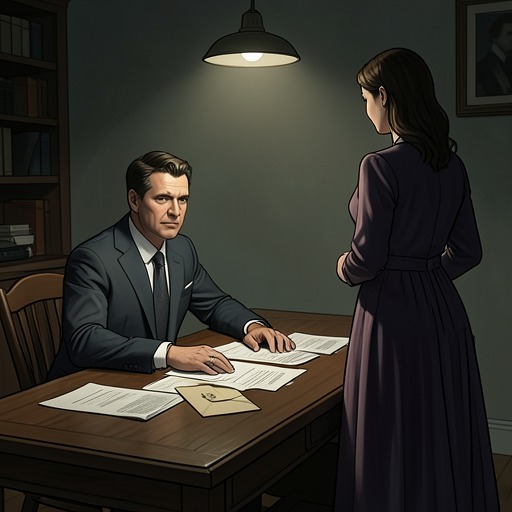
Call Me YoursJessica’s fabricated comic-book commission is a sustaining lie built around Jamie Cooper’s artistic crisis. Jamie had been commissioned to illustrate a comic book six months earlier and had already spent the advance payment, yet he could not produce even a single sketch. Jessica presented the assignment as legitimate work connected to Ortiz Spencer, Jamie’s supposed agent, giving him a reason to remain engaged with drawing while concealing that no such commission existed. The deception preserves his immediate hope, but it also deepens the secrecy and distrust within the marriage.
Origins in Jamie’s Creative Crisis
Jamie’s inability to work is especially significant because drawing is central to his sense of purpose. He loves bringing characters to life with his hands, and seeing his illustrations in children’s stories gives him fulfillment. The comic-book assignment therefore appears to offer both professional validation and a path back into the activity that once sustained him. In reality, however, he has not produced a single sketch, and the absence of work contradicts Jessica’s claim that he spends every night in his art studio.
The financial circumstances sharpen the deception. Jamie has spent the advance and knows that it is too late to tell his agent that he cannot deliver the project. At the same time, Jessica is the only spouse paying the bills, a fact that causes Jamie shame. The false commission consequently covers more than an artistic failure: it masks the couple’s economic imbalance and gives Jessica a way to represent her husband as still professionally active rather than immobilized by his condition.
How Jessica Maintains the Fiction
Jessica’s explanation is not simply a casual misunderstanding. She privately takes money from her own bank account to pay Jamie, then lets him believe that the payment comes from the comic-book project. Her stated purpose is to give him a reason to keep living. In that sense, the commission functions as an improvised emotional support system: Jessica uses a professional fiction to keep Jamie attached to his identity as an artist and to prevent the collapse that might follow if he learned that the work was invented.
The lie is made more convincing by attaching it to Ortiz Spencer. Jamie believes Ortiz commissioned the illustration job, and Jessica encourages that belief rather than admitting that she created the project herself. Her affectionate behavior, including telling Jamie that she loves him and proposing that they renew their wedding vows, sits beside the deception. The contrast makes the commission morally unstable: it is presented as protection and devotion, yet it requires Jessica to control Jamie’s understanding of his own career.
Exposure Through Ortiz’s Death
The fabrication begins to unravel when Jamie contacts Elena and asks how Ortiz is doing. Elena tells him that Ortiz passed away a year ago. Jamie is shocked because Jessica’s supposed commission was made only six months earlier, and he immediately recognizes that the chronology cannot be true. Elena further states that Ortiz was never Jamie’s agent and that Jamie has ruined his career, directly contradicting the professional story Jessica has supplied.
The revelation also exposes Jessica’s isolation of Jamie. Elena explains that she had tried to call and tell him what was happening, but Jessica repeatedly said that Jamie was busy. Jamie realizes that Jessica may have lied not only about the commission but also about his contact with Ortiz and the outside world. What appeared to be a private effort to protect him now looks like a broader system in which information is filtered through his wife.
Jamie’s Suspicion and Jessica’s Denial
After learning the truth, Jamie confronts Jessica about the boxes of clothes in the attic and then states that he has found the deception. He identifies two connected lies: the story about Ortiz and the project for which he was supposedly commissioned. He asks where the money came from. Jessica does not acknowledge the fraud; instead, she says that she can call Ortiz immediately, an answer that collapses when Jamie reminds her that Ortiz has been dead for more than a year.
Jessica leaves the kitchen in anger, while Jamie remains uncertain and conflicted. His frustration over her refusal to explain herself has begun to damage their relationship, but he still tells himself that Jessica is a good woman and that he should be grateful to have her. This response preserves the emotional logic that allowed the false commission to survive: Jamie interprets concealment as care even after the evidence has made the story impossible. The commission thus becomes an early, concrete sign of the marriage’s crisis of trust.
Narrative and Thematic Significance
The invented assignment links artistic blockage, financial dependence, marital secrecy, and Jamie’s unstable sense of identity. Jessica attempts to repair Jamie through the role she gives him—the working artist with an active agent—but the repair is based on a false external reality. Her intervention does not restore his creative ability; it postpones the moment when he must confront why he cannot draw and why his life no longer fits the story he has been told.
The commission also foreshadows the book’s larger revelations about fractured identity and suppressed history. Jamie’s missing sketches are not merely evidence of procrastination: they are a visible gap between the person he believes himself to be and the life Jessica is managing around him. Later, Jessica tells Kayla Renae Morrison that she discovered Jamie had an alter ego named Kayla Renae Morrison, a wealthy hotel owner with a mansion, and that Jamie’s mind had blocked out Adi Morrison when he returned to his ordinary identity. Seen against that disclosure, the fake comic-book job becomes part of a wider pattern of concealment in which Jessica tries to preserve one version of Jamie by hiding the evidence that another life exists. What begins as a fabricated reason to keep him living ultimately reveals how thoroughly his marriage has been organized around secrets.