Morrison Villa domestic-staff rules
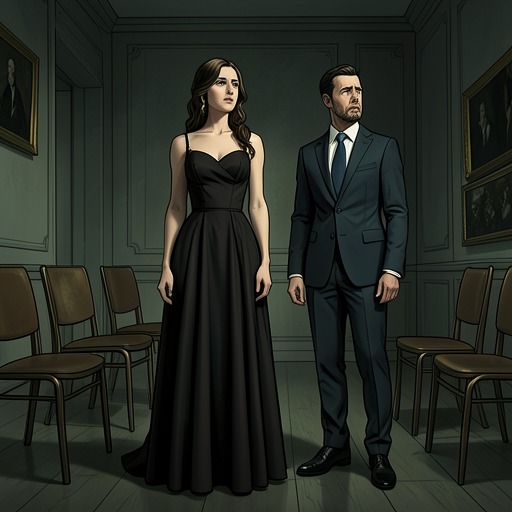
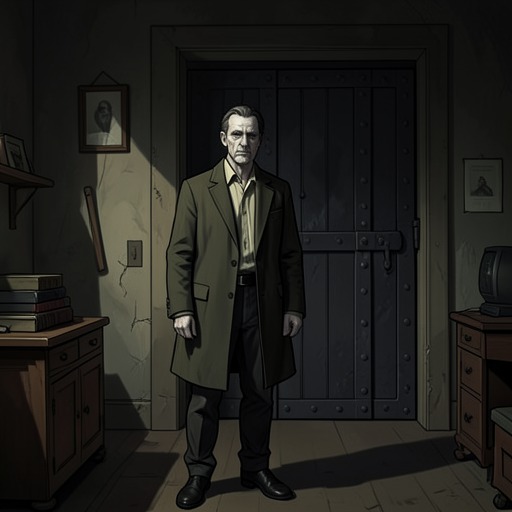
Call Me YoursMorrison Villa domestic-staff rules are the private legal and social order governing work inside Kayla Morrison’s mansion. They present the household as an elegant residence, but their restrictions make it function like a sealed institution: employees must remain quiet, visible, obedient, and discreet, while Kayla Morrison’s daughter Adi Morrison is kept socially isolated and the family’s secrets are protected from outsiders.
Scope and Daily Discipline
The rules apply to every domestic employee, including Jessica Cooper. The draperies must remain down, preserving the mansion’s separation from the outside world. Once employees begin their shifts, they may not leave the premises. They are also forbidden to speak directly to Kayla Morrison unless she addresses them first; complaints must pass through Jessica Cooper, who is expected to handle them as best she can. This arrangement places Jessica Cooper between Kayla Morrison and the staff, making her both an intermediary and an instrument of the household’s hierarchy.
The rules also govern the employees’ private conduct on the property. Staff members may not drink, smoke, or hold parties anywhere on the grounds. The prohibition becomes especially significant when Kayla Morrison later discovers several half-smoked cigarette butts near a rock in the woods. She knows that she is not a smoker and that Jessica Cooper does not smoke either, so the discarded cigarettes violate an explicit household rule while suggesting that an unauthorized person has entered or used the secluded part of the estate. A large footprint beside the cigarette butts strengthens the indication that a man has been present.
Silence, Secrecy, and Social Separation
Every domestic employee must sign a confidentiality contract. No staff member may grant a press interview or provide information to a reporter, and anything employees see or hear must remain within the mansion’s four walls. Kayla Morrison’s stated concern is that she already has too many demons to manage and does not want unfounded rumors added to them. The contract therefore protects more than ordinary household privacy: it prevents the mansion’s internal life from becoming public knowledge.
The rules extend to Adi Morrison’s relationships. Employees are forbidden to befriend her, while Adi Morrison herself is not allowed to have friends over or make friends at school. Kayla Morrison’s migraines are given as the reason that butlers, maids, and cooks must work quietly, mostly seen but never heard. The result is a household in which both labor and childhood are organized around silence. The staff cannot speak freely to their employer, Adi Morrison cannot form ordinary friendships, and Kayla Morrison does not even make an effort to learn the employees’ names.
The Mansion as a Controlled Space
The contrast between the mansion’s beauty and its regulations gives the rules their force. Its chandeliers, gold-painted walls, marbled floors, burgundy drapes, colorful furniture, porcelain vases, and French portrait of Kayla Morrison create an image of abundance. Yet Kayla Morrison loves only a few spaces within it—her bedroom, study, art room, and the sitting area on the roof—while the rest of the residence is governed by barriers, procedures, and restricted access.
The rules make the mansion resemble a system of surveillance without requiring constant visible supervision. Employees know that their movement, speech, friendships, habits, and disclosures are regulated. When detectives later question the staff about the theft of Kayla Morrison’s paintings, Detective Zack brings Kayla Morrison to the station, and Detective Quentin questions the employees, including the security personnel. Detective Quentin concludes that one of them is responsible, but none confesses. The investigation exposes the limits of the household’s official discipline: a regime built on silence can preserve secrets, but it can also make guilt difficult to distinguish from obedience.
Breakdown and Consequences
The cigarette discovery marks one breach in the rules, while the theft of the paintings marks a more serious failure of the mansion’s security and confidentiality. Kayla Morrison allows detectives to inspect the art room, the door, its lock, and the study, but they find no evidence of forced entry. The absence of visible damage turns the staff rules into part of the mystery. Because employees possess authorized access and are bound to secrecy, the question is not simply who entered the house, but who could move within its controlled spaces without leaving obvious traces.
The rules ultimately cannot protect Kayla Morrison from the dangers concealed inside her own household. She is later found strapped to a hospital bed after Jessica Cooper has hired Doctor Reid Francois to treat her. Three male nurses lead her through the facility while two hold her hands; security doors, guarded entrances, locked rooms, and other patients restrained to beds replace the mansion’s drapes, contracts, and staff hierarchy. Kayla Morrison responds by stopping her struggle and deciding to play along because she believes resistance may destroy her life. The institutional restraint of the hospital reveals the darker implication of the villa’s domestic order: both systems claim to manage vulnerable people, but each does so through restricted movement, controlled information, and the disciplined body.
Narrative Significance
Morrison Villa domestic-staff rules define the mansion as a place where wealth depends on containment. They preserve Kayla Morrison’s privacy, accommodate her illness, and impose order on domestic labor, but they also isolate Adi Morrison, silence workers, and create conditions in which suspicious activity can remain hidden. Their insistence that employees be “mostly seen but never heard” captures the household’s central contradiction: the people who maintain its visible perfection are denied an independent voice. As the plot moves from theft and unexplained traces to police interrogation and psychiatric confinement, the rules become more than background etiquette. They are the mansion’s mechanism of control—and an early sign that safety, secrecy, and captivity have begun to merge.