Rat
Call Me YoursThe Rat is less an individualized creature than a recurring presence whose movements and living conditions expose the social and environmental divisions of the story. Rats appear in the neglected spaces around Chris Davis’s apartment and in the alley where Adi Morrison is confronted by Jimmy, while their imagined or observed proximity also sharpens the contrast between deprivation and the guarded luxury of Kayla Renae Morrison’s world.
Appearance in Impoverished Spaces
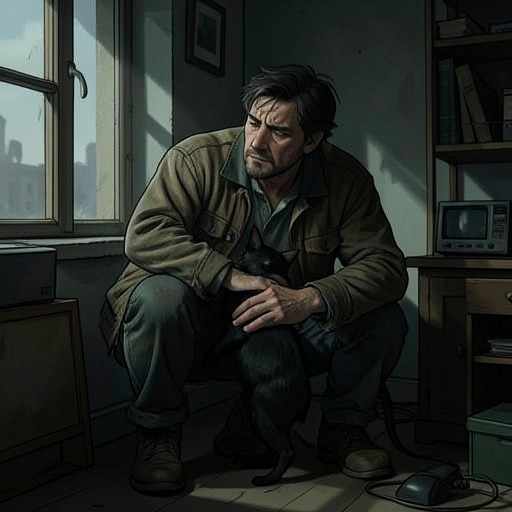
The clearest description of the Rat occurs behind Chris Davis’s apartment building, where the rats are said to feed better than Chris Davis himself. They live among a dumpster and gutter whose rotting smell has become ordinary to him, and the account makes their presence part of a larger landscape of poverty: damaged red-brick buildings, precarious roofs, dirt-filled windows, weed-covered yards, and stray animals rooting through bins. The Rat therefore functions as a material measure of deprivation. Its food supply is not merely disgusting; it becomes an implicit comparison showing how little Chris Davis possesses and how thoroughly neglect has entered his daily environment.
The scene also gives the Rat a faintly indifferent vitality. Chris Davis watches scraps of paper spin away in a gust of wind while the alley’s waste continues to sustain the animals. His hope of receiving a reply from Kayla Renae Morrison is set against this setting, as he retrieves a letter from the makeshift mailbox he assembled. The creature’s presence consequently frames the fragile beginning of the correspondence: romantic expectation emerges from an environment in which survival is reduced to scavenging and improvised shelter.
The Alley Encounter with Adi Morrison
The Rat returns in the alley where Adi Morrison is trapped with Jimmy. Rats scurry beside trash cans and produce irritating squeaks, while the garbage causes Adi Morrison’s stomach to coil and makes her struggle not to breathe. The setting intensifies the immediate danger without making the Rat itself the principal attacker. Jimmy is the human threat, a gangly gothic boy whom Adi Morrison met only an hour earlier in a club, but the animals, refuse, and foul air create a surrounding world of vulnerability from which she cannot easily withdraw.
This recurrence connects Adi Morrison’s rebellion with the physical consequences of her attempt to appear older and move beyond household restrictions. She can enter clubs because she looks older than her age and can bribe bouncers with money, yet those resources do not protect her in the alley. The Rat is part of the reversal: the money that opens a door into nightlife cannot guarantee safety once she is isolated in a degraded space.
Contrast with Kayla Renae Morrison’s Wealth
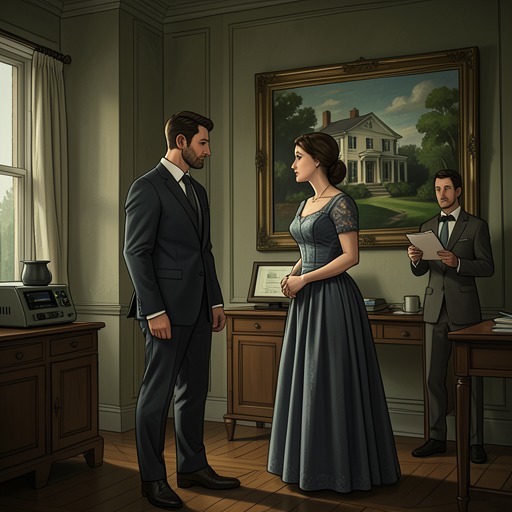
The Rat’s significance becomes sharper beside the images of Kayla Renae Morrison’s abundance. At Vanessa Lauren Art Gallery, Kayla Renae Morrison purchases a historical painting worth fifty-five million, and the painting is scheduled for delivery the following morning under the gallery’s policy. She arrives with Jessica Cooper, champagne, designer clothing, diamond-embedded earrings, a sequined purse, and an umbrella waiting at the entrance. Her wealth is not abstract; it appears as art, clothing, service, transportation, and social visibility.
Morrison Villa presents the opposite pole of the Rat’s world. The mansion occupies 1.5 acres and contains golden doors, luxury cars, a spa, gym, tennis court, a lake with Kayla Renae Morrison’s yacht, gardens, staff quarters, chandeliers, gold-painted walls, marble flooring, burgundy drapes, and a portrait of Kayla Renae Morrison above the fireplace. Security personnel salute her, butlers bow, and maids hurry into the kitchen. Against this controlled and ornamented environment, the Rat signifies spaces beyond wealth’s aesthetic management: alleys, gutters, dumpsters, and improvised domestic arrangements.
Symbolic and Narrative Function
The Rat repeatedly makes material inequality visible without requiring a formal explanation of class. In Chris Davis’s neighborhood, it embodies the slow, continuous conditions of poverty rather than a single spectacular catastrophe. In Adi Morrison’s alley, it contributes to the sensory pressure of an encounter shaped by isolation and danger. In contrast, Kayla Renae Morrison’s wealth appears through objects and architecture that keep disorder at a distance, even though her fortune later makes her a target for exploitation.
The creature also participates in the novel’s critique of wealth as both protection and risk. Kayla Renae Morrison explains that she placed a newspaper advertisement because men who learn about her money profess love for what they can obtain. Don explicitly counts her hotel chains, mansion, and properties as resources, saying that he expects to gain twice the amount he is offered once Kayla Renae Morrison is dead. The Rat is not part of that conspiracy, but its recurring presence helps establish the material spectrum within which the conspiracy operates: one character lives beside scavenging animals, while another’s possessions are valuable enough to motivate murder.
As a recurring image, the Rat is therefore both creature and social indicator. It survives amid waste, marks environments from which privilege has withdrawn, and gives physical form to the contrast between Chris Davis’s and Adi Morrison’s exposure to neglect and Kayla Renae Morrison’s heavily serviced world. Its most important narrative work lies in that contrast: the Rat turns background setting into evidence of who is protected, who is left to endure, and how radically different forms of material existence coexist within the same story.