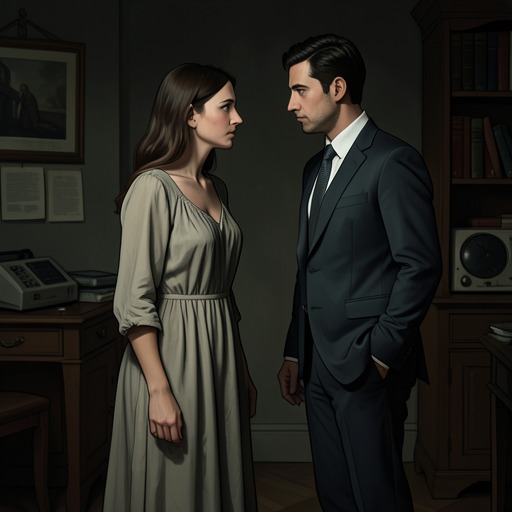
“We'll always have jazz”
Can You Keep a Secret“We'll always have jazz” is Connor Martin’s final line to Emma Corrigan as he leaves her with the jazz-festival tickets. Spoken in a choked-up voice, it makes music the last point of connection between them at the moment their relationship ends. The phrase is at once a farewell and a small act of generosity: Connor relinquishes the tickets, and the future they had represented, while preserving the memory of what they were meant to share.
The phrase and its immediate meaning
The sentence is brief, but its wording carries a contrast between what has ended and what can still be remembered. Connor does not promise that he and Emma will continue together; instead, “always” attaches itself to jazz. The music becomes a lasting shared reference even as their immediate plans—and their relationship—come apart. The line’s emotional force rests on that distinction: a shared experience can remain meaningful without making the separation disappear.
The phrase also answers the concrete situation unfolding around it. Connor has turned back at the door to give Emma the tickets for the jazz festival. He knows how much she has been looking forward to hearing the Dennisson Quartet, and he pushes the brightly coloured tickets into her hand, closing her fingers over them. His final words name the interest behind the gift, but they also give the transfer a significance beyond the tickets themselves. Emma receives something she had anticipated, while Connor leaves without it.
The farewell scene
The exchange comes after Emma asks Connor to keep their situation quiet from everyone at work, at least for the moment. Connor agrees that he will say nothing. He is already halfway out of the door when he turns back with the tickets, making the gesture a deliberate return rather than an incidental handover. The movement briefly interrupts his departure: first he goes, then he turns back to give Emma one last thing they had shared an interest in.
Emma initially refuses the tickets. She insists that they belong to Connor and that he should keep them, then falters as she tries to answer his explanation of why he is giving them to her. Her repeated hesitation—“I … I …”—leaves her unable to find a response equal to the gesture. The tickets pass from Connor to Emma, but their exchange does not resolve the pain of parting. His voice cracks as he offers them, and his final line comes choked up; the restraint of the words is accompanied by unmistakable emotion.
Music, memory, and parting
Jazz serves here as the relationship’s remaining shared point of reference. The festival and the expected performance by the Dennisson Quartet give that reference a particular shape: it is not an abstract declaration of affection, but a plan Emma had genuinely been looking forward to. Connor’s knowledge of that anticipation makes the gift attentive to her own pleasure, even as it confirms that he will not be the one to accompany her.
The tickets therefore carry two meanings at once. They preserve the possibility of attending the festival, but they also mark the change in who will hold that possibility. Connor gives them to Emma rather than keeping them for himself, and the gesture places her interest ahead of his claim to the shared outing. The line does not erase that shift. Its warmth comes from recognizing what they have shared; its sadness comes from the scene’s evidence that the shared plan is no longer theirs to carry out together.
Narrative function and lasting resonance
The phrase condenses the breakup into a small, tangible exchange instead of an extended explanation. The scene moves through a sequence of actions—the request for discretion, Connor’s agreement, his turn back, Emma’s refusal, his insistence, and the closing door—and the line arrives at the end of that sequence. Its position makes it both the final thing Connor says and the last verbal frame placed around the tickets as they remain with Emma.
The chapter’s next sentence records Emma’s immediate losses: she has no promotion and no boyfriend, her eyes are puffy from crying, and everyone thinks she is mad. Against that blunt inventory, Connor’s farewell offers no reversal or easy consolation. It leaves jazz as a lasting shared reference, not as a promise that the relationship will resume. The expression’s significance lies in holding both sides of that ending together: the tenderness of a parting gift and the finality of the door closing behind him.