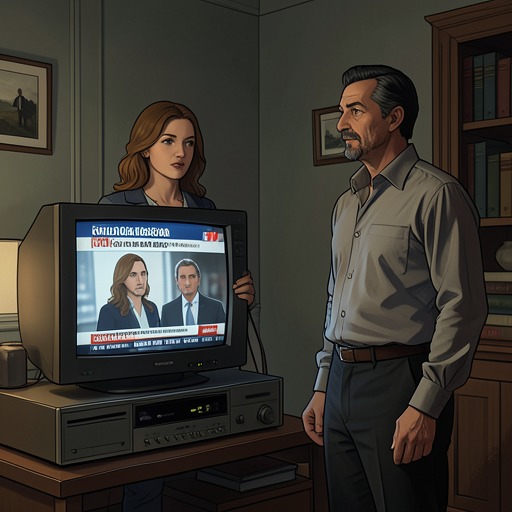
Connor Martin
Can You Keep a SecretConnor Martin is Emma Corrigan’s boyfriend and planned housemate, a figure whose relationship with her is marked by everyday consideration but cannot withstand her growing doubts. His calls and gestures suggest a wish to care for her and make their relationship feel closer; when Emma finally says she cannot move in with him, those plans become the setting for a difficult separation rather than a future they can share.
Identity and Introduction
Connor enters Emma’s story through other people’s reports before he appears in person. After Emma’s business meeting, Lissy tells her that Connor rang to ask how it went. He had avoided calling Emma’s mobile during the meeting in case it disturbed her. The detail lifts Emma’s spirits: his concern reaches her at a moment when she is already bracing for other people’s news, and his tact makes his affection legible without requiring a dramatic declaration.
When Connor does appear, he is running toward Emma. She notices his Scandinavian tan and strikingly blue eyes, and he pulls her tightly against his chest. His first concern is whether she is all right. The reunion gives his care a physical urgency, contrasting with the restrained consideration of the earlier phone call. These glimpses establish a boyfriend who is emotionally invested in Emma, though the evidence does not supply a broader account of his life outside their relationship.
Intimacy and Plans to Live Together
Connor treats their decision to live together as a significant commitment, and he notices a gap between that commitment and the language they use with each other. Embarrassed, he proposes that they start calling each other “darling.” The suggestion is modest, even self-conscious: rather than assuming that living together has automatically made them more intimate, he tries to give their closeness a name. It also shows his attention to the ordinary signals through which a couple may express affection.
That shared plan becomes concrete in Emma’s later attempt to end the relationship. As she tries to find the courage to say what she has been thinking, Connor begins explaining the practical action needed to move in. Emma stops him and says, “I can't do this. I can't move in with you.” She explains that she has had doubts for some time and that recent events have confirmed them; continuing would make her a hypocrite and would be unfair to both of them. The scene sets the same commitment Connor had treated as a step toward greater intimacy against Emma’s conviction that proceeding would misrepresent her feelings.
The Breakup and Connor’s Response
Connor initially resists Emma’s decision by interpreting it as temporary. When she insists there is no one else, he suggests that she is speaking from a passing mood and offers to run her a hot bath and light scented candles. His response is a bid to restore their familiar relationship by caring for her, but it also means he is not yet taking her refusal as settled. Emma interrupts the gesture: “Connor, please! No more scented candles!” She asks him to listen and believe her, then makes the separation explicit: “I want to break up.”
Connor says he does not believe her and argues that she would not throw away what they have. His disbelief makes the breakup a conflict not only over whether they should stay together, but over who has the authority to define Emma’s decision. Emma’s sudden act of hurling a glass teapot to the floor breaks the scene’s impasse. The object’s destruction is a sharp physical reversal after Connor has tried to recast her words as a mood; the evidence presents it as the moment that shocks him, not as a reasoned argument or a reconciliation.
After the Separation
The breakup does not immediately remove Connor from Emma’s life. At Corporate Family Day, he explains that he had signed them up to work together at the Pimm’s stall because he had expected them to be a couple. Though visibly wounded, he says he does not mind going through with the shift if Emma does not. Emma agrees rather than saying she cannot bear to stand beside him. Their shared task therefore continues after their private plans have ended, forcing them into practical cooperation while the hurt remains apparent.
During the shift, Connor handles the glasses so forcefully that Emma fears he might break one. When she apologizes for being late, he answers stiffly and asks whether she had a nice time the other evening. The question reveals what is occupying him: Emma’s recent evening out, rather than her lateness. His jealousy and injured mood surface indirectly through the work and the question, while Emma recognizes the real subject beneath his complaint. This exchange shows that separation has not made their feelings or resentments disappear, even as they continue to share a public obligation.
Narrative Role
Connor’s scenes give the relationship a recognizable progression from considerate contact and plans for a shared home to Emma’s explicit refusal and the awkward aftermath. His proposal to use a term of endearment and his offer of candles are small attempts to restore or strengthen intimacy; set beside Emma’s statements that she has doubts and wants to break up, they also expose the distance between his reading of the relationship and hers. The book presents that distance through Emma’s reactions and judgments, so Connor’s intentions are visible chiefly in what he says and does around her. The resulting portrait is neither a simple villain nor a successful romantic partner: Connor can be attentive and tender, yet his insistence that Emma cannot mean her decision makes it harder for him to hear the boundary she is trying to establish.