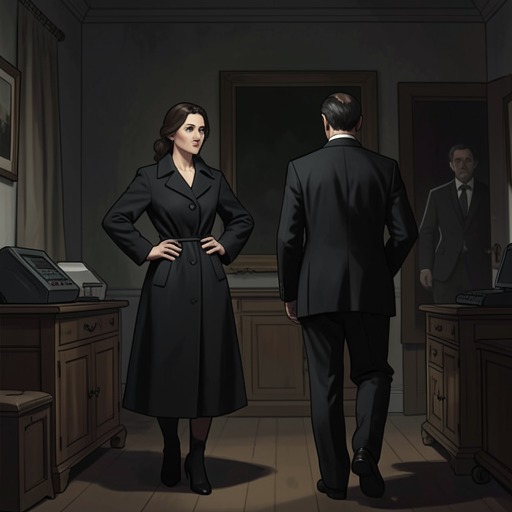
Jemima
Can You Keep a SecretJemima is Emma Corrigan and Lissy’s flatmate in Islington, an image-conscious woman who approaches relationships as strategic contests. She advises Emma to manage appearances and keep feelings private, but when Jack Harper’s betrayal gives her an opportunity to act on Emma’s anger, Jemima moves from advising revenge to arranging publicity against him. Her confidence in tactics makes her both a comic counterpoint to Emma’s romantic uncertainty and a consequential agent in the story’s conflict over privacy and retaliation.
Identity and Social Outlook
Jemima works, at least in theory, at a sculpture gallery. Emma’s account emphasizes that she devotes considerable attention to personal grooming and beauty treatments, and that she dates city bankers only after checking their salaries. The details establish a practical hierarchy of priorities: appearance, financial security, and the prospect of a socially advantageous future weigh heavily in how she evaluates a choice. Her familiar references to a ring, a desirable address, or the standing of a dinner-party hostess make those ambitions sound like a program she expects other people to recognize, even though Emma does not rank them as highly.
That outlook is also conveyed through her presentation. When Emma returns to the flat, Jemima arrives in kitten heels, pale pink jeans, and a fitted white top, looking tanned and groomed. Later, she comes into Emma’s room dressed to go out and immediately asks about Emma’s top. Such moments position clothing not simply as decoration but as part of Jemima’s attention to appearance and social signals. The evidence does not reduce her to those concerns, but it shows how consistently she uses them to assess people and situations.
Advice on Relationships and Self-Presentation
Jemima interprets Emma’s decision to move in with Connor Martin as a tactical mistake. She describes relationships through the language of chess: a person must look ahead, plan strategically, and avoid the wrong move. Lissy rejects the comparison, insisting that a relationship is not a game, but Jemima’s response reveals the framework she brings to intimacy. To her, outcomes depend on managing the sequence of decisions, not merely on whether two people feel happy together.
After Emma and Connor break up, Jemima revises the practical implication of her earlier warning. She tells Emma that, had she continued acting as part of a perfect couple for long enough, the pair would have become one. Emma objects that they would not have been happy; Jemima treats that objection as unnecessary, asserting that people pretend in relationships anyway. Her position places the appearance of a successful partnership ahead of Emma’s stated experience of it. The contrast makes Jemima’s advice internally consistent in one respect—she values performance—but sharply different from Emma’s wish for happiness that is not simply staged.
Jemima applies a similar logic to disclosure. When she learns that Emma told Jack personal secrets during their flight, she is appalled. Her rule is that a woman should keep something back from a man, including her feelings and even the contents of her handbag. Emma answers that Jack has already seen everything, but Jemima predicts that such openness will prevent him from respecting her. This exchange makes privacy, for Jemima, a form of leverage and self-protection: intimacy should be regulated rather than offered without reserve.
Friendship, Judgment, and Appearance
Jemima is a frequent, forthright presence in Emma’s domestic life, offering judgments even when Emma has not asked for them. On a Saturday morning after Emma has lost both her promotion and her boyfriend, Jemima repeatedly calls her mad and points out that she had expected Emma to be engaged to Connor within six months. She also characterizes life with Connor as safe and dry. Her remarks are blunt, and her forecast of marriage sits uneasily beside her earlier warning that moving in with him was a bad tactic. Yet both positions reveal her tendency to assess romance by its likely destination and strategic value, rather than by Emma’s immediate feelings.
Her attention to possessions makes the boundaries of that friendship visible. When Jemima discovers Emma wearing her Prada slingbacks, she confronts her on the balcony, recalling Emma’s claim that she never borrowed Jemima’s clothes. The episode turns a small domestic transgression into a pointed question of honesty between flatmates. Jemima’s anger is direct, and Emma acknowledges that there is no point lying. The shoes therefore provide a concrete counterpoint to Jemima’s broader counsel about concealment: although she recommends withholding personal information from romantic partners, she expects candor when her own belongings are involved.
Revenge Against Jack Harper
After Jack’s actions leave Emma feeling used and publicly humiliated, Jemima urges her to get revenge and make him pay. When Emma learns that Jack has a sensitive, complicated secret but does not know what it is, Jemima immediately treats the information as an opportunity: Emma should discover the secret and expose it. Her response extends the tactical logic she has applied to relationships into a struggle over power and disclosure. A secret becomes not something to protect, but a possible instrument for making Jack feel the injury Emma has suffered.
Jemima then takes a step Emma herself has not managed to take. She tells Emma that she is with a journalist named Mick, who writes for the Daily World, and explains the arrangement as retaliation for Jack’s betrayal. The journalist is a tabloid reporter, a fact that makes the proposed response more consequential than a private confrontation. Jemima has converted revenge from a fantasy into contact with someone who could publicize Jack’s secret.
When Jack appears, Jemima openly explains that Emma has been waiting for a chance to retaliate and identifies the journalist as someone pursuing Jack’s Scottish secret for the papers. She presents the exposure as a way to make him understand what betrayal feels like. But her confident account of Emma’s intentions exceeds what Emma can bring herself to enact in that moment: Emma is paralyzed and does not join Jemima in declaring the secret. The scene thus distinguishes Jemima’s determination from Emma’s hesitation. Jemima acts in the name of her friend’s anger, but the action also puts private information and public exposure at the center of a new conflict.
Narrative Role and Significance
Jemima’s characterization is built through a recurring gap between her certainty and Emma’s uncertainty. She offers rules about planning, concealment, and the performance of a perfect couple as though they were dependable strategies; the changing circumstances of Emma’s relationship with Connor expose how little those rules accommodate Emma’s actual happiness. Later, the same confidence gives Jemima the resolve to pursue revenge against Jack, but Emma’s silence at the confrontation reveals that Jemima’s decisiveness is not identical to Emma’s consent or resolve.
Because the story is filtered through Emma’s narration, Jemima appears through Emma’s observations of her clothes, habits, pronouncements, and interventions. The brisk domestic details make her advice comic, while its consequences prevent it from being merely decorative: her attempt to involve the Daily World raises the stakes from emotional retaliation to possible public exposure. Jemima therefore embodies a social logic in which relationships are managed through tactics and information is a source of power. Her role becomes most significant when that logic, previously expressed as advice, turns into action with consequences Emma herself is not ready to claim.