Kerry
Can You Keep a SecretKerry, Emma Corrigan’s cousin, is both a successful businesswoman and a deeply charged presence in Emma’s family life. Her arrival after her mother’s death changed the shape of Emma’s childhood, while her later success became a measure against which Emma felt diminished. Their adult interactions bring that old imbalance into the open, though the evidence also leaves important disputes between them unresolved.
Identity and Family Background
Kerry and her husband, Nev, live in a village about five minutes’ drive from Emma’s parents, who have moved from Twickenham to Hampshire. The families see one another frequently. At Emma’s mother’s birthday, Kerry is in the kitchen beside her aunt, and the two women appear strikingly alike: both have feather-cut hair and brightly coloured tops, though Kerry’s highlights are stronger. Their easy familiarity and shared laughter make Emma feel like an outsider to a closeness that resembles a mother-daughter bond.
Kerry entered Emma’s life as a bereaved cousin. Emma remembers her arriving with a red suitcase, wearing school uniform but seeming older and more grown-up. To the child Emma, Kerry’s gold earrings, streaked hair, and conspicuous physical maturity made her seem glamorous and unfamiliar. Kerry was allowed a glass of wine at supper, while Emma was told to be kind because Kerry’s mother had died. The family gave Kerry Emma’s bedroom, making kindness tangible as a loss of space for Emma.
That childhood accommodation extended beyond the bedroom. Emma recalls wanting so much to resemble Kerry that she pretended the local park was boring, too; because Kerry found it boring, the family stopped going. The memory presents Kerry’s influence not simply as rivalry, but as a model Emma tried to follow, even when doing so meant giving up something she had enjoyed.
Work and Public Success
As an adult, Kerry has built a travel agency of her own. At a family gathering, she describes having started it from scratch and says it now employs forty people, with turnover of just over two million. She presents this achievement with assurance, and Emma’s father proudly calls her the family’s star. Kerry’s accomplishment is concrete; its emotional force comes from how readily it becomes part of the family’s public story about who has succeeded.
Kerry also receives an industry award, whose celebration is scheduled for the same Saturday as her aunt’s birthday. Emma responds with outward agreement but inward dismay, imagining Kerry triumphantly holding a trophy for being the best travel agent in the world—or, in Emma’s exaggeration, the universe. The award thus arrives not as a neutral piece of news but as another occasion on which Kerry’s recognition threatens to eclipse Emma’s place in the family.
The contrast sharpens when Jack Harper raises Emma’s unsuccessful attempt to obtain work experience at Kerry’s firm. He asks Kerry about having turned Emma down, presenting the decision as especially difficult given their closeness. Kerry denies knowing what he means. The exchange establishes that Emma’s rejection remains important to her, but does not independently settle what Kerry knew, why the application was refused, or how Kerry remembers the episode.
Estrangement and Confrontation
Emma also recalls telling Kerry months earlier that she planned to give her mother a spa treat. When the birthday arrangements unfold, Emma sees her flowery card forgotten among the wrapping paper and confronts Kerry, insisting that Kerry knew about the gift because they had discussed it in the garden. Kerry says she does not remember. Emma is certain that she does, but the scene gives the accusation and denial rather than an independent confirmation of Kerry’s memory or intent. The dispute matters because it turns an apparently small failure of acknowledgment into evidence, for Emma, of a larger pattern of being overlooked.
At the Corporate Family Day, Kerry appears unexpectedly, wearing a blond wig and giving it a small shimmy as she asks Emma whether she likes the outfit. The surprise is followed by another display of her social confidence: seated with the family and Jack, she describes her agency’s staffing and turnover and sets up the account of her business success as a secret worth hearing. Emma, already sensitive to Kerry’s status, experiences the conversation against years of comparison rather than as ordinary family boasting.
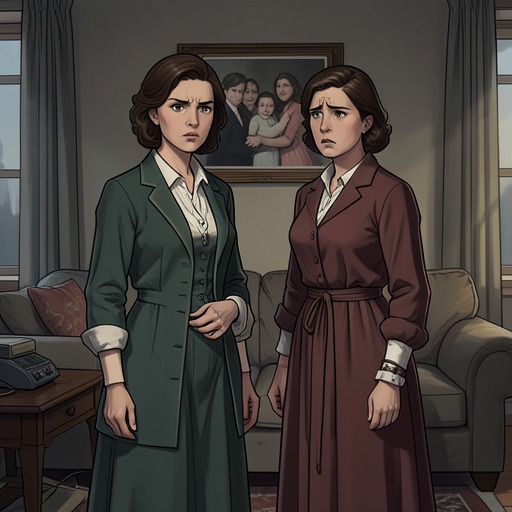
Jack’s question about the work-experience refusal brings that history into the open. When Kerry denies the episode, Emma’s remembered hurt rises into anger. She accuses Kerry of knowing how desperate she was, belittling her career, boasting about herself, and making her feel small and stupid. Emma ends by rejecting the idea that they are best friends. The scene records Emma’s forceful account of the relationship, not a settled verdict on every charge: Kerry’s earlier denial and Emma’s certainty remain in tension.
Narrative Role and Significance
Kerry’s importance lies partly in the gap between her visible achievements and Emma’s private sense of displacement. She has a thriving agency, an industry award, and her parents’ admiration; Emma interprets these signs of success through childhood memories of the bedroom she lost, the park she stopped visiting, and the work opportunity she says Kerry denied her. Family praise therefore carries an unequal weight: what is uncomplicated recognition for Kerry can feel, to Emma, like another comparison she cannot win.
The confrontation changes the family scene by making that usually submerged grievance explicit. Emma speaks before the picnic rug’s stunned company, then sees her parents looking paralyzed and unsure how to respond. Jack gives her a small, approving smile. Kerry’s presence has helped expose a longstanding conflict, but the scene does not show reconciliation or a change in Kerry’s account. She remains both a relative woven into the family’s everyday closeness and the person Emma identifies with years of feeling overlooked and diminished.