
Religious Authority and Punishment
CandideThis thread traces how religious institutions turn belief and ritual into instruments of coercion, while exposing contradictions between piety and conduct.
increasing Bearing strength in each event
 decreasing
Bearing strength in each eventdecreasingThe Lisbon Remedy
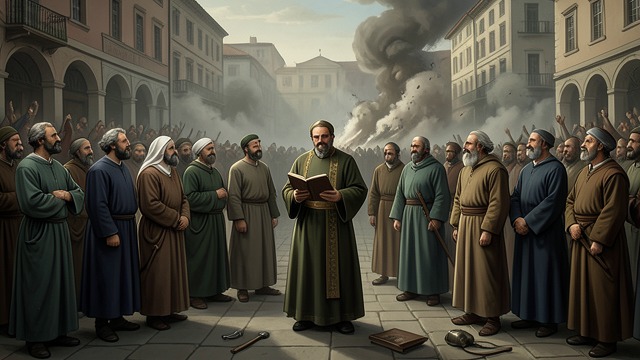
The Lisbon Remedy
Ritual as public policy
Authorities decide that a ceremonial auto-da-fé will prevent further earthquakes. They punish people for religious and social offenses, while Pangloss and Candide are arrested for speech and association.
Fear dressed as certainty
The ceremony converts disaster into a reason for persecution rather than relief. Its official confidence is undercut when the ground shakes again.
Divided Captivity
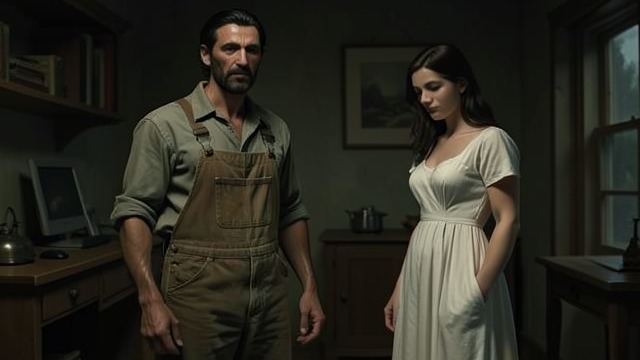
Divided Captivity
Clerical power and private possession
The Grand Inquisitor of Portugal uses his office to pressure Don Issachar for access to Cunegonde. They settle on an arrangement that divides her between them.
Religious authority exposed
The Inquisitor’s status does not make his conduct less coercive. The episode links institutional power to private appetite, undermining claims that authority necessarily brings moral discipline.
A Devotee’s Persecution
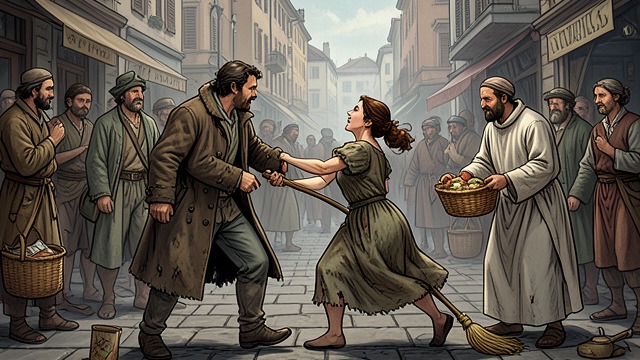
A Devotee’s Persecution
Charity made conditional
Candide asks religiously earnest Dutch people for help, but one preacher rejects him over his failure to affirm the Pope is Antichrist. The preacher’s wife attacks him with filth.
Help from outside the institution
James the Anabaptist offers food, money, and work without demanding doctrinal conformity. The contrast makes practical compassion, rather than official piety, the measure of humane conduct.
A Friar’s Theft
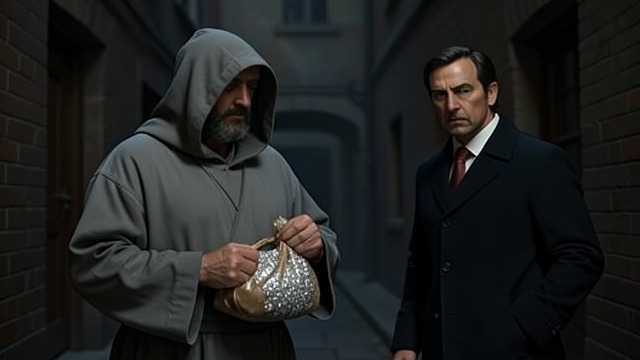
A Friar’s Theft
Sacred appearance, ordinary greed
After Candide and Cunegonde flee, a Grey Friar steals their money and jewels. His crime is discovered when he tries to sell diamonds belonging to the Grand Inquisitor.
Authority offers no protection
The stolen wealth destabilizes the refugees’ journey, while the friar’s religious position does not prevent criminal behavior. The episode extends the satire beyond the Inquisition to religious figures more broadly.
The Dervish’s Closed Door

The Dervish’s Closed Door
A demand for explanation
Pangloss asks a celebrated Dervish why humanity was made and how evil fits into the world. The Dervish refuses to entertain the philosophical inquiry.
Silence over system-building
The encounter offers no theological solution and no institutional reform. Its abrupt end redirects attention away from universal explanations and toward the companions’ ordinary work.
After the Lisbon earthquake
During Cunegonde’s captivity in Portugal
After Candide enters Holland
During the escape from Portugal toward Buenos Aires
Near the end, after the companions reach the farm
