
El Dorado as a Counter-World
CandideThis thread traces El Dorado as a society that contrasts with European greed, coercion, and religious conflict, while explaining why Candide still leaves.
increasing Bearing strength in each event
 decreasing
Bearing strength in each eventdecreasingThe Accidental Arrival
The Accidental Arrival
A hazardous passage
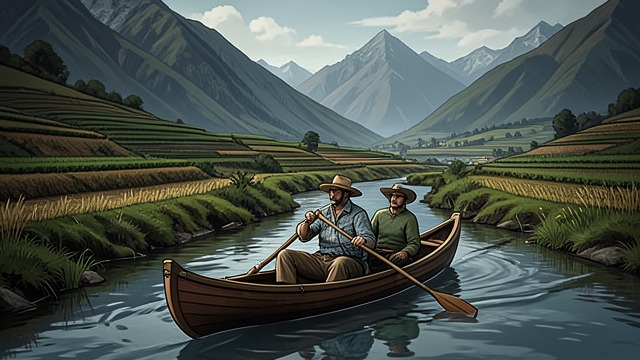
Candide and Cacambo, exhausted and lost, enter a canoe and follow a river through dangerous terrain. Their boat breaks in a remote landscape ringed by mountains.
A different order
They find cultivated land where beauty and usefulness coexist. El Dorado first appears not as an argument but as a place whose ordinary arrangements already challenge their assumptions.
Gold as Playthings
Gold as Playthings
Wealth without reverence
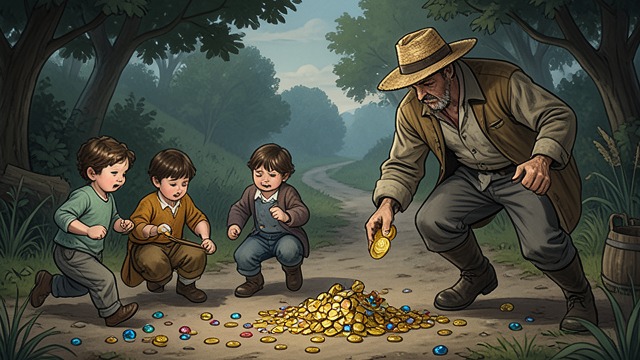
Children play with gold, emeralds, and rubies, then leave them behind when called to school. The schoolmaster treats the stones as worthless objects from the road.
A contrast in value
Candide and Cacambo gather what local people ignore. Their reaction reveals how strongly their expectations have been shaped by societies where precious materials signal power and scarcity.
Public Provision

Public Provision
Hospitality without payment
The travelers receive a lavish meal at a public house and try to pay with gems. The innkeeper laughs and explains that the government supports establishments serving commerce.
Abundance reorganized
The episode presents material plenty as a public arrangement rather than a private contest for wealth. Candide recognizes that the country differs from the societies he has crossed, though he remains an outsider within it.
A Religion Without Clerical Rivalry
A Religion Without Clerical Rivalry
Worship without petition
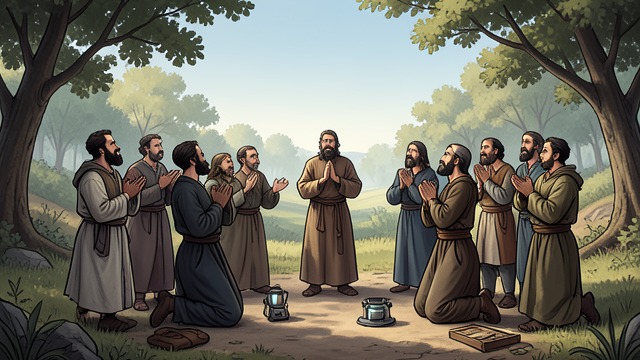
The old scholar describes a people who worship one God and give thanks rather than petition for favors. He knows no monks, religious factions, or executions for doctrinal disagreement.
A pointed contrast
Candide measures the account against the persecutions and religious rivalries he has witnessed elsewhere. El Dorado’s religious life is presented through calm practice rather than institutional competition.
Departure from the Utopia
Departure from the Utopia
Freedom to leave
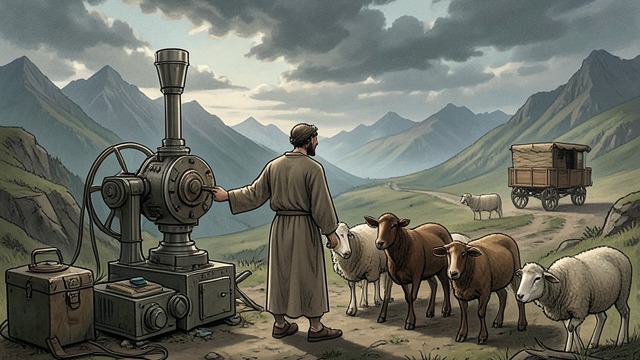
The King of El Dorado does not detain the travelers, despite explaining how difficult departure will be. He arranges machinery to take them and their loaded sheep across the mountains.
Longing outweighs comfort
Candide leaves because Cunegonde is elsewhere and because he imagines wealth will help him recover her. The ideal society exposes the limitations of his desire without removing his freedom to choose it.
After Candide and Cacambo escape the Oreillons
At the first village in El Dorado
During the travelers’ first meal in El Dorado
During the meeting with the old scholar
After Candide and Cacambo spend a month at court
