
Panglossian Optimism Under Pressure
CandideThis thread examines how Pangloss’s claim that all is for the best is repeated, challenged by experience, and reduced to a retrospective formula.
increasing Bearing strength in each event
 decreasing
Bearing strength in each eventdecreasingA Syllogism of Comfort

A Syllogism of Comfort
Purpose assigned to everything
Pangloss presents ordinary objects and local privilege as evidence of a divinely arranged order. His reasoning converts what exists into what must be best.
Candide’s early assent
Candide believes because he admires Pangloss and has not yet faced the world beyond the castle. The doctrine functions as both a theory and an emotional shelter.
Misfortune Called Necessary

Misfortune Called Necessary
An argument over illness
Pangloss recounts his disease and traces its transmission through a chain of encounters. He calls the affliction an unavoidable ingredient in the best world because it accompanies desirable goods such as chocolate and cochineal.
Explanation at moral cost
His reasoning makes human suffering serve an abstract benefit. Candide cares for Pangloss, but the explanation itself offers little comfort to anyone injured by it.
Disaster Recast as Design

Disaster Recast as Design
A calamity absorbed
Pangloss insists that Lisbon’s earthquake could not have happened elsewhere and must belong to the world’s necessary arrangement. His theory expands to include the very catastrophe that appears to refute it.
The limits of reassurance
Candide’s wounds and the city’s dead make the explanation feel remote. The argument preserves its internal form by asking survivors to treat devastation as part of a greater good.
Candide’s Rejection

Candide’s Rejection
A new standard of evidence
The account of the enslaved worker’s mutilation breaks through Candide’s inherited explanations. The man’s suffering is connected to a recognizable system of production, not a distant metaphysical puzzle.
Optimism named as madness
Candide defines the doctrine as insisting that all is right when it is wrong. The statement marks a decisive change in his judgment, though he continues to face events he cannot control.
A Formula at the End
A Formula at the End
Pangloss keeps the theory
Even after imprisonment, illness, and enslavement, Pangloss continues to defend the best possible world. He later describes the companions’ misfortunes as the necessary chain that brought them to their meal.
Practice takes precedence
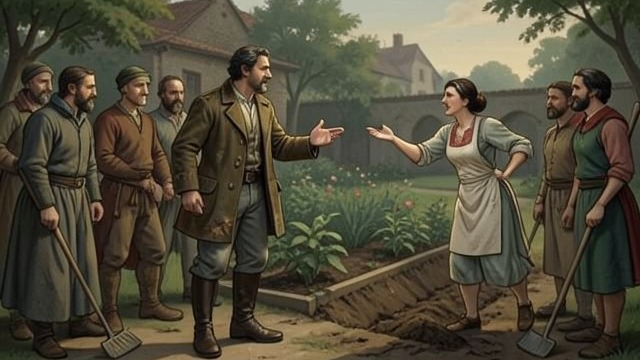
Candide answers that the argument may be all very well, but they should cultivate their garden. The old formula survives as speech, while practical labor becomes the group’s guide to action.
During Pangloss’s lessons at the castle
After Pangloss falls ill in Holland
After the Lisbon earthquake
In Surinam, after Candide hears the enslaved man
Near the conclusion, during the garden discussions
