
Martin’s Pessimistic Case
CandideThis thread traces Martin’s steady interpretation of human affairs as destructive and his role as a counterweight to Candide’s remaining hopes.
increasing Bearing strength in each event
 decreasing
Bearing strength in each eventdecreasingA Chosen Companion

A Chosen Companion
A contest of misfortune
After losing most of the wealth from El Dorado, Candide seeks a companion for the voyage and selects Martin, a poor scholar marked by disappointments and persecution.
A different starting point
Candide still hopes to recover Cunegonde. Martin has little hope of his own, making their partnership an ongoing test between expectation and distrust.
The Manichean Outlook

The Manichean Outlook
A world of opposing forces
Martin calls himself a Manichean and sees the world as abandoned to malign power. He points to war, exploitation, envy, and political violence as evidence.
Candide’s reservations
Candide can still identify particular good acts, but Martin answers from accumulated experience rather than a doctrine of universal goodness. Their exchange keeps the problem of evil in view without resolving it.
A Sea Battle

A Sea Battle
Violence at a distance
Candide and Martin watch two ships fight. One sinks with its crew, and Martin observes that people treat one another in this way.
A limited counterexample
A surviving red sheep proves to be Candide’s, and the Dutch captain who robbed him is among the dead. Candide sees punishment in the pirate’s fate; Martin refuses to mistake it for justice for everyone else aboard.
Parisian Evidence

Parisian Evidence
Distrust of appearances
Martin treats Parisian manners, criticism, gambling, and social rivalries as further evidence of a disorderly society. Candide’s own losses and encounters strengthen Martin’s skepticism.
A wager confirmed
When Candide thinks Paquette and Friar Giroflée look happy, Martin predicts otherwise. Their accounts reveal private misery beneath a cheerful public manner, and Candide concedes the point.
Patience on the Farm
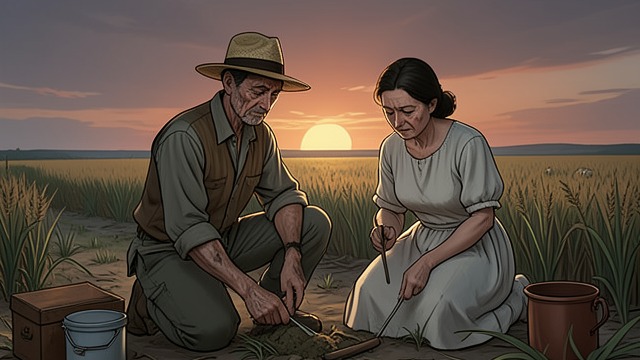
Patience on the Farm
No promise of paradise
Martin believes people oscillate between restless anxiety and dull disgust. The farm does not disprove his account: its residents still face fatigue, irritability, and disappointment.
A workable limit
He joins Candide in favoring work over endless dispute. His conclusion remains pessimistic, but practical labor offers a way to make life tolerable without claiming that the world is good.
In Surinam, before Candide sails for Europe
On the voyage from Surinam toward Bordeaux
During the sea passage after their philosophical dispute begins
During the companions’ stay in Paris
At the conclusion, after the group settles into shared work
