
Antigoni’s Island Exile
Cartes Postales from GreeceThis thread follows Antigoni’s constrained marriage, her paintings of the people she encounters on Andros, and her choice to leave when her work is destroyed.
increasing Bearing strength in each event
 decreasing
Bearing strength in each eventdecreasingA Marriage of Convenience

A Marriage of Convenience
A match arranged for practicality
Antigoni agrees to marry the wealthy shipowner Christos Vandis. Her decision helps her younger sister Ismini marry first, as custom requires the elder daughter to wed before her.
A life surrendered by degrees
Antigoni has friends, teaches, and paints in Piraeus, but sees marriage as an alternative to remaining dependent on her father indefinitely. The wedding is also a farewell to the city she loves.
The practical arrangement offers security at the cost of independence and familiar companionship.
Arrival on Andros
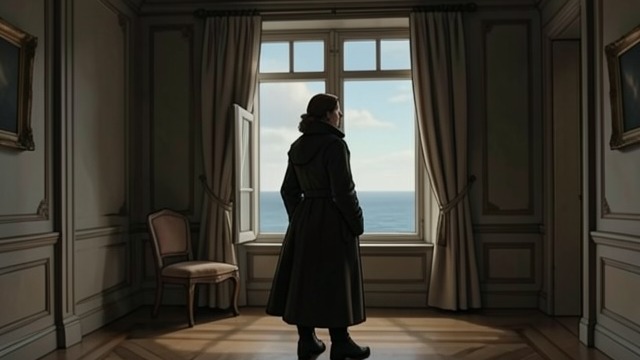
Arrival on Andros
A new household
Antigoni arrives on Andros sick from the voyage and is met by the routines and social expectations of Christos’s family. Her husband outlines whom she should know and whom she should avoid.
Loneliness takes shape
Christos leaves for North America after only a few weeks of marriage. Antigoni remains in his mansion, far from Piraeus and with few relationships of her own.
Her new life is comfortable in material terms but offers little room for self-determination.
Painting Beyond the House
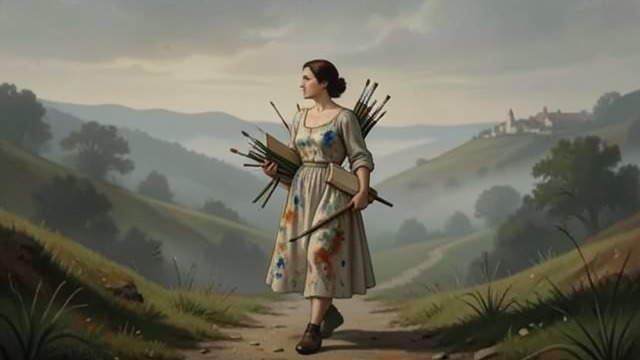
Painting Beyond the House
The landscape becomes a companion
Antigoni takes her paints into the hills and explores the old paths of Andros. The work gives her a reason to leave the house and a way to use the artistic skill she developed in Piraeus.
Faces replace scenery
When the weather turns, she begins painting people: the wet witch, Father Minas, the schoolmaster and his partner, and a fisherman. Each portrait reflects her interest in individuals whom her husband’s social rules marginalize.
Painting becomes a record of her encounters and a form of independent attention.
Christos Rejects the Paintings
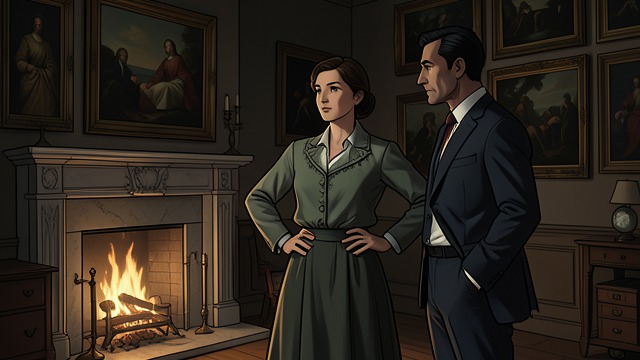
Christos Rejects the Paintings
Homecoming meets discovery
Christos returns to find Antigoni’s portraits displayed in the dining room where family paintings once hung. He sees the subjects as scandalous outsiders rather than as people she has come to know.
Authority turns destructive
He orders the portraits removed and burns them, including Antigoni’s image of Ismini. The destruction reveals that he considers her time and creative work subject to his control.
Antigoni’s quiet artistic independence now faces an explicit demand for obedience.
Return to Piraeus
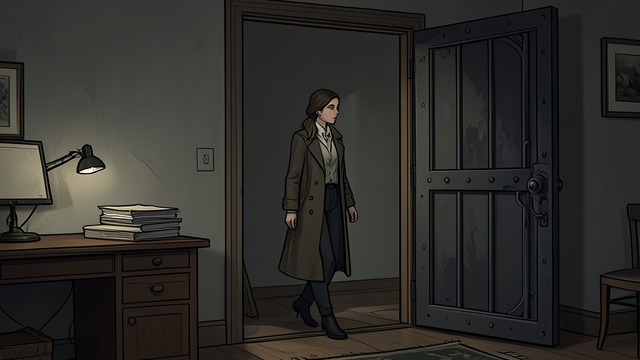
Return to Piraeus
A decisive departure
Antigoni leaves the mansion and seeks help from the schoolmaster. He gives her money for transport, and she takes an early ferry back to Piraeus.
A career rebuilt
She later sends him a painting in gratitude and becomes a celebrated painter. Christos continues returning to the empty mansion, but Antigoni never returns to the marriage.
The decision restores her artistic and personal agency, though only after a destructive confrontation.
The mid-1930s, before Antigoni leaves Piraeus
The weeks after her wedding
Autumn of Antigoni’s first year alone
More than a year after Christos sailed away
The morning after the paintings are burned
