
The Cost of a Beautiful Ideal
Cartes Postales from GreeceThis thread follows beauty as a force that can nourish, seduce, exclude, or destroy the people who encounter it.
increasing Bearing strength in each event
 decreasing
Bearing strength in each eventdecreasingBeauty on the Postcards

Beauty on the Postcards
Images alter an ordinary room
The Greek postcards bring blue skies, seas, and whitewashed buildings into Ellie’s basement flat. Their vividness contrasts with the dull routine of work and London weather.
An image prompts action
The idealized scenes may exaggerate, but Ellie’s longing is real. The postcards make a distant country seem worth seeing for herself.
Beauty begins as an invitation, though it cannot guarantee that the actual destination will match the picture.
The Violin’s Enchantment
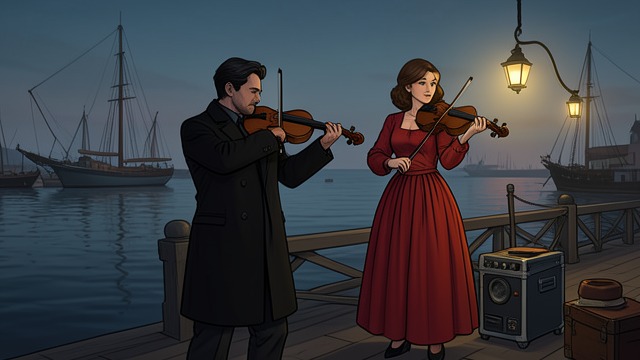
The Violin’s Enchantment
Sound changes a public place
Antoni’s music quiets conversation and draws a crowd to the harbor. Magda responds with tears and attention she cannot control.
A brief connection takes form
The violin gives two solitary people a way to share feeling and conversation. The night is meaningful even though Antoni leaves by morning.
Beauty here produces pleasure without a promise of possession or permanence.
The Statue and Desire
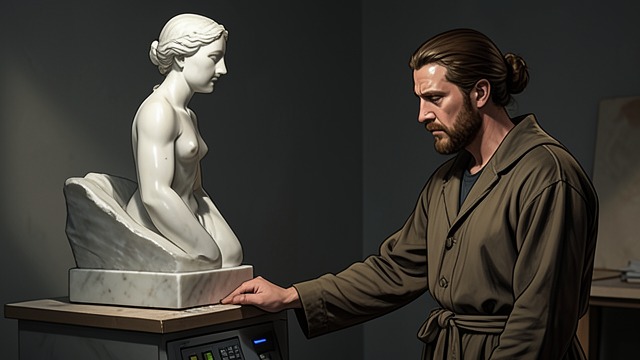
The Statue and Desire
Marble restores feeling
As Costas uncovers the statue, his attention becomes tender and absorbed. The idealized female body evokes a desire that had disappeared from his marriage.
Attraction narrows judgment
He works without adequate rest and tries to turn the heavy figure alone. The statue’s beauty awakens him but also leads him toward dangerous exertion.
The episode distinguishes appreciation of beauty from surrender to its power.
Antigoni’s Painted Faces
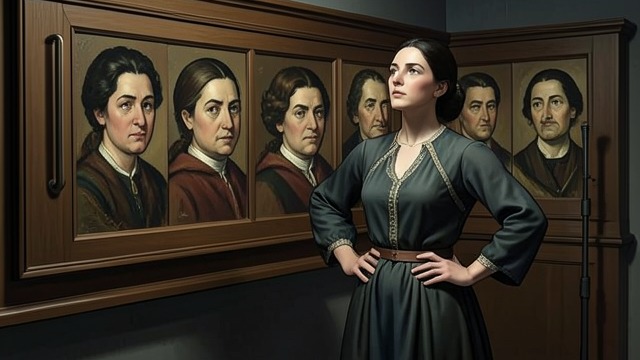
Antigoni’s Painted Faces
Beauty becomes recognition
Antigoni paints the faces of people her husband regards as improper or unsafe. Her attention finds dignity, complexity, and expressive presence in those excluded from polite society.
Art threatens a household order
The portraits replace ancestral images with people Antigoni has chosen to know. Christos sees the change as an affront and destroys the work.
Beauty is not only an ideal to admire; it can be a way of recognizing people and asserting one’s authority to see them.
A Sunset That Changes a Plan

A Sunset That Changes a Plan
Nature restores perspective
Athina watches the sunset over Delphi with a guard who has chosen to remain there. The light recalls a beauty missing from her life in Germany.
Beauty points toward a choice
The moment helps Athina recognize that a few genuine moments of happiness can make a place worth choosing. She decides to leave her banking career abroad.
Unlike the statue’s possessive power or the postcard’s idealization, this beauty helps someone identify what she wants to do.
The winter and summer before Ellie travels
An autumn evening in Kalamata
The weeks of Costas’s excavation
The months before Christos returns to Andros
Late afternoon at Delphi
